Thursday, August 29, 2019

PR: Bitcoin.com Partners with Resistance – the Next Gen DEX

PR: Bitcoin.com Partners with Resistance - the Next Gen DEX

August 29th, 2019 – Last week, the Resistance team met with Bitcoin.com CEO Stefan Rust, and other members of the Bitcoin.com organization, to discuss the terms of a partnership. The meeting was a great success and a strategic partnership agreement was drawn up and signed the same day.

The exact details of the agreement are yet to be announced, but this important development will help to make the Resistance decentralized exchange and privacy coin accessible to the masses through Bitcoin.com’s significant presence in the blockchain space.

“Joining forces with a company that has such incredible strengths in the blockchain industry, together with our team of technology and cryptographic geniuses, it’s possible for us to change the world.” says Resistance CEO, Anthony Khamsei.

The Resistance platform, accessed through the Resistance Desktop Application includes a decentralized exchange, ResDEX, privacy coin (RES), and CPU-optimized miner that allows users to mine on the Resistance blockchain with a regular computer. The platform also gives users the option to receive block rewards through Proof of Research by committing processing power to real scientific research projects.

The Resistance IEO is complete and the platform’s Mainnet has been live for over a month with over 3,000 CPUs mining on the blockchain. Their masternode network was released on 25th August, and ResDEX will launch in less than a week from now.

________________________________________

About Resistance
Resistance is an award-winning decentralized exchange and privacy coin built by a group of highly-experienced crypto pioneers. The core team includes Alexander Peslyak, founder of Openwall – well-known for their team of expert cryptographers, and Patrick Schleizer, founder of the innovative privacy-focused desktop operating system Whonix. Key advisors include Dr. David Kravitz, a cryptographic mastermind and inventor of the Digital Signature Algorithm, DSA.

Liquidity on the exchange is provided by Huobi and other platforms, market making by GSR – as used by top 5 market capped coins, Ledger provides hardware wallet support, and TLDR, an advisory firm that builds companies and infrastructure for the new token economy, is responsible for assisting and mentoring the core team to create ground-breaking technology systems.

For more information on Resistance: https://www.resistance.io.
For interview requests, please don’t hesitate to contact Kieron Allen, phone: +447960956498, email: kieron@resistance.io.

The post PR: Bitcoin.com Partners with Resistance – the Next Gen DEX appeared first on Bitcoin News.


via Bitcoin.com PR

Wednesday, August 28, 2019

Crypto Can Boost Indian Economy – How Banning Will Hurt it

Crypto Can Boost the Indian Economy - How Banning Will Hurt it

The Indian economy is experiencing severe economic slowdown not seen in many years, and cryptocurrency can potentially help. However, the government is considering a draft bill to ban cryptocurrencies, which could have undesirable consequences on the economy. Meanwhile, the Indian crypto community has already been enduring a banking ban by the central bank.

Also read: Indian Supreme Court Orders RBI to Answer Crypto Exchanges, New Date Set

Job Growth Amid ‘Unprecedented’ Economic Slowdown

Rajiv Kumar, the vice-chairman of Indian policy think tank Niti Aayog, said last week that the Indian government is facing “an unprecedented situation.” He explained that “In the last 70 years, nobody had faced this sort of situation where the entire financial system is under threat.” According to Reuters, economists predicted earlier this week that, in the second quarter of this year, the Indian economy likely expanded at its slowest pace in more than five years.

The slowdown has led to many job losses in a number of sectors, particularly the auto industry. Chief Minister of the Indian state of Rajasthan, Ashok Gehlot, informed the press last week that almost all sectors in the country are struggling, with lakhs (100,000s) of people losing their jobs. Parliament Member Manish Tewari, a spokesperson for India’s Congress political party, estimated that over three crore (30 million) people are facing the threat of becoming unemployed.

Nischal Shetty, CEO of crypto exchange Wazirx, believes that job growth is among the major benefits crypto can help his country’s economic situation. Kunal Barchha, cofounder of the crypto exchange Coinrecoil, shares the sentiment. He told news.Bitcoin.com:

Indirectly, crypto can help create awesome applications that can contribute to good business and that can boost the overall IT industry of India and add new jobs for the young generation.

Crypto Can Boost the Indian Economy - How Banning Will Hurt it

According to job search site Indeed, the crypto and blockchain market is still “rapidly growing.” The company found that the share of U.S. job postings related to crypto, blockchain and bitcoin has grown 90% over a one-year period ending February. Earlier this year, the company revealed that Bengaluru was the number one city in India for crypto jobs, followed by Pune, the second-largest city in the Indian state of Maharashtra.

Wealth Creation and Helping the Unbanked

Besides job creation, there are other benefits crypto can offer the Indian economy. Among them is attracting “new foreign venture capital investments into Indian startups,” Shetty detailed, telling news.Bitcoin.com that “ICOs can be a new global fundraising mechanism for early-stage Indian startup.” According to ICOdata, the total amount of funds raised globally in ICOs so far this year is over $346 million.

The Waxirx CEO added that cryptocurrency can help make remittances in India “cheaper and faster.” Data from Trading Economics shows that remittances in India stood at $12.6 billion in the first quarter. He also believes that cryptocurrency can offer the “Opportunity to bank the massive 300M+ unbanked people in India.” The Indian government’s own data shows that, as of Feb. 13, the number of accounts opened under the PMJDY, the government-run financial inclusion program, was 34.43 crores.

Crypto Can Boost the Indian Economy - How Banning Will Hurt it

Barchha, however, has doubts about how much cryptocurrency can help the Indian economy. He argued that “most of the people around the world still understand crypto as money for illegal activities,” so “It is a distant dream to see crypto helping [the] vast size of Indian economy.” He opined, “I personally don’t see crypto playing any leadership role in the Indian economy, not in coming 5 years at least.”

Negative Effects of Banning Crypto

Currently, the Indian government is deliberating on a draft bill to ban cryptocurrencies. It was drafted by an interministerial committee (IMC) headed by former Secretary of the Department of Economic Affairs Subhash Chandra Garg, who was recently reassigned to the Power Ministry. The committee was constituted on Nov. 2, 2017, and only met three times before finalizing this bill. However, the community is confident that the bill is flawed and has been tirelessly campaigning to convince lawmakers to reexamine the IMC recommendations.

Shetty shared with news.Bitcoin.com the short term and long term effects of banning cryptocurrencies in India. In the long run, he explained that “India will see a massive brain drain,” as skilled citizens move out of the country to seek opportunities elsewhere. Bahrain, for example, has already been courting Indian startups to set up shop there, marketing itself as a crypto-friendly country.

Crypto Can Boost the Indian Economy - How Banning Will Hurt it

If the government decides to ban cryptocurrency, “India will not have blockchain and crypto expertise leading to no crypto-related work reaching India,” the Wazirx executive pointed out, emphasizing that the country stands to “lose billions of dollars worth of investment that the crypto sector can potentially attract.” Consequently, “Hundreds of jobs will be lost,” he indicated, elaborating:

Indian citizens will lose hundreds and thousands of crores of their hard earned money … India will lose out on thousands of jobs that would otherwise be generated if the crypto sector was to be positively regulated.

Hurting Legitimate Players

Whether done in fiat currency or cryptocurrency, “Illegal activities, money laundering, and terrorist financing are the top concerns for the government of India,” Barchha asserted. “As of now, every exchange allows trading after verifying documents rigorously,” he described, affirming that “A ban will result in [the] closure of all exchanges and that will result in no accountability of transactions.” He further conveyed that “People with illicit intentions are … going to deal in crypto using their own network,” elaborating:

Indirectly, the government of India will increase their headache of tracing illegal transactions, which would have been easier if strict KYC based exchanges are regulated.

On the other hand, he opined: “honest traders or investors won’t give up their faith on the technology and they will trade in cash through peer-to-peer portals. They won’t be paying any taxes for these transactions, which is an additional loss for the government.”

Crypto Can Boost the Indian Economy - How Banning Will Hurt it

Recently, The Indian National Association of Software and Services Companies (Nasscom) voiced its concerns regarding the proposed banning of crypto assets in India. The association describes itself as “the apex body for the 154 billion dollar IT BPM industry in India,” which “Liaisons with government and industry to influence a favourable policy framework.” Nasscom stated that “A ban would inhibit new applications and solutions from being deployed and would discourage tech startups” and would also “handicap India from participating in new use cases that cryptocurrencies nad tokens offer,” emphasizing:

A ban is more likely to deter only the legitimate operators as they have no intent to be non-compliant.

In his open letter to the Indian finance minister, Sohail Merchant, CEO of local crypto exchange Pocketbits, wrote: “If the ban comes into effect, the black market will continue to thrive. It will be the common man, compliant businesses, and innovators building upon these protocols that will be affected.”

Supreme Court Hearing, One Petition Withdrawn

There is already a banking ban in place in India, imposed by the Reserve Bank of India (RBI) in its circular issued in April last year. The ban went into effect 90 days later. A number of industry participants filed writ petitions challenging the ban, which the Indian supreme court was originally set to hear in September last year but was continually delayed. The wait has caused a few operators to shut down their local exchange operations, including Zebpay, formerly one of the largest crypto exchanges in India, Coindelta, Coinome, Koinex, and Cryptokart.

Crypto Can Boost the Indian Economy - How Banning Will Hurt it

During the Aug. 21 hearing, the supreme court instructed the central bank to answer the representation by crypto exchanges. Shetty told news.Bitcoin.com that the document was submitted by the Internet and Mobile Association of India (IAMAI) sometime last year. “It’s basically a set of suggestions that IAMAI had sent to the RBI. Stuff like exchanges following KYC and AML policies etc,” he clarified. “The objective was to put across the fact that there are better ways to ensure investor protection and prevent malicious activities in crypto.”

Coinrecoil, the first company to challenge the RBI ban in court, has recently withdrawn its writ petition. “Yes, we did withdraw our petition last week,” Barchha confirmed. “Even though being a startup, we decided to take the risk and became the first exchange in the country to file the petition. We tried our best to stay till the end of the fight. But regardless of our passion or confidence, at some point, money matters.”

According to Barchha, the financial burden was the only reason for his startup with limited funds to withdraw its petition. “Most of the investment was done by three directors, friends, and family. That was enough to build the exchange from scratch, and make it operational for 4 months. The banking ban was a blow to our financial planning,” he detailed.

Do you think crypto could help boost the Indian economy? Would banning it have the opposite effect? Let us know in the comments section below.


Images courtesy of Shutterstock.


Did you know you can buy and sell BCH privately using our noncustodial, peer-to-peer Local Bitcoin Cash trading platform? The Local.Bitcoin.com marketplace has thousands of participants from all around the world trading BCH right now. And if you need a bitcoin wallet to securely store your coins, you can download one from us here.

The post Crypto Can Boost Indian Economy – How Banning Will Hurt it appeared first on Bitcoin News.


via Kevin Helms

Crypto Salaries Gain Regulatory Recognition Around the World

Crypto Salaries Gain Regulatory Recognition Around the World

Salaries paid in decentralized digital coins have become a norm across the crypto industry, but there’s really no reason why cryptocurrencies can’t be used for remuneration by businesses in other sectors as well. In many jurisdictions that should be legal even in the absence of dedicated legislation. Switzerland, New Zealand, Japan and Estonia are a few examples. Companies and employees in these countries take advantage of the benefits that come with crypto payments.

Also read: Initiative to Curtail Negative Interest Rates Gains Traction in Germany

Temptation to Tax Crypto Income Works in Favor of Bitcoin Wages

Switzerland has already established itself as a crypto-friendly nation and it is a role model in many respects, including the way it treats cryptocurrency remuneration. Many leading companies and projects in the crypto space have already set up offices or are headquartered in the Swiss Crypto Valley, centered in the Canton of Zug. The long list includes names such as Shapeshift, Xapo, Bitmain, the Ethereum Foundation and most recently the Libra Association.

For many decades, the Alpine federation was a good example of geopolitical neutrality and financial privacy. The latter has been somewhat degraded in the past few years under pressure from powerful players such as the U.S. and the EU. However, decentralized digital currencies are offering Switzerland a chance to redeem itself in the eyes of account holders, and the country has embraced the opportunity.

Crypto Salaries Gain Regulatory Recognition Around the World

Many aspects of dealing with crypto assets have been regulated already by the Swiss authorities and that includes taxation. People who receive cryptocurrency as wage income need to declare it and pay tax, just like with fiat salaries. Crypto gains of investors and traders are treated as tax-exempt capital gains but depending on the canton, you may have to pay wealth tax which is levied on the total amount of digital coins you hold, similar to cash or precious metals.

In a confederation like Switzerland, there are multiple levels of income taxation – federal, cantonal, and municipal. Regulations vary from one administrative unit to another and income tax can be progressive or proportional. Amounts owed also depend on the marital status of the taxpayer. The scope of taxable income covers all funds accruing to a natural person from all sources. That includes remuneration received in various forms, including digital.

Cryptocurrency Remuneration Spreads in Friendly Jurisdictions

Switzerland is undoubtedly a leader in creating favorable conditions for crypto businesses, but other nations have been quickly catching up. Among those where crypto salaries are a working option are Japan, Estonia, and the United States. For example, Japanese internet giant GMO announced some time ago that its almost 5,000 employees will be able to receive part of their salaries in cryptocurrency. And this spring, U.S.-based cryptocurrency exchange Kraken revealed it paid 250 salaries in bitcoin in April.

Crypto companies registered in Estonia, considered to be one of the most advanced digital societies, are often partially compensating or encouraging their employees with cryptocurrencies and tokens. The Baltic nation’s legislation provides for the taxation of such income. But even in jurisdictions where cryptocurrencies are yet to be legalized, crypto salaries are possible. In Russia, for example, half of fintech companies pay their employees with coins.

Crypto Salaries Gain Regulatory Recognition Around the World

The crypto industry is not restricted by national boundaries. Cryptocurrencies significantly improve the speed and reliability of cross-border payments and the growing gig economy is taking advantage of the benefits of frictionless digital money. According to a study from 2017, freelancers will form a majority of the workforce in the United States within a decade. And a survey on payment preferences conducted in 2018 shows that a third of them would like to be paid partially or entirely in cryptocurrency.

Crypto-paid remote jobs are rapidly spreading in the global economy as well, thanks to the services offered by companies like Bitwage. It’s also getting easier to find a job paid in cryptocurrency with the help of platforms such as Workingforbitcoins.

New Zealand Tax Authority Adopts Rules for Crypto Payroll

Generally speaking, crypto salaries don’t really need dedicated legislation or special permissions by authorities to be legal. Many countries allow part of an employee’s compensation to be paid with non-monetary assets like commodities. And in jurisdictions where digital coins are not yet recognized as currencies, they have been granted a commodity status. Thus, cryptocurrencies can still be paid and received as fringe benefits.

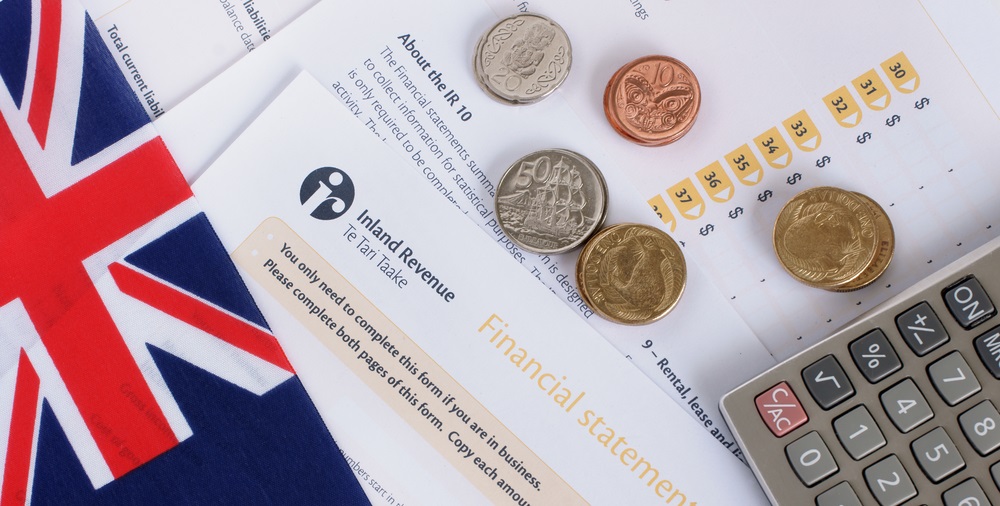
Nevertheless, it does look like a step forward when a government agency explicitly mentions crypto wages in its official documents. And that’s what the tax authority in New Zealand recently did, deeming it legal for businesses to pay their employees in bitcoin. Companies will now be able to withhold tax on income payments under the existing pay-as-you-earn schemes like those of regular fiat salaries, as per the country’s current tax legislation.

The clarifications were made in an information bulletin issued earlier this month by New Zealand’s Inland Revenue Department (IRD). The ruling will go into effect on Sept. 1, 2019 and will be valid for the next three years. And while crypto enthusiasts have welcomed the arrangement as one that can encourage crypto adoption, doubters have expressed concerns its only goal is to ensure the collection of more taxes by the government in Wellington.

Crypto Salaries Gain Regulatory Recognition Around the World

As expected from a regulator, the green light comes with multiple conditions. First of all, only employees working under official agreements can be paid with cryptocurrency. Then, the payments must be for a fixed amount, not exceeding half of the full pay, with the value of the crypto asset pegged to one or more fiat currencies. The crypto wages must be a regular part of the employee’s remuneration and be convertible into government-issued fiat money like the New Zealand Dollar.

The IRD also pointed out that salaries must be paid in a coin that can function as a currency, a substitute to fiat. This requirement aims to protect employees from being paid in an illiquid asset or small altcoin.

The tax agency listed several decentralized cryptocurrencies that meet its criteria. These are bitcoin cash (BCH), bitcoin core (BTC), bitcoin gold (BTG), ethereum (ETH), and litecoin (LTC). The revenue department also thinks stablecoins such as tether (USDT), or any of its alternatives that are easily convertible to fiat, qualify for that role as well.

If you are looking to securely acquire bitcoin cash (BCH) and other leading cryptocurrencies, you can do that at Buy.Bitcoin.com. And if you are earning a salary in bitcoin cash, you can sell or buy BCH privately using our noncustodial, peer-to-peer trading platform. The Local.Bitcoin.com marketplace already has thousands of users from all around the world.

Do you expect more countries to regulate the use of cryptocurrencies for remuneration? Do you think crypto salaries need specific regulations? Share your thoughts on the subject in the comments section below.


Images courtesy of Shutterstock.


Do you need a reliable bitcoin mobile wallet to send, receive, and store your coins? Download one for free from us and then head to our Purchase Bitcoin page where you can quickly buy bitcoin with a credit card.

The post Crypto Salaries Gain Regulatory Recognition Around the World appeared first on Bitcoin News.


via Lubomir Tassev

Tuesday, August 27, 2019

Mega Drug Pushers Johnson & Johnson Get Away While Peaceful Silk Road Is Destroyed

Mega Drug Pushers Johnson & Johnson Get Away While Peaceful Silk Road Is Destroyed

It’s been said that those who protest the loudest are often the ones who are guilty, and when it comes to government and their pet corporations, things are no different. No surprise, then, that the blustery moralizing — and violent state force brought to bear against businesses — are most intense where the money and power stand to be lost, as in the case of the Silk Road, and most weak and permissive where embedded, state-friendly corporations like Johnson & Johnson can basically get away with murder.

Also Read: The White House Just Blamed Bitcoin for America’s Opiate Crisis

Opioid Kingpins

The state of Oklahoma won $572 million in a lawsuit against American pharmaceutical giant Johnson & Johnson Monday, for their alleged reckless contribution to the state’s opioid crisis. Prosecutors labeled the company a “public nuisance,” and an opioid “kingpin.” The mega corporation’s aggressive marketing tactics downplayed the very real risks of extremely addictive opioid painkillers, according to the state of Oklahoma. This isn’t Johnson & Johnson’s first legal rodeo, either. From arsenic-poisoned Tylenol, to bribes and kickbacks for doctors worldwide, downplaying dangerous side effects, and peddling allegedly cancer-causing baby powder, the company is no stranger to legal attack.

Of course, their legal representation vehemently denied the charges, citing what they view as Johnson & Johnson’s negligible share of the U.S. painkiller market as a whole. The company aims to postpone payment during an appeal procedure, which some reports say could last until 2021. The lawsuit was seeking $17 billion in damages, with settlements reached with Purdue Pharma ($270 million) and Teva Pharmaceutical ($85 million), earlier this year. Though the awarded amount is nowhere near the prosecutor’s goal, it remains a landmark ruling nonetheless, being the first time a major pharmaceutical company has been found legally liable for America’s opioid problem.

This verdict comes at a timely juncture where the cryptospace is concerned. News.bitcoin.com reported just days ago on recently issued White House advisories, which attempt to pin blame for the very same crisis on cryptocurrencies like bitcoin, bitcoin cash, ether, and monero.

Mega Drug Pushers Johnson & Johnson Get Away While Peaceful Silk Road Is Destroyed

Consensual vs. Non-Consensual Business

There are rigorous licensing requirements for selling drugs legally in the United States. These measures are taken to ensure safety and quality, ostensibly. Without approval from the state, nobody can sell anything. With legal approval from the state, anybody can sell anything — even dangerously addictive painkillers via aggressive marketing campaigns and bribes. Organizations that have the power to green light or reject new pharmaceuticals become very important, then, to companies wishing to make a killing in the industry.

In Johnson and Johnson’s case, around $6 million is spent on lobbying annually, influencing everything from legal policy to drug studies. 37 members of the U.S. Congress actually own shares in the pharmaceutical juggernaut. Some of the legislation Johnson & Johnson pays big bucks to back is aimed at making it harder to sue big corporations. For example, the company is a member of the American Tort Reform Association (ATRA), which championed the Class Action Fairness Act of 2005, a bill that drew fire from critics for placing unfair restrictions on individuals seeking legal recourse against corporations via class action lawsuits.

With this iron-clad shield of legal protections in place, and deep pocketsful of politicians and alphabet agencies paid for in USD — a money that everyone is forced to use under threat of violence — the meaning of a non-consensual business becomes clear. Don’t reach for the cannabis for pain relief–that could land you in prison. Don’t sue the providers of the only legal options available, that’s been made near impossible. Instead, fall victim to purposefully relaxed drug laws, misleading advertising, and FDA/DEA propaganda. In Oklahoma’s case, the systematically eroded caution about opioids contributed to the 6,000 related deaths since 2000, according to attorney general Mike Hunter.

Mega Drug Pushers Johnson & Johnson Get Away While Peaceful Silk Road Is Destroyed

The Silk Road

If Johnson & Johnson’s preferred method of force-backed monopoly is non-consensual, then the model of the now defunct Silk Road would be the opposite. Using the same cryptocurrency the White House has now pinned as responsible for opioid trafficking and Fentanyl deaths, Ross Ulbricht’s darknet marketplace sold anything and everything, drug-wise, legal or not. This causes many to take worried pause, viewing the endeavor as an illicit or malevolent enterprise, but things are almost never what they seem on surface.

Unlike Johnson & Johnson, the community on Silk Road had ethical rules about its drug sales. As International Business Times reported back in 2011:

But even as an illegal drug store, Silk Road has its own ethical standards which is stated in terms of service: anything who’s purpose is to harm or defraud, such as stolen credit cards, assassinations, and weapons of mass destruction, will not be sold through the network.

There are still those who talk about Ulbricht’s supposed hand in the murder-for-hire plots, but these charges were never brought to bear, and later dropped, instead being mentioned in passing to prejudice the outcome of the trial. Nobody was ever killed because of the debacle, either. Many suspect foul play on the part of the state, and indeed this idea is bolstered by computer forensics testimony that doesn’t add up. All in all, there are 7 people who are reported to have died from Silk Road-related overdoses, who presumably ordered the products voluntarily, with full disclosure of the potential risks. This is a far cry from the big pharma racket on the legal side of the tracks, where disclosure is actively obfuscated, and safer, alternative options are punished by jail time.

Mega Drug Pushers Johnson & Johnson Get Away While Peaceful Silk Road Is Destroyed

Legal Immunity for Criminals, Life in Prison for Heroes

According to the judge, “Among other things, they [Johnson & Johnson] sent sales representatives into Oklahoma doctors’ offices to deliver misleading messages, they disseminated misleading pamphlets, coupons, and other printed materials for patients and doctors, and they misleadingly advertised their drugs over the internet.” It was further found by the ruling that the company had created a problem where there hadn’t been one, in encouraging the over-prescription of opioids for chronic pain.

Though Johnson & Johnson may have to pay $572 million if they lose their appeal, that’s really just a chink in the armor for a company that pulled in $81.6 billion in 2018, with a net worth at press time of $337.1 billion. Though their reckless practices have arguably contributed to the deaths of thousands in the United States, and they consistently seek to insulate themselves unfairly within the legal system, the company remains “legitimate” in the eyes of the government at large.

Ross Ulbricht, however, has had his life taken from him, simply for providing a voluntary marketplace and earnestly trying to not mislead or harm anyone. When it comes to real culpability here, people on the street seem to be getting wise to Johnson & Johnson’s racket. When it comes to the U.S. Federal Government taking issue with consensual exchange and a young kid making millions on the darknet from drug sales, many think the state doth protest too much.

What are your thoughts on the Johnson & Johnson ruling? Let us know in the comments section below.


Images courtesy of Shutterstock.


Did you know you can buy and sell BCH privately using our noncustodial, peer-to-peer Local Bitcoin Cash trading platform? The Local.Bitcoin.com marketplace has thousands of participants from all around the world trading BCH right now. And if you need a bitcoin wallet to securely store your coins, you can download one from us here.

The post Mega Drug Pushers Johnson & Johnson Get Away While Peaceful Silk Road Is Destroyed appeared first on Bitcoin News.


via Graham Smith