Showing posts with label Samuel Haig. Show all posts
Showing posts with label Samuel Haig. Show all posts
Monday, April 22, 2019

Sunday, April 14, 2019
Aussie Banks Still Cold to Cryptocurrency Businesses Despite Regulation
Despite increasing regulation in the cryptocurrency sector, Australia’s major banks maintain cautious policies when it comes to cryptocurrencies. While cryptocurrency businesses appear to challenge Australian banks’ appetite for risk, many institutions permit cryptocurrencies to be purchased using credit cards.
Also Read: Lithuania to Adopt Crypto Regulations Even Stricter Than the EU’s
Credit Card Cryptocurrency Purchases Permitted by Many Australian Banks
A spokesperson for Westpac, Australia’s second-largest bank by capitalization, stated that the company “does not restrict [the] use of accounts or credit cards in relation to purchasing cryptocurrency as long as the transaction complies with our legal obligations and terms and conditions.” The policies extend to Westpac-owned St George Bank, Bank of Melbourne, and Bank SA.
The country’s third-largest bank, Australia and New Zealand Banking Group (ANZ), also does not prohibit its customers from purchasing cryptocurrencies, with an ANZ representative stating that the bank “does not prohibit customers buying digital or cryptocurrencies, or accepting them as a form of payment.” However, the spokesperson added that the bank “monitor[s] transactions for unusual behavior to protect against potential fraud and in line with our regulatory responsibilities.”
The Commonwealth Bank of Australia (CBA), Australia’s largest bank, however, revised its policies 14 months ago to prohibit virtual currency purchases via credit card. Despite this, a Commonwealth Bank spokesperson stated that “customers are still able to buy and sell cryptocurrencies using their CBA transaction accounts and debit cards.” CBA subsidiary Bankwest shares the same policies.
Few Banking Options Available to Australian Cryptocurrency Businesses
News.Bitcoin.com was unable to find an Australian financial institution that expressed a willingness to bank cryptocurrency businesses.
Of the major banks, while CBA and Westpac declined to comment on the matter, an ANZ spokesperson indicated that the company’s policy “is to not bank businesses that operate as issuers, dealers or exchanges of digital or crypto-currency as they are outside of our risk appetite.” A spokesperson for regional bank Suncorp also indicated that the company does not provide “services to cryptocurrency businesses.”
The country’s credit union also appears to hold policies that are cold to cryptocurrency businesses, with a Newcastle Permanent spokesperson indicating that the entity does not partner with crypto companies, nor does it permit cryptocurrency purchases using its credit cards.
A spokesperson for Heritage Bank, one of Australia’s largest credit unions, stated: “Due to the high risk and anonymous nature of cryptocurrency trading, Heritage has made the decision not to transact with business accounts that trade in cryptocurrencies.”
Do you operate a business in the cryptocurrency sector? Have you encountered difficulties in securing banking partners? Share your thoughts in the comments section below!
Images courtesy of Shutterstock
At Bitcoin.com there’s a bunch of free helpful services. For instance, have you seen our Tools page? You can even lookup the exchange rate for a transaction in the past. Or calculate the value of your current holdings. Or create a paper wallet. And much more.
The post Aussie Banks Still Cold to Cryptocurrency Businesses Despite Regulation appeared first on Bitcoin News.
via Samuel Haig
Tuesday, April 9, 2019
Crypto Markets and CME Futures Post Record Trade Volume
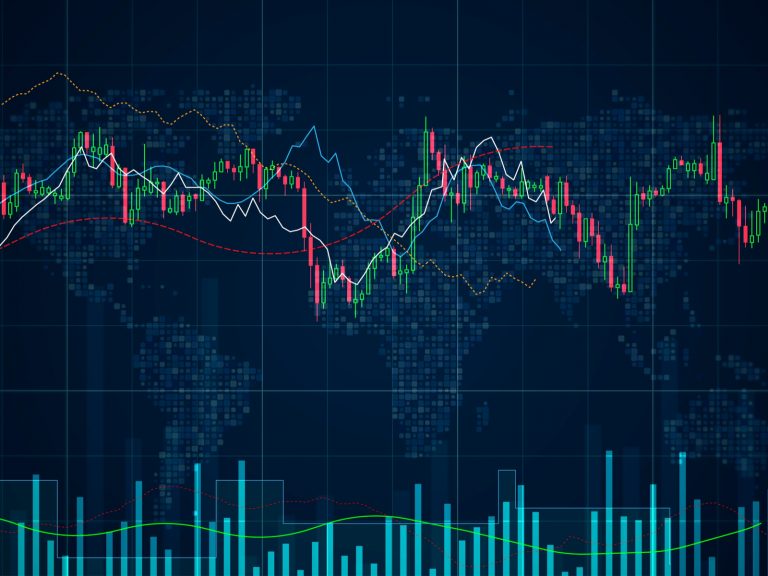
Volume has been ramping up across the cryptocurrency markets, with April seeing a new all-time high posted for daily global cryptocurrency volume. The month has also seen Chicago Mercantile Exchange (CME) report record trade volume for its BTC futures contracts, in addition to Cumberland’s trade desk reporting an influx of 1,000 BTC buy orders, signaling strength across numerous facets of the virtual currency ecosystem.
Also Read: How 5 Asian Countries Regulate Cryptocurrency
New All-Time High Posted for Global Cryptocurrency Trade
According to Coinmarketcap, new records for daily global cryptocurrency trade were posted on April 4 and 5 consecutively, with $77.07 billion and $79.99 billion worth of crypto changing hands on each day. The new records beat out the former all-time high of nearly $70 billion that was posted on Jan 5, 2018, by more than 10%.

The rally appears to have been driven by a significant spike in USDT trade, with USDT volume beating BTC on both April 3 and April 4. Currently, April 4 comprises the strongest day on record for both USDT and BTC, with $25.3 billion worth of tether and $21.7 billion worth of bitcoin core changing hands.
As of this writing, BTC and USDT volume is nearly identical, with almost $15.81 billion worth of BTC and $15.74 billion worth of USDT having been traded over the past 24 hours.
CME Reports Record Volume
April 4th also saw CME report record volume for its BTC futures contracts with more than 22,500 contracts or the equivalent of 112,700 BTC traded, beating out the previous record of 18,300 contracts that was set as of February 19.
On April 1, Cumberland reported that a large influx of 1,000 BTC buy orders had been executed within the span of a single hour on its trading desk, further evidencing a dramatic spike in demand across the cryptocurrency markets.
Speaking to CNBC, the chief executive officer of Binance, CZ, reported that the platform has seen a record number of orders executed in recent days, stating: “The number of transactions … is at an all-time high, we are actually seeing more orders than January 2018.”
News.Bitcoin.com also reached out to an over-the-counter (OTC) BTC broker, who noted that “demand is picking up” in the OTC markets.
Do you think that the increase in trade volume is an indication of a shift in the cryptocurrency meta-trend? Share your thoughts in the comments section below!
Images courtesy of Shutterstock, Coinmarketcap
At Bitcoin.com there’s a bunch of free helpful services. For instance, have you seen our Tools page? You can even lookup the exchange rate for a transaction in the past. Or calculate the value of your current holdings. Or create a paper wallet. And much more.
The post Crypto Markets and CME Futures Post Record Trade Volume appeared first on Bitcoin News.
via Samuel Haig
Sunday, April 7, 2019
“It’s A Lion’s Den” – P2P Traders Discuss Challenges of Operating on Localbitcoins
Despite many cryptocurrency users having made their first purchases using Localbitcoins, little attention is paid to the experiences of the traders who operate on the platform. News.Bitcoin.com reached out to several Localbitcoins traders to find out about the challenges facing peer-to-peer crypto brokers.
Also Read: Darknet Buyers Flock to Wall Street as Dream Winds Down
“It’s A Lion’s Den”
News.Bitcoin.com spoke to an Australian Localbitcoins trader who has been operating on the platform for just “a few months.”
The trader, who wishes to remain anonymous, works alongside roughly 2 other individuals, with the company’s operations demanding approximately 40 hours of work. The company was started using pooled savings, with all of the individuals continuing to work outside of trading.
The company conducts trades both online and face-to-face, with in-person trades occurring in public places where security cameras are present. The trader also requests know-your-customer information prior to meeting customers. The traders recently started offering trades via their own website, however, most of their trades are still executed using Localbitcoins.
When first operating on the platform, the trader lost “a lot of money to scammers,” attributing such to having been too trusting toward prospective customers. The trader also recounted having their bank accounts frozen as a consequence of malicious actors hacking the account and using it to carry out scams.
The trader described Localbitcoins as comprising “a lion’s den,” adding “I advise anyone to get good training before going on the platform.” The trader also hopes that the criminal presence on Localbitcoins will be “controlled” following the rolling out of the platform’s new anti-money laundering/counter-terrorism financing policies.
The trader also described “bank hostility” as the largest challenge currently faced by Localbitcoins traders.
Australian Cryptocurrency Regulations Alienates Small Localbitcoins Traders
MJ from Bitcoin Babe has been operating on Localbitcoins for nearly five years. Her company comprises a one-woman operation, demanding approximately 105 hours of MJ’s time each week.
MJ offers both online and face-to-face trades and takes a number of security precautions when trading in person – conducting such in public places where there is sufficient security, such as banks, and informing friends and family as to where she is going and how long the trade should take to complete.
While MJ offers trades through a private website and other P2P websites, the vast majority of her transactions occur on Localbitcoins, with MJ estimating that 95% of her trade takes place on the platform.
Despite Localbitcoins comprising such a large percentage of her operations, MJ states that the benefits of the platform “have been drying up lately,” adding that she has been trying to move away from P2P platforms “for quite some time now.”
MJ describes Australia’s regulatory climate pertaining to cryptocurrencies as an “absolute shit show,” adding that the country’s regulatory body, the Australian Transaction Reports and Analysis Centre (AUSTRAC), “really rushed into things without a proper assessment of the market and community.”

By her assessment, the current legislative framework comprises “an attempt to try and blanket everyone in a one size fits all approach,” resulting in many “small traders/businesses exit[ing] the scene because the cost of regulation killed it for them.” MJ adds that “people continue to trade unregistered with no inkling of punishment or repercussion” despite AUSTRAC having issued “threats of jail time during pre-registration conferences.”
Do you trade peer-to-peer? Share your experiences in the comments section below!
Images courtesy of Shutterstock
At Bitcoin.com there’s a bunch of free helpful services. For instance, have you seen our Tools page? You can even lookup the exchange rate for a transaction in the past. Or calculate the value of your current holdings. Or create a paper wallet. And much more.
The post “It’s A Lion’s Den” – P2P Traders Discuss Challenges of Operating on Localbitcoins appeared first on Bitcoin News.
via Samuel Haig
Friday, April 5, 2019
Aussie School’s Cryptocurrency Programs Attract International Attention

In August 2017, news.Bitcoin.com covered a number of cryptocurrency programs that were being offered to the students of Wooranna primary school in Victoria, Australia. Nearly two years later, the school’s cryptocurrency programs continue to thrive, with the students having recently interviewed Andreas Antonopolous, and attracted visitors from Europe, North America, and Asia.
Also Read: Australian Primary School Students Explore Bitcoin
Students of Wooranna Primary School Are Not Deterred by Bear Trend
The cryptocurrency programs offered to students of Wooranna primary school have continued to expand despite 2018’s bear trend. Even though the school is situated in a “low socioeconomic area” as described by Keiran Nolan, a former network engineer turned educational technologist who runs Wooranna’s blockchain programs, 2019 has already seen Wooranna’s students afforded unique opportunities within the cryptocurrency sector.
In January, the students were invited to help create the narrative for the educational edition of the video game Crypto Crisis, which was developed by Armoured Beans. The game allows players to operate a virtual mining rig, learning about heat management, energy consumption, and upgrading hardware in the process. The education edition was made available on Steam on Feb. 19 and was distributed to Wooranna’s companion schools in Sydney and New Zealand.

On Feb. 20, 11-year-old Wooranna students Sierra and Kynan interviewed Andreas Antonopolous, during which they discussed nodes, hardware wallets, the 21 million supply cap on BTC, and Minecraft.
Wooranna Cryptocurrency Programs Find International Attention
Recently, the students have been working with hardware wallets using Minecraft as a catalyst. Nolan states that the kids split into teams and set about sending some dogecoin to hardware wallets, “then in Minecraft, the teams find created ways to hide the 24 phrase, and both teams have to ‘hack’ the other account to retrieve the Dogecoin to their own wallets.”
The cryptocurrency programs have been to the benefit of many of the parents, in addition to the students, with Nolan recounting that “some parents on school council did really well on investments as a result” of being exposed to the technology, adding that “one of the kids learned how to mine ETH and did it at home with his dad, which was pretty awesome.”

Nolan recently presented at the world’s largest educational technology conference, Betts, in which he shared many of the successes of the programs, including the story of a Singaporean family who had relocated to Melbourne in order to facilitate their child’s attendance in the program.
Nolan is also currently working on Rocketshoes, a blockchain and IPFS educational platform that allows students to “keep track of their own learning materials, including assignments, notes, and digital assets.” In addition to Wooranna, more than 300 Australian schools and universities have expressed interest in adopting the platform.
Do you think that programs covering Bitcoin and distributed ledger technology should be incorporated into school curriculums? Share your thoughts in the comments section below!
Images courtesy of Shutterstock
At Bitcoin.com there’s a bunch of free helpful services. For instance, have you seen our Tools page? You can even lookup the exchange rate for a transaction in the past. Or calculate the value of your current holdings. Or create a paper wallet. And much more.
The post Aussie School’s Cryptocurrency Programs Attract International Attention appeared first on Bitcoin News.
via Samuel Haig
Friday, March 22, 2019
Mercado Livre Bans Cryptocurrency Listings Following $750 Million Investment From Paypal

Cryptocurrency listings have been prohibited from publication on Mercado Livre, also known as Free Market, following a $750 million investment into the platform from Paypal. Just prior to the announcement, more than 10,000 listings relating to virtual currencies were identified on the platform.
Also Read: Why Africa Continues to Lag Behind in Cryptocurrency Adoption
Latin America’s Largest Marketplace Bans Crypto Asset Listings
Mercado Livre, the largest Latin American e-commerce marketplace by number of visitors, has prohibited the listing of advertisements offering the sale of cryptocurrencies on the platform. The news comes shortly after it announced that Paypal had purchased $750 million worth of shares in Mercado Livre.
Mercado Livre issued a notice requesting that users terminate listings pertaining to virtual currencies before the date, with the platform announcing it will automatically terminate all cryptocurrency listings on the platform from March 19 onwards.

In addition, the platform simultaneously banned listings for “pre-paid cards for games.” The new rules came into effect as of March 19. Mercado Livre operates in Argentina, Bolivia, Chile, Colombia, Costa Rica, Ecuador, El Salvador, Guatemala, Honduras, Mexico, Nicaragua, Panama, Paraguay, Peru, the Dominican Republic, Uruguay, and Venezuela.
Over 10,000 Cryptocurrency Listings on Brazilian Platform Alone
According to research conducted by local media in partnership with Mercado, the platform contains approximately 9,326 advertisements relating to the search term “criptomonedas,” the Spanish word for cryptocurrency.
Additionally, 5,638 listings were associated with the search term “bitcoin,” while 2,636 ads were found related to “ethereum.”

The banning of cryptocurrency listings on the platform comes one month after Latin America’s largest standalone investment bank, Banco BTG Pactual SA, announced plans to enter the virtual currency sector with the launch of a security token. The bank hopes to raise $15 million through a security token offering for its Reitbz token, which it plans to back with distressed real estate assets in Brazil.
What is your reaction to the banning of cryptocurrency listings on Mercado Livre? Share your thoughts in the comments section below!
Images courtesy of Shutterstock
At Bitcoin.com there’s a bunch of free helpful services. For instance, have you seen our Tools page? You can even lookup the exchange rate for a transaction in the past. Or calculate the value of your current holdings. Or create a paper wallet. And much more.
The post Mercado Livre Bans Cryptocurrency Listings Following $750 Million Investment From Paypal appeared first on Bitcoin News.
via Samuel Haig
Wednesday, March 20, 2019
Up & Down: BTCP and ABBC Plummet Amid Controversy

Liquidity has shifted away from the top gaining crypto assets, with only six of the week’s 30 top performing markets currently riding 24-hour volume of seven figures or higher in USD. ABBC comprises the most liquid of the week’s top losers, currently ranking as the sixth poorest performing market of the last seven days after the resolution of the court case between Abbc Coin and Alibaba.
Also Read: Quadrigacx Co-Founder a Convicted Fraudster
BTCP Comprises Second Worst Performing Market of Last Seven Days
Bitcoin private (BTCP) is currently ranking as the worst performing market of the past week after shedding nearly 47% of its value in seven days.
The heavy sell-off comes less than two weeks after the project behind the controversial fork shared a “legal letter” that had been issued to Hitbtc in response to the exchange removal of BTCP pairings from its platform. BTCP is trading for $0.353, or 8,730 satoshis, with a 24-hour volume of $490,000 – up more than 50x when compared with just a few days ago.

ABBC Plummets Following Resolution of Dispute Over ‘Alibabacoin’
The sixth worst performing crypto asset of the last seven days, abbc coin (ABBC), also comprises the market with the largest liquidity of this past week’s top losers.
The bearish momentum appears to have been driven by last week’s announcement that Abbc Coin and Alibaba had “reached a worldwide settlement of claims involving the use of the name Alibabacoin, with ABBC agreeing not to use trademarks that include the term Alibaba worldwide.” Abbc Coin also lost a preliminary copyright lawsuit filed by Alibaba during Oct. 2018.

ABBC is currently trading for $0.255, or 6,300 satoshis, after posting a nearly 38% drop in one week.
Liquidity Recedes From Weekly Gainers
This past week has seen very few of the strongest performing crypto assets rank with strong volume, with only six of the 30 top-performing markets exceeding daily trade volume of $1 million.
Truechain (TRUE) comprised the most liquid of this week’s strongest gainers, ranking 10th after gaining 97% in seven days.

As of this writing, TRUE is trading for $0.605, or 0.00015 BTC, and has a 24-hour trade volume of $58.63 million.
Do you think that we will start to see a stronger presence from high liquidity crypto assets among the top performing markets in coming months? Or will low caps continue to dominate the gainers rankings?
Images courtesy of Shutterstock, Coinmarketcap
At Bitcoin.com there’s a bunch of free helpful services. For instance, have you seen our Tools page? You can even lookup the exchange rate for a transaction in the past. Or calculate the value of your current holdings. Or create a paper wallet. And much more.
The post Up & Down: BTCP and ABBC Plummet Amid Controversy appeared first on Bitcoin News.
via Samuel Haig
Monday, March 18, 2019
While Tether Withdraws Claim of USD Backing, Rival Stablecoins Provide Monthly Attestations

The controversy surrounding the backing of Tether’s USDT tokens has resurfaced following a recent alteration to the company’s terms of service that now state the reserves backing USDT comprise “traditional currency and cash equivalents and … other assets and receivables from loans made by Tether to third parties.” Despite tether’s dominance among stablecoins by market share and capitalization, Tether is facing increasing competition from newer stablecoin projects that have been able to provide regular attestations evidencing U.S. dollar backing since launch.
Also Read: Bitcoin Cash Developers Launch Privacy-Preserving Light Client Neutrino
New Tether Terms of Service State Stablecoins are not Exclusively Backed by USD
Tether has updated its terms of service regarding the backing of its USDT token, apparently reversing previous assertions that all USDT tokens are backed one-to-one with USD reserves.
Tether’s homepage now states that “Every tether is always 100% backed by our reserves, which include traditional currency and cash equivalents and, from time to time, may include other assets and receivables from loans made by Tether to third parties, which may include affiliated entities.”

The company’s legal page also states that “the composition of the Reserves to back Tether Tokens is within the sole control and at the sole … discretion of Tether,” adding that “Tether reserves the right to delay the redemption or withdrawal of Tether Tokens if such delay is necessitated by the illiquidity or unavailability or loss of any Reserves held by Tether to back the Tether Tokens, and Tether reserves the right to redeem Tether Tokens by in-kind redemptions of securities and other assets held in the Reserves.”
Rival Stablecoins Evidence USD Backing Through Monthly Attestation Reports
While Tether appears to have backed down on its previous claim that all outstanding USDT are tokens are backed by USD, many of its rivals have provided regular attestation reports demonstrating fiat backing.
Trueusd has provided between one and three attestation reports per month since launching during March 2018, with top 40 accounting firm Cohen & Company producing the reports. As of Trueusd’s most recent report, which refers to accounts examined as of Feb. 28, 2019, the company’s 201,727,658 outstanding TUSD tokens were then backed by $202,621,765 dollars that were held in Trueusd’s bank accounts.

On Feb. 15, 2019, Circle published its fourth monthly attestation report pertaining to the USD reserve for its USDC token. The report states that as of January 31, 2019, the outstanding 307,7903,924 USDC tokens were backed by $307,848,312 held in custody accounts.
Since launching in Sep. 2018, Paxos has provided monthly attestation reports provided by Withum for its Paxos Standard Token Stablecoin. Paxos’ most recent report asserts that as of Feb. 28, 2019, the 109,543,189.7 PAX tokens were backed by USD reserve “at least equal to or greater than “$109,543,189.70.”
What is your response to the changes recently made to USDT’s terms of service? Share your thoughts in the comments section below!
Images courtesy of Shutterstock
At Bitcoin.com there’s a bunch of free helpful services. For instance, have you seen our Tools page? You can even lookup the exchange rate for a transaction in the past. Or calculate the value of your current holdings. Or create a paper wallet. And much more.
The post While Tether Withdraws Claim of USD Backing, Rival Stablecoins Provide Monthly Attestations appeared first on Bitcoin News.
via Samuel Haig
Thursday, March 14, 2019
Pwc Report Finds STOs ‘Are Not Fundamentally Different From ICOs’

Pricewaterhouse Coopers (PWC) has published a report in collaboration with Crypto Valley seeking to provide “a strategic perspective” on the initial coin offering (ICO) and security token offering (STO) sectors. The report finds that security tokens “are not fundamentally different from ICOs,” estimating that their combined total raised almost $20 billion during 2018.
Also Read: Suite of Crypto Services Including Mining, Trading, Custody to Leverage Nasdaq Framework
Combined Sum Generated Through Cryptocurrency Fundraising Nearly Triples Year-Over-Year
The report note that more than 1,132 ICOs and STOs successfully took place during 2018, more than double the 552 offerings that occurred during 2017.

While the total amount raised by token offerings in 2018 tripled the combined sum generated in 2017, just two ICOs accounted for 29 percent of the total raised last year, with Eos raising $4.1 billion and Telegram $1.7 billion.
Despite the record sum raised, the report notes that the total raised and the number of offerings declined significantly during the second half of 2018.
STOs Emerge as Legitimate Alternative to Traditional Fundraising
PWC asserts that security token offerings do not differ fundamentally from initial coin offerings, describing STOs as comprising “a more mature and regulated form” that “combine many features of ICOs” including “low entry barriers for investors” and “traditional venture capital [and] private equity fundraising characteristics.”
The report highlights that the trading and exchange infrastructure must improve in order to facilitate the growing popularity of STOs as an alternative to traditional funding practices, adding that market participants will likely come to demand additional services such as “flexible custody solutions” and “market data services.”

The report notes that two STOs took place during 2017, raising a total of roughly $22 million, while 28 security token offerings raised $442 million collectively during 2018.
PWC also notes an increasing proliferation of permissive regulatory apparatus pertaining to security token offerings, highlighting the legislative frameworks currently adopted in Switzerland, the United States, Liechtenstein, Germany, and Estonia.
Do you think that STOs will overtake ICOs as the dominant form of cryptocurrency fundraising? Share your thoughts in the comments section below!
Images courtesy of Shutterstock
At Bitcoin.com there’s a bunch of free helpful services. For instance, have you seen our Tools page? You can even lookup the exchange rate for a transaction in the past. Or calculate the value of your current holdings. Or create a paper wallet. And much more.
The post Pwc Report Finds STOs ‘Are Not Fundamentally Different From ICOs’ appeared first on Bitcoin News.
via Samuel Haig
Chinese Government Officials Targeted With Ransomware, North Korea Suspected

A statement issued by the People’s Government of Yiling District, Yichang has revealed that Chinese officials have been the target of a ransomware email attack in recent days.
Also Read: Late Quadrigacx CEO Used Personal Funds to Fulfill Withdrawals
Chinese Government Officials Face Ransomware Attack
A statement issued by a Chinese provincial government website has announced that the National Network and Information Security Information Center has identified overseas hackers targeting the websites of government departments with emails containing ransomware.
The ransomware was delivered via an email containing the subject line: “You must report to the police at 3:00 pm on March 11!” The emails contain version 5.2 of the Gandcrab malware, which is concealed in an attachment named “03-11-19.rar.”
After running, Gandcrab encrypts the hard disk data of the victim, prompting them to download the Tor browser. The Tor browser then “logs into the attacker’s digital currency payment window and asks the victim to pay the ransom.”
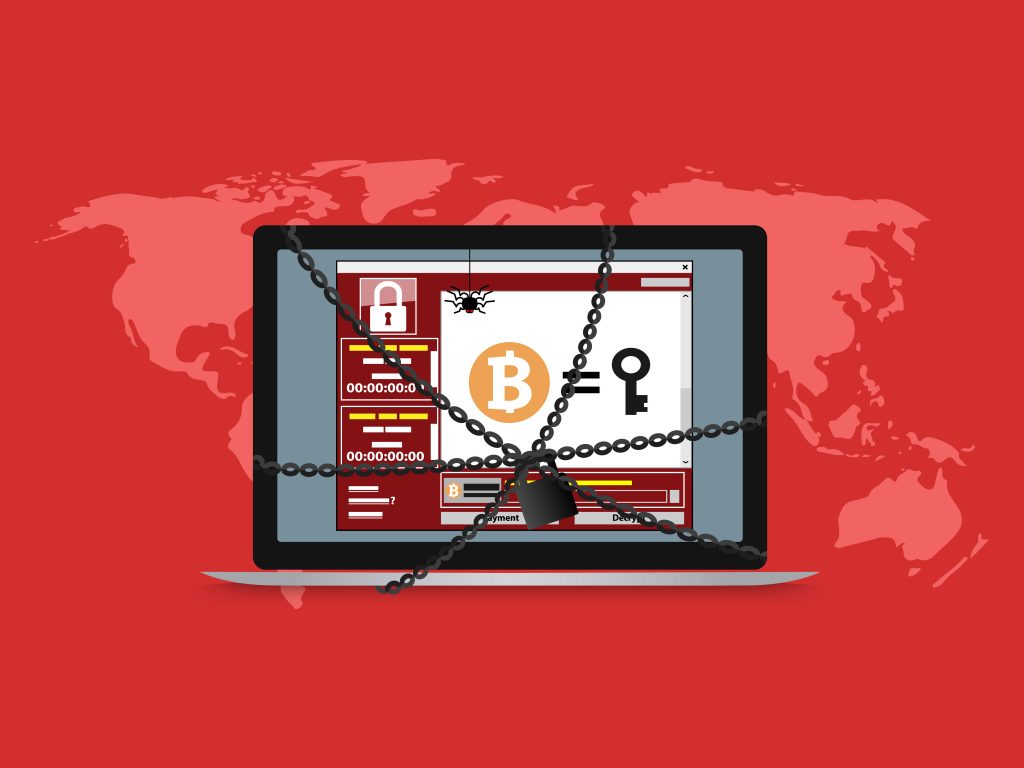
The document states that the attacks have been taking place since March 11. The scale of the attack is not currently known, however a number of hard drives belonging to government officials have been infected.
Hackers Suspected to Have North Korean Affiliation
An anonymous government official has reportedly indicated that he received a notice warning him of the virus, adding that he believes all government departments in China have been issued the warning.
The official stated that he often receives warning notices pertaining to potential cyber attacks, but believes this is the first instance in which the Chinese state has been targeted by hackers demanding ransom in the form of cryptocurrency.
Although the identity and origin of the hackers has yet to be confirmed, one of the malicious emails was sent from the name of “Min, Gap Ryong,” a Korean name that suggests possible affiliation with North Korea.
Do you think that the hackers targeting Chinese government emails with ransom are likely to be affiliated with North Korea? Share your thoughts in the comments section below!
Images courtesy of Shutterstock
At Bitcoin.com there’s a bunch of free helpful services. For instance, have you seen our Tools page? You can even lookup the exchange rate for a transaction in the past. Or calculate the value of your current holdings. Or create a paper wallet. And much more.
The post Chinese Government Officials Targeted With Ransomware, North Korea Suspected appeared first on Bitcoin News.
via Samuel Haig
Tel Aviv Court Gives Moshe Hogeg 30 Days to Settle $4M Lawsuit

Moshe Hogeg, the co-founder and chairman of venture capital investment fund Singulariteam, and the alleged head of Stox Technologies, has been given 30 days to settle with a Chinese investor. The disgruntled investor has brought a 17 million Israeli new shekels (approximately $4.23 million) lawsuit against Hogeg for allegedly misappropriating several million dollars worth of funds raised through the Floyd Mayweather-promoted Stox initial coin offering (ICO).
Also Read: In the Daily: Exchange to List STOs, Crypto Tax Tool for Accountants, Coinbase Updates
Sirin Labs CEO Given 30 Days to Settle Lawsuit Alleging Misappropriation of Funds Raised via Stox ICO
Tel Aviv District Court judge Michal Amit-Anisman has given Moshe Hogeg 30 days to reach a compromise with Huwan Hugh, a Chinese investor who filed a multi-million dollar lawsuit against Hogeg in January of this year.
The lawsuit was also brought against the former Singulariteam chief financial officer (CFO) and current Saga Foundation CFO Yaron Shalem and the Stox Technologies company. The complaint alleges that Hogeg intentionally misrepresented how the funds raised through the Stox ICO would be used and distributed.

Moshe Hogeg is also the chief executive officer of cryptocurrency smartphone startup Sirin Labs and owner of the Beitar Jerusalem soccer club.
Judge Recommends Involvement of Third-Party Mediator
According to local media outlet Globes, judge Amit-Anisman brought the parties to the temporary agreement after three hours of discussion, specifying that “requests will not be made at this time,” rather “the parties will come directly or by a third party who is a mediator.” The judge recommended Meira Harel as a possible mediator, describing Harel as “an expert in the field of cryptographic currencies.”
Globes also reported that “it was further agreed that after a period of 30 days or a longer period, insofar as the parties request an agreement to extend the 30 days granted to them, each party will be entitled to petition the court with a request to make a decision on the pending applications.”

Emphasizing the challenges of adjudicating cases involving cryptocurrency amid the current global climate of opaque regulatory apparatus pertaining to crypto assets, Judge Amit-Anisman noted that the case “raises serious questions that have not yet been answered, neither in Israel … nor by regulators in the world.”
Do you think that Moshe and Hugh will be able to reach a settlement in 30 days? Share your thoughts in the comments section below!
Images courtesy of Shutterstock
At Bitcoin.com there’s a bunch of free helpful services. For instance, have you seen our Tools page? You can even lookup the exchange rate for a transaction in the past. Or calculate the value of your current holdings. Or create a paper wallet. And much more.
The post Tel Aviv Court Gives Moshe Hogeg 30 Days to Settle $4M Lawsuit appeared first on Bitcoin News.
via Samuel Haig
Quoine Found Liable for Wrongfully Reversing BTC Trades in Singaporean First

In the first Singaporean legal dispute involving BTC, Singapore-registered cryptocurrency exchange Quoine has been found to have wrongfully reversed seven trades placed by market maker B2C2 during April 2017. The ruling has been made following four months of proceedings.
Also Read: Thailand Approves Country’s First ICO Portal
Quoine Held Liable for Reversing Trades Selling 309 ETH Priced at 10 BTC Each
The Singapore International Commercial Court has found Quoine to be liable for a breach of contract and breach of trust for unilaterally reversing orders placed nearly two years ago by United Kingdom-based market maker B2C2.
On April 19, 2017, B2C2 placed 12,617 ETH/BTC orders, only 15 of which were filled, including the seven orders that are the subject of the dispute with Quoine. The disputed trades comprised orders to sell 309.25 ETH for BTC at between 9.99999 BTC and 10 BTC each. With the exception of the disputed trades, all other orders were executed at a price of approximately 0.04 BTC per ETH. On April 20, 2017, the trades were reversed, triggering B2C2 to take legal action against Quoine. The trial sought the recovery of roughly 3,085 BTC.

While the Singapore International Commercial Court has ruled in favor of B2C2, Judge Simon Thorley did not order Quoine to transfer the 3,085 BTC in question due to bitcoin currently being priced “substantially higher” than in April 2017.
The judge stated: “When the bitcoin were originally credited to its account, the B2C2 software immediately began to hedge the proceeds by selling bitcoin … Before the trades were reversed, B2C2’s systems had sold slightly under one-third of proceeds on nine different exchanges,” adding that ordering repayment to B2C2 “would cause substantial hardship to Quoine which any potential difficulty in assessing damages does not outweigh.”
Quoine Argues B2C2’s Trades Were Executed as Result of Technical Glitch
According to the Supreme Court of Singapore, Quoine claimed that after 23:30:00 on April 19, 2017, its platform experienced a “technical glitch” causing “the quoter program to cease working” and as such all orders on ETH/BTC “ceased to be available and no true market price was available.”
Between 23:52:52 and 23:54:33 on April 19, 2017, while the quoter program was not functioning, B2C2 placed the seven disputed trades priced approximately 250 times higher than the then-average price of ETH.

As a result of the quoter program being unable to “access all the data necessary to establish a true market price, it sought to do so by reference to … the data arising out of the plaintiff’s seven orders,” causing leveraged traders’ positions to be liquidated. With no other orders available, the program matched the liquidation orders with the plaintiff’s seven orders, resulting in nearly 3092.52 BTC being credited to B2C2’s account in exchange for 309.25 ETH.
Do you agree with the judge’s ruling? Tell us why in the comments section below!
Images courtesy of Shutterstock
At Bitcoin.com there’s a bunch of free helpful services. For instance, have you seen our Tools page? You can even lookup the exchange rate for a transaction in the past. Or calculate the value of your current holdings. Or create a paper wallet. And much more.
The post Quoine Found Liable for Wrongfully Reversing BTC Trades in Singaporean First appeared first on Bitcoin News.
via Samuel Haig
Late Quadrigacx CEO Used Personal Funds to Fulfill Withdrawals

Jennifer Robertson, the widow of late Quadrigacx chief executive officer Gerry Cotten, has revealed that customer withdrawals were processed using personal funds in a statement published yesterday. The document also indicates that law firm Stewart McKelvey has withdrawn from representing Quadrigacx during the Companies’ Creditors Arrangement Act process due to “potential” conflicts of interest.
Also Read: Markets Update: BTC Longs Hit New Low for 2019, ETH Longs Test ATH
Quadrigacx Withdrawals Processed Using Personal Funds During 2018
The widow of Quadrigacx’s late CEO published a statement on March 13 that provides an update on the legal proceedings surrounding the exchange.
The statement reveals that Gerry Cotten was using personal funds to fulfill customer withdrawals during 2018 while the exchange’s funds held with the Canadian Imperial Bank of Commerce continued to be frozen.

“While I had no direct knowledge of how Gerry operated the business, he told me that he had been putting his own money back into QCX to fund user withdrawals in 2018 while the CIBC money remained frozen,” she said, adding “I believe Gerry had the best interests of the business in mind, and cared for his customers.”
Robertson states that following Gerry Cotten’s death, she arranged for the Companies’ Creditors Arrangement Act (CCAA) process to begin by “providing the initial funding and agreeing to act as a director of [Quadrigacx].”
Stewart McKelvey Withdraws From Representing Quadrigacx During CCAA Process
The document also states that Roberston has been advised by Stewart McKelvey that the law firm has withdrawn from representing Quadrigacx during the CCAA process “in light of concerns regarding a potential conflict of interest.”

Robertson closes the document by stating her intention to “continue to support the process and to ensure a fair and equitable resolution is obtained.”
Are you surprised by the revelation that Quadrigacx’s late CEO used personal funds to fulfill withdrawals during 2019? Share your thoughts in the comments section below!
Images courtesy of Shutterstock
At Bitcoin.com there’s a bunch of free helpful services. For instance, have you seen our Tools page? You can even lookup the exchange rate for a transaction in the past. Or calculate the value of your current holdings. Or create a paper wallet. And much more.
The post Late Quadrigacx CEO Used Personal Funds to Fulfill Withdrawals appeared first on Bitcoin News.
via Samuel Haig
Tuesday, March 12, 2019
Auscoin Exchange Suspended After Arrest of Sam Karagiozis

27-year-old Sam Karagiozis has been named as the individual arrested on March 7 following raids carried out by the Australian Transactions Reports and Analysis Centre (AUSTRAC) and Australian Federal Police. The arrest resulted in the suspension of the licenses of two cryptocurrency exchanges that Karagiozis is involved with including his controversial nationwide cryptocurrency ATM network, Auscoin.
Also Read: Malta Appoints Cybersecurity Firm Ciphertrace to Monitor Crypto Transactions
Auscoin Suspended Following Arrest of Founder
Karagiozis was arrested last week following a series of raids conducted by Australian authorities in the Victorian suburb of Bulleen.
Karagiozis has been charged with possessing, importing, and trafficking roughly 30 kilograms of controlled substances, including MDMA, methamphetamine, cocaine, and ketamine via darknet marketplaces. Police allege that Karagiozis played a “key role” in directing the operations of an illegal narcotics syndicate.

Authorities have also revealed that one of the cryptocurrency exchanges suspended following Karagiozis’ arrest is Auscoin. It has been reported that Karagiozis invested $15 million into Auscoin, which sought to roll out Australia’s first nationwide ATM network.
Karagiozis a Fixture in Australian Media
Self-described “serial entrepreneur” Sam Karagiozis has received frequent coverage in the Australian media in recent years. Last month, Auscoin was the subject of a report aired on prime time television that described the company’s purported plan to install 1,200 bitcoin ATMs as an “$80 million scam” built on “grandiose promises.” At the time, Auscoin had installed four machines in Australia, with purported plans to finance the 1,200 terminals through an initial coin offering.
During January of this year, media reported that Karagiozis had incurred a 3 million Australian dollar (approximately USD $2.13 million) loss during the bear trend. Karagiozis also asserted that Auscoin had a turnover of $500,000 Australian dollars each week.

In January 2018, the Auscoin founder had urged investors to buy BTC, asserting that “The first quarter of [2018] is probably the last opportunity people are ever going to get to buy Bitcoin for under AUD$20,000 a coin.” In December 2017, Australian tennis star Nick Kyrgios indicated that he purchased BTC from Karagiozis.
What is your reaction to the founder of Auscoin’s arrest? Share your thoughts in the comments section below.
Images courtesy of Shutterstock, Twitter
At Bitcoin.com there’s a bunch of free helpful services. For instance, have you seen our Tools page? You can even lookup the exchange rate for a transaction in the past. Or calculate the value of your current holdings. Or create a paper wallet. And much more.
The post Auscoin Exchange Suspended After Arrest of Sam Karagiozis appeared first on Bitcoin News.
via Samuel Haig
73-Year-Old Investor Marc Faber Makes First Ever BTC Purchase

In a recent interview with Cash, renowned stock market analyst and investor Marc Faber revealed that he purchased BTC for the first time during late February. The 73-year-old noted that a conversation with the chief executive officer of Xapo, Wences Casares, sealed the deal.
Also Read: Up & Down: Large Volume for Today’s Gainers, ENJ and COSM Among Losers
73-Year-Old Marc Faber Purchases Bitcoin for First Time
During a recent interview, former cryptocurrency skeptic Marc Faber revealed that he recently purchased BTC for the first time in his life. The Swiss investor gained fame after predicting the 1987 stock market crash, and is the director of Marc Faber Ltd.
On March 8, Faber stated that he “bought bitcoin for the first time ten days ago.” Faber sought to justify his purchase by arguing that BTC “looks better” from a technical perspective after having crashed from nearly $20,000 at the end of 2017 to trade in the $3,000 range.
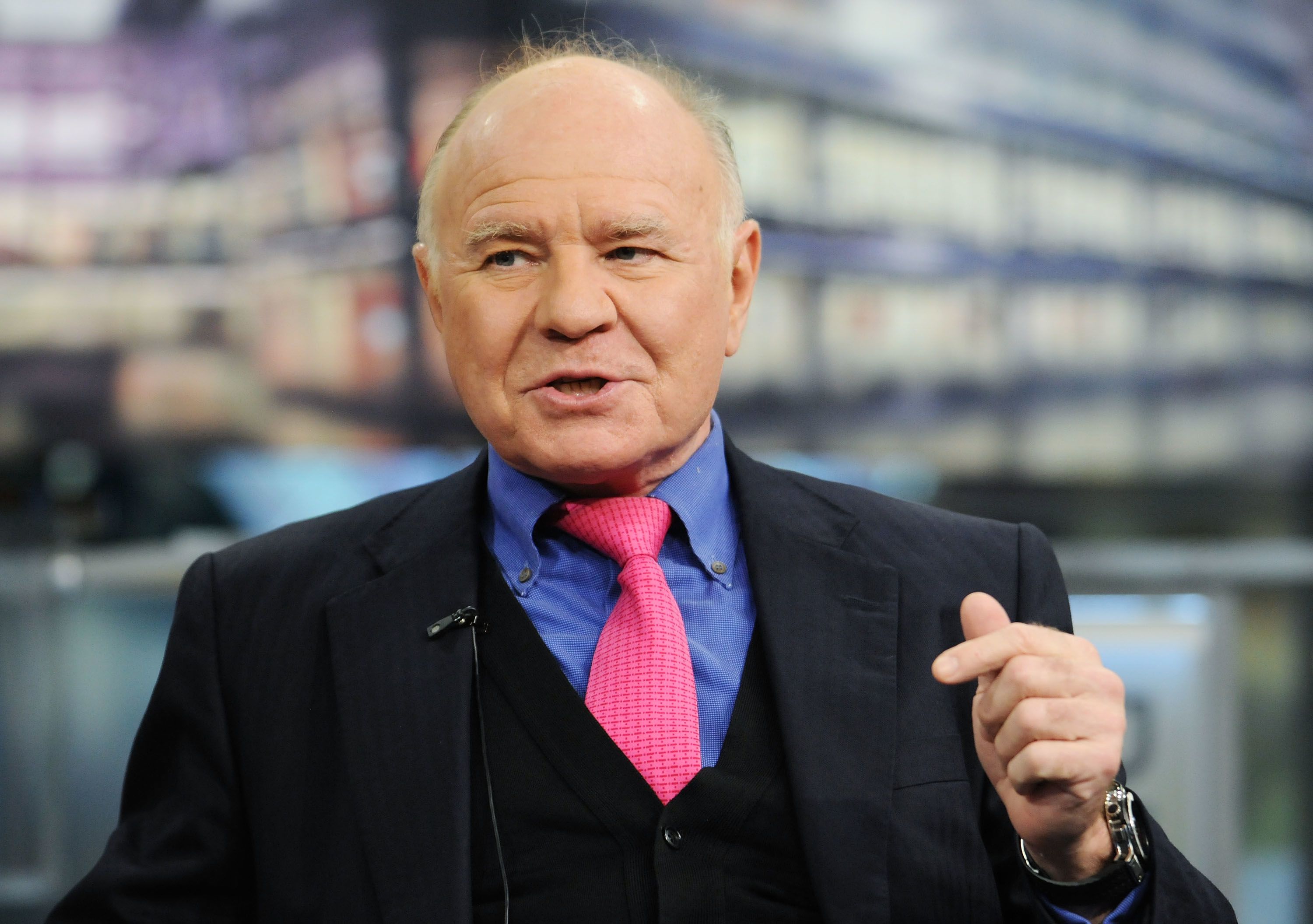
Faber stated that a one-hour discussion with Xapo CEO and Paypal board member Wences Casares influenced his recent decision to purchase his first BTC, as had the desire to learn more about cryptocurrency.
The investor added that the younger readers of his ‘Gloom Boom & Doom Report’ newsletter had also persistently encouraged him to buy BTC in recent years.
Bitcoin May Become ‘Standard for Money Transfers’
The septuagenarian expressed cautious optimism regarding the prospect of widespread adoption of virtual currencies. “It’s not certain, but possible, that Bitcoin will be the standard for money transfers,” Faber said.

The investor added that prospective bitcoin investors should only invest as much capital as they are prepared to lose. Faber also asserted that while “impressive,” the current stock market recovery is unlikely to last.
Do you think that Marc Faber has chosen the right time to purchase his first bitcoin? Share your thoughts in the comments section below!
Images courtesy of Shutterstock, CNBC
At Bitcoin.com there’s a bunch of free helpful services. For instance, have you seen our Tools page? You can even lookup the exchange rate for a transaction in the past. Or calculate the value of your current holdings. Or create a paper wallet. And much more.
The post 73-Year-Old Investor Marc Faber Makes First Ever BTC Purchase appeared first on Bitcoin News.
via Samuel Haig