Showing posts with label OP-ED. Show all posts

Wednesday, September 11, 2019

Connecting Cash to the Internet Using Stablecoins

Most often overlooked in the fintech space is the world’s most scalable and private payment system: cash. It is used in every country around the world and despite its much exaggerated demise, according to the G4S Global Cash Report 2018, cash circulation has risen to 9.6% of GDP across developed and emerging market countries since 2000, up from 7%. Cash is still king for now, despite concerted attempts to usurp it.

Also read: David Chaum’s Elixxir Invites Smartphone Users to Test Private Messaging

The War on Cash Is in Full Swing

Cash settlements are direct and final, with particular usage for smaller value transactions accounting for 60-80%, as per the same GS4 report. Overall it is an essential pillar of civilization as cash is the primary mechanism by which the world conducts payments and trade. Were cash to disappear suddenly, the economy of various countries would be severely affected.

Connecting Cash to the Internet Using Stablecoins

Having recently attended the ESTA forum 2019 in Vienna, an annual event for Europe’s cash management industry, I was able to get a grasp on the situation:

  • The War on Cash is in full swing and many cash management providers don’t know how to react to this development. A recent IMF blog post comes to mind that explains how cash can be removed from the economy by charging a 4% fee to convert between cash and bank money.

  • Central banks want their interest rates to go negative and in some countries in Europe they are already negative. Cash is an effective escape from this and therefore central banks want to eliminate cash.

  • Nobody seems interested in defending cash from the larger powers that be in commercial banks and central banks, both of whom would prefer everything to be digital so that they can exert more control.

In Emerging Markets, Digital Services Need Cash

While negative interest rates and cashless economies are a talking subject in many developed countries, it’s a pipe dream for most of the world’s population. Only about 30 of the world’s 180 currencies are internationally floated and of them only about a third are effectively used for cross border trade.

Connecting Cash to the Internet Using Stablecoins

For the many billions of people in the world, cash will continue to play a key role for the foreseeable future as will positive interest rates and higher inflation.

In fact, the adoption of digital services and products in emerging markets relies on the ability to move between cash and digital money. Many people may tout the effectiveness of mobile money in Africa and how that can be a path forward for the developing world, but in order to get a mobile money balance you need to visit an agent who will top it up. Therefore, every unit of currency in the mobile money system is backed by an equivalent amount of cash.

The reality on the ground is that mobile money is not replacing cash, but instead cash is a necessity for mobile money services to take off in the first place.

Stablecoins Provide the Bridge Between Cash and Digital

Cryptocurrency has an important part to play in connecting cash-based markets to the digital economy. In particular, stablecoins are perfectly suited for this as a type of cryptocurrency where the value is pegged to the value of another more stable asset, like a national currency.

The mechanism for maintaining the peg can be classified in two ways: trusted and trustless. When a stablecoin is trusted, it means a central authority is in charge of the reserves and maintaining the peg (think: True USD, USD Tether, Gemini Dollar). Trustless stablecoins on the other hand are managed by smart contracts which control the reserves and maintain the peg (think: Makerdao, Bitusd, Stable.php).

Connecting Cash to the Internet Using Stablecoins

While most stablecoins are trusted and pegged to the US Dollar, we are increasingly seeing new projects branching out to include stablecoins for exotic currencies such as Indonesian rupiah, Philippine peso, Brazilian real, Vietnamese dong, South African rand and potentially many more.

This is where trustless stablecoins especially get to shine, as the creation of, say, a trustless Philippine peso stablecoin only requires crypto infrastructure – circumventing the traditional banking system – which makes it a lot easier for companies to enter that market.

Why Stablecoins Matter

Stablecoins are important for digital services to take off in emerging markets because they simplify the process of converting cash to digital money, without having to factor in the volatility of an asset like bitcoin. As a form of digital cash, stablecoins can then be integrated with any of the digital services provided by companies in that market.

Okra Solar serves as a great example of how stablecoins can be used to connect cash-based markets to a digital service: in the Philippines, residents can get their power from the solar grid provided by Okra and pay for their bills with stable.php, a stablecoin they can buy locally with cash. As an extra benefit, while this stablecoin was initially acquired to pay for solar electricity, those same people effectively now also have a way to access the wider world of cryptocurrencies using cash – especially relevant in markets with weaker currencies.

As more digital services are aiming for customers in emerging markets, stablecoins will become increasingly important as the connecting thread between cash and the digital economy. All it takes is a cash in, cash out network designed to make crypto accessible to everyone.

Connecting Cash to the Internet Using Stablecoins

George Harrap is the CEO & Co-Founder of Bitspark. Having started in early 2011, George is an early adopter of Bitcoin and blockchain technology. In 2014, he co-founded Bitspark with the intention of bringing greater financial access to everyone. Through a network of cash points, mobile app and DEX, Bitspark uses cryptocurrencies to form the bridge between the old and new worlds of finance.


Op-ed disclaimer: This is an Op-ed article. The opinions expressed in this article are the author’s own. Bitcoin.com is not responsible for or liable for any content, accuracy or quality within the Op-ed article. Readers should do their own due diligence before taking any actions related to the content. Bitcoin.com is not responsible, directly or indirectly, for any damage or loss caused or alleged to be caused by or in connection with the use of or reliance on any information in this Op-ed article.


Images courtesy of Shutterstock.


Did you know you can verify any unconfirmed Bitcoin transaction with our Bitcoin Block Explorer tool? Simply complete a Bitcoin address search to view it on the blockchain. Plus, visit our Bitcoin Charts to see what’s happening in the industry.

The post Connecting Cash to the Internet Using Stablecoins appeared first on Bitcoin News.


via OP-ED

Thursday, September 5, 2019

3-Day Japan Bitcoin Cash Survival Challenge

Among cryptocurrency enthusiasts, Tokyo is often mentioned as one of the most crypto-friendly cities in the world. Recently, it has especially become known for Bitcoin Cash (BCH) adoption, which is a cryptocurrency that has the characteristics of the original Bitcoin (BTC), as intended by the mysterious creator Satoshi Nakamoto. Bitcoin Cash is meant to be used as cash for daily transactions, while Bitcoin (BTC) is not as useful as before with its high transaction fees, etc.

Also read: 5 Key Concepts from Day One at Bitcoin Cash City

Three Days Subsisting on BCH

The Bitcoin Cash community in Tokyo is growing. I am an organizer of the Bitcoin Cash Meetup which currently has 1,500+ members. We meet up every Wednesday in Tokyo. I am also a Community Manager at Bitcoin.com and Satoshi’s Angels helping with the community’s growth and adoption of Bitcoin Cash.

Tokyo Survival Channel challenged me to survive 24 hours in Tokyo with only Bitcoin Cash (BCH) — no fiat currency. This was their rule:

All of the things you buy must be paid with BCH, or BCH converted into some kind of e-money. No “fiat” (=Japanese yen) can be used during the challenge. Have a normal city life in Tokyo.

I told them that it would probably be easy to do this, so they upped the challenge to 3 days/72 hours instead. I wasn’t sure if I could really get through 3 whole days without using any fiat currency, but I decided to take the challenge anyway.

Summary of my challenge

3-Day Japan Bitcoin Cash Survival Challenge
Crypto Survival Challenge: Day 1

Monday, August 26th

I didn’t want to mistakenly use fiat (Japanese yen), because it’s easy to do, so I decided to hide my fiat and credit cards in the closet, so I couldn’t touch them. I loaded my Bitcoin.com mobile wallet with 1 BCH (about 32,000 yen worth). My wallet was very lean (in a good way)! I started to feel a bit nervous unexpectedly thinking to myself “Can I really survive without fiat for 3 whole days?”

Lunch at Dot RAW

I started with lunch. I was in the mood for something healthy, so I went to Dot RAW to have their all-you-can-eat salad, soup and deli (3 kinds of dishes) for 1,100 yen. They also have smoothies so I ordered a tropical green smoothie for 800 yen, too. Maybe that was too many vegetables. I paid with BCH from my mobile BCH wallet directly.

Cost: 1,900 yen

Coffee at Gluten-Free T’s Kitchen

Gluten-Free T’s Kitchen across from Tokyo Midtown is popular for visitors who are looking for gluten-free food in Japan. I feel vegetarian/vegan or gluten-free restaurants are still hard to find in Japan. This cafe also makes desserts that taste so good you can’t tell that they’re gluten-free.

Cost: 500 yen

Chocolate snack at Family Mart

You’re probably thinking, “Wait, I can use cryptocurrency at a convenience store?”

The answer is, yes you can! But indirectly. This is how I did it:

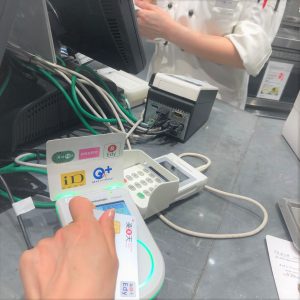
A Japanese exchange Decurret has just released a cool service that lets users charge some of the most popular e-money cards/wallets such as Rakuten Edy, Nanaco, and Au wallet with certain cryptocurrencies (BCH, BTC, LTC, and XRP). Here is their press release for the service.

Being able to top-up these popular e-money cards means you can shop at 400,000+ shops for Edy, 490,000 + shops for Nanaco, and Au wallet can be used for places that accept Visa or Mastercard, so that’s a lot of shops. Opening an account with an exchange takes some time, so asking a friend to buy you “gift points” might be another easy option. Edy and Nanaco are charged with gift points.

Cost: 108 yen

Printing at 7 Eleven

I had to print something, so I went to 7-Eleven and used the printer with a Nanaco card which was topped-up using BCH through Decurret. Being able to use a printer with cryptocurrency even indirectly was a very cool experience for me.

Cost: 660 yen

A Quick Drink at MEZZO

You think night clubbing or going to a bar in Tokyo is too expensive? Mezzo is located right by Roppongi Crossing, with a great atmosphere and professional, friendly staff. Their drinks and most of the food are 500 yen (less than 5 U.S. dollars). They accept BCH directly from your BCH wallets.

Cost: 500 yen

Bitcoin Cash IPA and Pizza for Dinner at Two Dogs Taproom

Two Dogs Taproom has been a long-time Bitcoin supporter going back to 2013. They accept BCH and BTC now, directly from your Bitcoin wallets.

They also make Bitcoin Cash branded IPA, which is their best seller. Don’t forget to try Coinspice pizza, which is sponsored by crypto news outlet. If you pay with BCH, you get Bitcoin Cash IPA for a happy-hour price. Even though they accept Bitcoin (BTC) as well, I chose to use BCH because it’s much cheaper to use. When I paid the bill with BCH, I spent 0.08 yen which is less than one-tenth of a penny, but if I used BTC, I would have paid 100–200 yen on top of my bill. Two Dogs’ owner told me that nobody really pays with BTC anymore because of its high fees.

Tipping in Japan isn’t common, but it’s fun to tip staff in BCH, so I added another 300 yen on top of my bill.

Cost with tip: 3,350 yen

A Drink at Jokers

The night club Jokers is about 20 steps away from Two Dogs Taproom. They accept BCH directly from your BCH wallets.

Cost: 1,000 yen

Late Night Curry at CoCo ICHIBANYA (Spicy level 4 🔥🔥🔥🔥)

It was almost 1:30 a.m. and I was getting hungry again… In the late hours of the night, the choices are more limited for a good meal if you want to buy with bitcoin cash (BCH) directly, so I decided to use one of those cards that I topped up with BCH using Decurrent. I ordered a takeout “Summer Chicken Curry” from CoCo Ichibanya with Edy.

Cost: 985 yen

Day 1 Recap

In the morning I was a bit worried if I would be able to survive with no fiat for 72 hours, but by the end of the day, I realized there are so many places that I can spend cryptocurrency directly and indirectly.

Crypto Survival Challenge: Day 2

Tuesday, August 27

I was still full from the late night curry from yesterday, so I skipped breakfast.

Iced Coffee from Family Mart

I need some coffee in the morning, so I went to Family Mart and paid for an iced coffee with Edy. Nice and easy!

Cost: 100 yen

Lunch at Gusto

I had lunch with my non-crypto job colleagues.

I told them that I couldn’t use fiat, so we decided to go somewhere that accepts Edy or Nanaco. They think I’m a weird Bitcoin nerd who can’t stop talking about Bitcoin all the time, but they’re nice enough to bear with me. We decided to go to Gusto, which is a family restaurant chain in Japan that accepts Edy.

When we were about to order food, however, the waiter told me they only accepted Edy through a QR code. Since I have an iPhone I couldn’t install the Edy app, and Gusto didn’t accept the Edy card. I challenged this situation by convincing one of my colleagues to accept BCH for me so she could pay on my behalf with JPY. The peer-to-peer exchange of Bitcoin was made in a few seconds. I had a hamburger and salad.

Cost: 1,023 yen

Hot Coffee from Natural Lawson

Lawson accepts Edy.

I love Natural Lawson because they have so many kinds of high-quality products including organic wine, coffee, snacks, vegetables, etc., in addition to daily essentials all convenience stores have. They even sell organic natto.

Cost: 100 yen

Cake at Dean & Deluca – 583 yen

After work, I was craving something sweet. I stopped by Dean & Deluca at Tokyo Midtown for a delicious looking piece of cake. They accepted Edy.

Note: If you want to exclusively spend BCH for desserts, places I mentioned before like Gluten Free T’s Kitchen and Dot RAW serve desserts as well.

Cost: 583 yen

3 pairs of socks at UNIQLO

Time for a little shopping.

I went to UNIQLO and purchased 3 pairs of socks. They accept Edy!

Cost: 1,069 yen

Passed by Matsuya

Hmm, I guess they don’t accept Edy or Nanaco…

Bottled Water from Mini Stop

I was thirsty, so bought a bottle of water from Mini Stop, which is another chain of convenience stores, with Edy.

Cost: 91 yen

Eye Drops from Drug Store Matsumoto Kiyoshi

I remembered that I needed to buy eye drops, so I bought a bottle at Matsumoto Kiyoshi, which is probably the largest drug store chain in Japan. They accept Edy.

Side Note: I heard Japanese eye-drops are popular souvenirs among some people.

Cost: 198 yen

Train Fare – 195 yen x 2 = 390 yen

So here came the big challenge — how could I pay for transportation with cryptocurrency?

Decurret’s president hinted this year that they’re thinking about adding crypto for charging Suica, which is one of the two major digital money cards used for transportation issued by JR East. Unfortunately, it hasn’t happened yet, so what to do? I couldn’t think of an easy way to get around this challenge. Asking a random stranger to purchase a ticket and I will pay them BCH did not sound like an easy or fun thing to do. I asked a friend to buy and charge PASMO for me after sending him 4,000 yen worth BCH. I have not touched fiat so far.

Spanish Dinner at La Cocina De Gaston in Nihonbashi – 3,000 yen

Had a nice red wine, delicious tapas plate, and peppermint tea and paella for dinner. They accept BCH directly from your BCH wallet.

Book at Book 1st

I bought a Japanese book about blockchain technology at Book 1st using a Nanaco card!

Side note: “Digital Gold” by Nathaniel Popper is a recommended book if you want to hear an interesting history of Bitcoin.

Cost: 1,998 yen

Don Quijote

Don Quijote is like Walmart. They have all kinds of things from daily consumables to party items, electronics, etc. I often recommend this place for souvenir shopping for my foreign friends who are visiting Japan. I bought a green tea flavored chocolate snack.

They accept Rakuten Edy.

Cost: 149 yen

Frozen Strawberry Margarita at Wall Street House

Wall Street House is located next to Two Dogs Taproom and Jokers in Roppongi’s “BCH District,” where there are about 6 BCH-friendly shops on one block.

Frozen Strawberry Margarita at Wall Street House

The bar is great for a quick drink after dinner. From the counter table, you can enjoy the busy streets of Roppongi while you enjoy your cocktail.

They also offer 200-yen discount if you pay for a drink with BCH.

Cost with discount: 1,000 yen

Window Shopping at Luxury Watch and Jewelry YUKIZAKI – 0 yen

Yukizaki, a luxury watch and jewelry company that has more than 15 shops in Japan, accepts BCH as payment. While it’s too much money for this challenge, it would be hard to pass up if I needed a new watch.

Crypto Survival Challenge: Day 3

Wednesday, August 28th

I worked from home in the morning, and I didn’t want to leave the house but I was hungry. It would have been nice if I could use crypto to get food delivered with services like Uber Eats. This is something that is definitely missing.

Lunch at Downtown B’s Indian Kitchen – 1,000 yen

This pop looking place is actually an authentic Indian curry restaurant. Downtown B’s uses good ingredients to make delicate-tasting curry, which is not spicy.

I ordered a “Grill Lunch Set” that comes with tandoori chicken and a drink.

Cost: 1,000 yen

Taxi from Roppongi to Ebisu

I was running late for my hair cut appointment, so I decided to take a taxi. They accepted Edy.
Taking Japanese Taxi with BCH (Eddy)

Note: Some taxis only take cash (fiat) so when you get in be sure to ask them what they accept.

Cost: 1,850 yen

Haircut and Treatment at Hair Salon Mint

I was running late for my appointment at the hair salon Mint, which is one of the few salons that accept BCH directly.

The friendly owner and staff gave me a very warm welcome. Their salon has a spa-style room where they give a variety of hair treatment services. Just hearing about the spa menu made me feel relaxed.

After a haircut, they gave me an herbal scalp cleansing and moisturizing hair treatment followed by a neck and shoulder massage — I was completely relaxed. I’d like to come back here for more spa treatments soon. The total bill was 10,220 yen but I got 20% referral discount.

Cost with referral discount: 8,170 yen

Drinks at Bar BASHI in Ebisu

BASHI is a nice cozy bar that started accepting BCH in August 2019. The Bitcoin Cash Meetup that I help coordinate met on day three of my challenge. We welcomed 20 people and discussed topics ranging from basic information on Bitcoin Cash to recent progress on BCH development, etc. It’s a very friendly community in Tokyo, so please join us if you love Bitcoin!

Cost: 2,900 yen

Drinks at Sheesha Bar No.5

After lots of talking and laughing, I headed to Sheesha bar No.5 with a friend.

We ordered 2 drinks and one sheesha (guava and strawberry flavor). This place accepts BCH directly.

Karaoke is included. They have a great view from the windows. Very Tokyo-ish. There’s also 500 yen per person table charge.

Cost (for 2): 5,500 yen

Cookies from Daily Yamazaki (Convenience Store)

The 72-hour challenge was almost over… I celebrated it with a small bag of chocolate-covered cookies (Takenoko no sato) from the convenience store Daily Yamazaki.

Cost: 140 yen

Can you Enjoy Tokyo with Only Bitcoin Cash?

I’d say living on bitcoin cash for three days is doable, and there are a lot of ways you can use bitcoin cash in Tokyo directly and indirectly. You can easily find restaurants, nightclubs, and bars (some have karaoke inside) that accept BCH directly, but you will have a hard time using transportation, postal and delivery services, etc. with cryptocurrency.

Also, I’d like to talk about the “hidden costs”. As much as these e-money cards are useful, paying with cryptocurrencies directly instead of going through these services is much better in the bigger picture. If you send BCH directly to a shop, for example, there is almost no fee for you or the shop, while if you pay with a credit card or e-money card, shops are charged 3–5% for the payment service even if it’s free for you to use those services. And the irony is that most shops reflect this fee in the product prices so that they don’t loose money, which means us consumers are indirectly “paying the price” for these expensive payment service fees. There is a reason why cost-efficient businesses like Saizeria (family restaurant) don’t accept e-money card payments.

Credit card services, e-money cards, or fiat are probably here to stay for longer than we think, and there are benefits from using those forms of money, too during the transition. There are many other merchants I wanted to introduce but three days was too short for that. You can find recommended shops that accept BCH directly here at Bitcoin.jp.

Enjoy Tokyo with Bitcoin Cash (BCH) and let us know your fun experience!

More Tips for Travelers

  • Opening an account with a Japanese crypto exchange locally is probably unrealistic. So if you need to change your BCH to cash (fiat/Japanese Yen), using services like Local Bitcoin as it does not require registration or ID may be helpful.
  • If you need more info about spending BCH in Japan, feel free to visit the local Tokyo meetup that’s held every Wednesday night. We’re sure you’ll find lots of useful information and make good connections about cryptocurrencies or Japanese culture from the participants.
  • If you are a foreigner visiting Japan and you’d like to use an e-money card with BCH, nanaco might be the easiest of all three. I recommend asking a friend to top it up for you beforehand if you live abroad. It takes a few days until you can receive Nanaco points.
  • If you are a ramen fan, there are two ramen shops (named Ramen Jinanbou) that are very good in Nogata that accept BCH directly. I highly recommend it.
    Don’t forget to check out Hatano Chiropractic, which is only 1–2 minutes away from Ramen Jinanbou.
  • I definitely recommend bringing fiat if you want to travel in the countryside.
    You will be shocked to find that some of the old shops and hotels do not even accept credit cards yet.

How to find stores and restaurants that accept Cryptocurrency:
Go to Marco Coino. They keep the most updated info about shops that accept Crypto payment.

This article was originally published by Akane Yokoo here.


Images credits: Akane Yokoo.


Did you know you can verify any unconfirmed Bitcoin transaction with our Bitcoin Block Explorer tool? Simply complete a Bitcoin address search to view it on the blockchain. Plus, visit our Bitcoin Charts to see what’s happening in the industry.

The post 3-Day Japan Bitcoin Cash Survival Challenge appeared first on Bitcoin News.


via OP-ED

Tuesday, June 18, 2019

Privacy Is Paramount: How KYC Makes Us All Less Free

Privacy Is Paramount: How KYC Makes Us All Less Free

KYC (Know Your Customer) policies and endless private data collection, coupled with force-backed, violent legislation compromise the utility and ethics of crypto trading. An uncompromising stance on user privacy is critically important to crypto traders and peer-to-peer transaction. It’s not about having nothing to hide, but about sound economics, human dignity, and creating a more peaceful, less violent, world.

Also read: Hayden Otto Discusses the Rise of North Queensland’s Bitcoin Cash Movement

Making Bathroom Breaks Illegal

“If you’ve done nothing wrong, you’ve got nothing to hide!” The oft-repeated trope is familiar to all, but really what lies behind it? It’s clear when I am using the bathroom, alone in my room writing, or just taking a breather to escape the madness of a particularly stressful day, that I have nothing to “hide” as such. I’ve done nothing wrong. And yet, privacy remains paramount to me. Force someone to surrender the precious stuff, and see how long they remain healthy. It won’t be long until they are resisting – breaking down emotionally, physically, and mentally. Privacy is a treasure trove where creation happens. Regeneration. And most importantly, it’s a basic and non-negotiable prerequisite to human dignity, anywhere and everywhere in the world.

With the advent of Bitcoin in 2009, new economic applications of privacy were made possible. Fed up with the coercive monetary status quo, Satoshi Nakamoto released a financial protocol enabling free and autonomous trade without a middleman or centralized authority overseeing people’s private business. Over 10 years later, the idea is now being pursued hotly by massive state-approved railroading campaigns. Centralized, pro-government exchanges seem to have missed the memo on sound econ and privacy. They don’t wish to let you trade without knowing nearly every damn thing about you, first. For all its perceived “security,” this approach denies the real utility and value of blockchain technology, and does so in breathtakingly draconian, Keynesian fashion.

Privacy Is Paramount: How KYC Makes Us All Less Free

Money of the Future: Internet 2.0

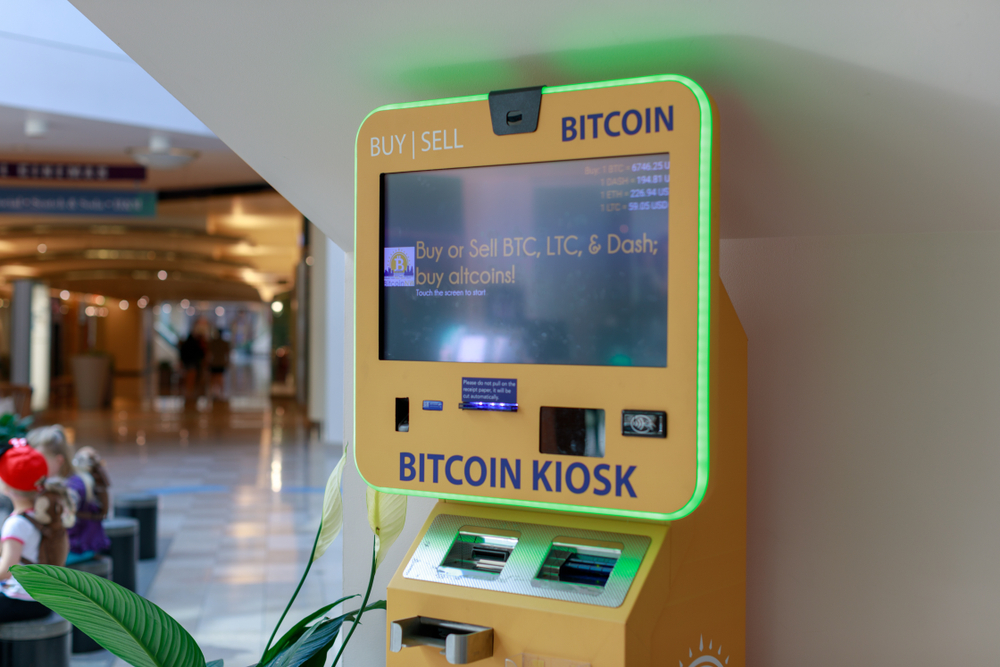
If you’ll suffer me a bit of personal reflection here. I’ll take you in my time machine to 2016, Tokyo. I was in the Roppongi district, heading to a small bar in the afternoon to make my second ever crypto-to-fiat transaction. I was newly jobless, and had been blogging on a blockchain-based social media site to scrape up some money in the interim. My wife wasn’t sure about all of this “crypto stuff” and was of course distraught about our financial situation. I had used the Bitcoin ATM at this place once before, so I swapped my STEEM for BTC, got on the train, and hit up the interesting little machine again, in the shadowy corner of the bar. I had avoided utilizing large exchanges up to this point for privacy reasons. The transaction was easy. I stuffed the money in an envelope and went home. Wife satisfied. Me, still alive to blog another day while I searched for a new “normie” job as a teacher. Without the ease and simplicity of exchange that day, I would not have been able to support myself and my family during a very difficult time, without jumping through all kinds of privacy-invasive hoops and long, unacceptable delays. A big win for crypto, the free market, and privacy.

Privacy Is Paramount: How KYC Makes Us All Less Free

Whoosh! Fast forward to the present day. Take a walk around any of the major wards in Tokyo, and you’ll no longer find many easy-to-use crypto ATMs. What you will find are giant billboards loudly plastered with greasy celebrities, advertising huge, state-regulated, privacy-compromising exchanges. What you will find is that most of the easy-to-use, privately owned ATMs have been ripped out, shut down, or discontinued. Why? Newly enacted coercive legislation, bureaucratic red tape, and licensing fees in Japan.

People like me, who rely on economic autonomy and the utility of crypto to exchange value for value are squeezed into an even tighter corner, it would seem. This trend is not endemic to Japan, either. From people being arrested for trading in Michigan, to localbitcoins.com recently shutting down cash trades, to insane and nearly-impossible-to-follow tax legislation on crypto all over the world, or the outright outlawing of various tokens and trading protocols, the agenda is clear: take the privacy, simplicity, and human dignity out of crypto, and with it, its whole utility and its capability to set people free and create a more private, peaceful world.

Privacy Is Paramount: How KYC Makes Us All Less Free

Free Trade Is a Choice

This dystopian world, devoid of digital privacy, may sound dark, but in my view that only makes the light of free trade shine brighter and bigger. The truth is, nothing can take away the utility of crypto. It’s a technology. Not a philosophy, not a “spiritual movement,” and not politics. Algorithms, mathematical formulas, blockchains and hashes don’t care who you are. Whether you’re president or peasant, or anything in between, crypto sees you just as the free market does—a trader wishing to exchange value for value. Nothing more. Nothing less. There is one magnificently critical “catch,” though: nothing can take away the utility of crypto, except the choice to not use it freely. Revolutionary fintech only retains utility for free market transactions (and this should go without saying) should we choose to use it freely. Regardless of risk or perceived lack thereof, the market isn’t going to “free market” for me. The tech isn’t going to trade for me. That’s on me, and that’s a wonderful thing.

The Price We Pay for Economic Freedom

Of course no one wants to become one of the many non-violent, peaceful traders the state has chosen to make examples of. Ross Ulbricht, Aaron Swartz, or that aforementioned guy in Michigan. We’ve got to be smart and shrewd. Encourage mass adoption and focus on the positive, to the end of these violent systems not becoming the focus, but becoming increasingly irrelevant. Life is inherently risk and opportunity laden. In a sense, these are one and the same. A “safety” which strips humans of their economic privacy and basic dignity is infinitely worse than a dignified, free choice in a perilous, yet opportunity-filled reality.

Privacy Is Paramount: How KYC Makes Us All Less Free

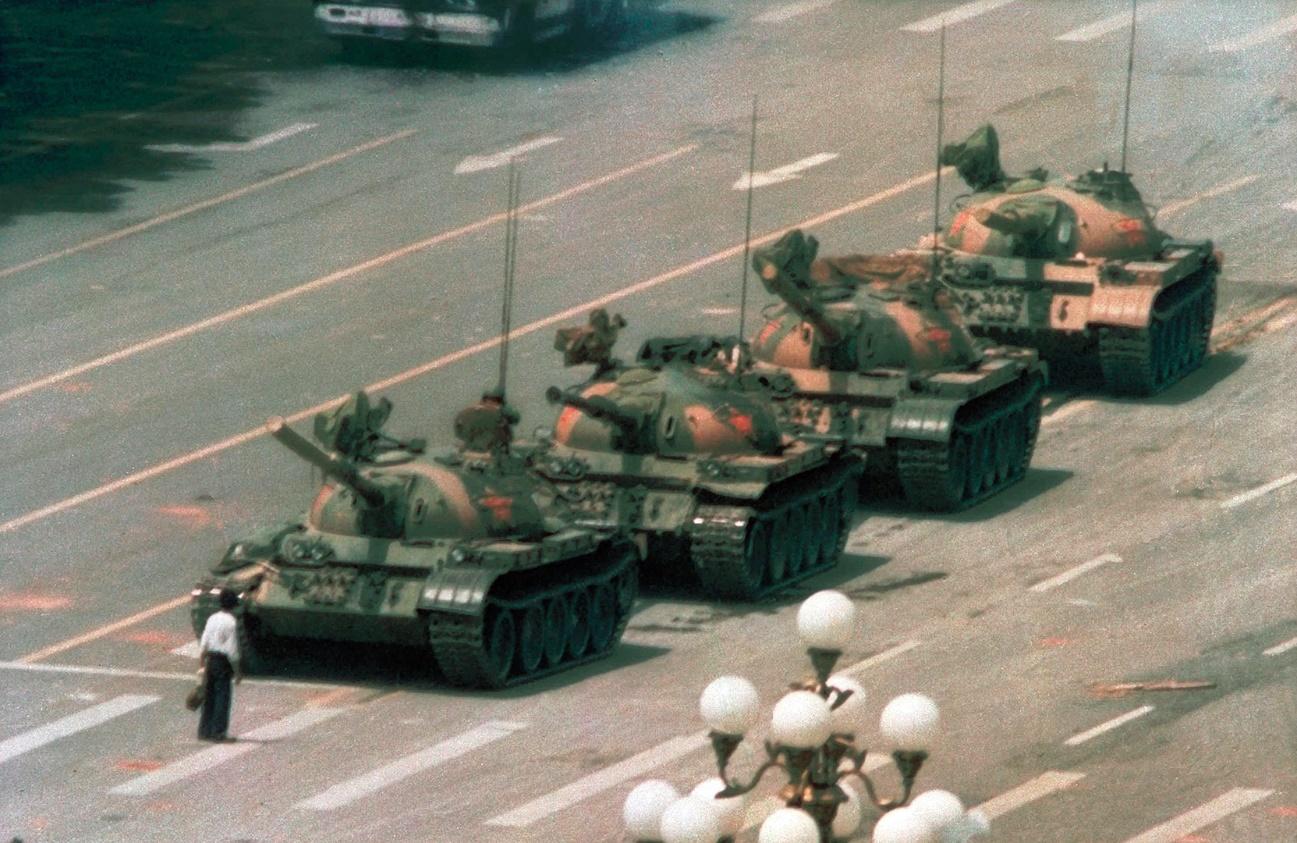
Tank Man Cometh

June 4, 2019. A KYC-free, peer-to-peer trading platform emerges, stepping out like a tiny Chinese man in front of a behemoth, rumbling fiat tank. Millions watch in expectant horror. “Who is he?” someone in the crowd implores desperately. The tank directly in front of him tries to go around, almost squashing him. He steps in front again. “What is he doing? Does he have a death wish!?” The fearful, shining eyes of the pulsing throng are engrossed on the scene, as the small businessman adjusts his grip on the bags in his left hand. The lid of the tank pops open. People gasp. A soldier, equal parts bewildered and angry peeks out of the portal and says something to the man. The tiny man begins to climb the hulking steel machine, making his way to the soldier. “They’ll kill him!” “He’s lost his mind!” There’s a blinding silence from the soldier’s searching, scandalized eyes, as the businessman leans in and asks a question.

“Excuse me. Where’s the bathroom?”

If you’d like to trade more freely, be sure to check out the P2P, non-KYC, private trading opportunities available at Local.Bitcoin.com.

This post was written by Graham Smith, an American expat living in Japan, and the founder of Voluntary Japan, an initiative dedicated to spreading the philosophies of unschooling, individual self-ownership, and economic freedom in the land of the rising sun.

OP-ed disclaimer: This is an Op-ed article. The opinions expressed in this article are the author’s own. Bitcoin.com is not responsible for or liable for any content, accuracy or quality within the Op-ed article. Readers should do their own due diligence before taking any actions related to the content. Bitcoin.com is not responsible, directly or indirectly, for any damage or loss caused or alleged to be caused by or in connection with the use of or reliance on any information in this Op-ed article.


Images courtesy of Shutterstock.


Did you know you can verify any unconfirmed Bitcoin transaction with our Bitcoin Block Explorer tool? Simply complete a Bitcoin address search to view it on the blockchain. Plus, visit our Bitcoin Charts to see what’s happening in the industry.

The post Privacy Is Paramount: How KYC Makes Us All Less Free appeared first on Bitcoin News.


via OP-ED

Saturday, May 18, 2019

Tuesday, February 19, 2019

Wednesday, February 6, 2019

A Millennial and Crypto Love Story: How This Generation Is Ghosting Banks

America’s youth has long been in a bad relationship with banks. Their predatory, self-serving practices have left a bad taste in the mouths of many young consumers, who have historically acclimated and resigned themselves to the system as they aged. Millennials have been accused of killing almost every industry, from golf to napkins, but now they’re on the cusp of the biggest breakup yet – with banks. Millennials might finally be the generation to leave their deadbeat ex and have the passion and optimism to envision a new way of doing things financially.

Also read: The Crucible of Privacy: Why Decentralized Exchange Is the Only Way

Breaking up With Banks

During the 2008 financial collapse, the Fed had to lower interest rates to 0 percent, right around when millennials were graduating from college (in debt from bank loans) and trying to build up their finances. Millennials could barely earn interest on their deposits, while banks continued to use those same deposits to charge consumers 25 percent interest on credit cards and keep over 90 percent of the value to themselves. Bank executives have had record earnings and bonuses since 2009, while most Americans struggle to finish the month in the green.

This is a completely one-sided relationship, with millennials giving and banks taking. Besides, healthy relationships are based on trust, and millennials just don’t trust banks. According to a 2018 study by Edelman, 77 percent of affluent millennials feel the traditional financial system is “designed to favor the rich and powerful.” 75 percent worry about the global financial system being hacked and losing their personal information, and 77 percent think it’s a matter of time before finance’s “bad behavior” leads to “another global financial crisis.”

So banks are bad news, and they don’t even pretend not to be. 70 percent of affluent millennials feel that financial service companies “make the purchasing process unnecessarily confusing/frustrating” and 71 percent say these companies leave them feeling “unsure” and “out of their depth.” This is a recipe for an unstable, manipulative relationship. Luckily, millennials have the sense to realize that and pull the plug.

The millennial disruption index slates banking as the most ripe industry for disruption, and reports that 71 percent of millennials would rather go to the dentist than “listen to what their banks have to say.”

The dentist!

The index also reports that all four of the leading banks are among the 10 brands millennials love least.

On top of all of that, banks have historically proved to be ageist, racist, and classist institutions that disfavor minorities in lending practices, fail to provide services to minority neighborhoods, and provide predatory rates to populations most in need. This is no pesky lovers’ quarrel. This is a breakup.

The Cryptocurrency Crush

Luckily, cryptocurrency is waiting to be that shoulder for millennials when banks break their hearts … and their wallets. It didn’t take long for millennials to notice – 17.2 percent of millennials own crypto already. And that number is higher for wealthy millennials: According to Edelman’s study, 25 percent of wealthy millennials own cryptocurrencies, a further 31 percent are interested in crypto, and a whopping 74 percent say technical innovations like blockchain make the global financial system more secure.

Crypto might have started out as the nerdy rebound, but it’s quickly prompting the friend-zoning of its jockey, broad-shouldered big name competitor banks. A Sustany Capital study found that 88 percent of millennials “want to own cryptocurrencies as an investment,” and 42 percent want to “use cryptocurrency as savings.”

The interest is there; we just need some good reliable friends to play matchmaker. Many millennials feel held back from diving into crypto only because of lack of education, but 97 percent of surveyed millennials and generation X said they’d like to learn more.  73 percent of millennials would be significantly more likely to invest in crypto if advised by a financial adviser. Crypto just needs a few good wingmen to help people understand how useful, safe, and fair it really is.

A Romance Built on Values

Lots of people are saying that crypto is a passing fad, like that time you were really into the double-popped collar look, especially as the market has declined in the last few months. But recent reporting by Bloomberg shows that although the price of bitcoin dropped by 80 percent during 2018, the total number of accounts opened has doubled to over 35 million during that same period, indicating that crypto’s popularity is just getting started.

Relationships that last through tough times are based on more than just attraction or novelty, but on deeper shared values. Crypto makes practical, financial sense for millennials: there are lower fees for using and transferring it since there are no middlemen involved, blockchain keeps a consistent and incorruptible record that means bankers can’t steal their money, and it’s impersonal, so there are no worries about discrimination based on previous student loans or social status. More than that, crypto also makes sense in principle to a generation that is moving away from exploitative business practices and buying with their consciences.

Values persist regardless of market highs and lows, as Charles Hoskinson, founder of Cardano, recently tweeted: “The headlines and carnival barking from the media about the current state of Bitcoin and recent losses show they have never gotten our movement. $150 billion in value has been liberated from the banking system and now exists in a parallel economy. Our growth remains unchallenged.” It’s about liberating the economy from the banking system, and that is true in bear and bull markets alike.

Millennials are looking for a new generation of services that will act in their best interest and help society in general by supporting the unbanked and under served. Crypto is the perfect mix of practical and passionate, paying the bills and fighting for a cause. For a generation toeing this balance like never before, crypto is a keeper – one that you can hopefully bring home to mom and dad.

Do you think millennials are breaking up with the banks? What will it take to help millennials get more involved in crypto? Will all generations begin to accept and adopt crypto? 


Images courtesy of Shutterstock


OP-ed disclaimer: This is an Op-ed article. The opinions expressed in this article are the author’s own. Bitcoin.com does not endorse nor support views, opinions or conclusions drawn in this post. Bitcoin.com is not responsible for or liable for any content, accuracy or quality within the Op-ed article. Readers should do their own due diligence before taking any actions related to the content. Bitcoin.com is not responsible, directly or indirectly, for any damage or loss caused or alleged to be caused by or in connection with the use of or reliance on any information in this Op-ed article.


This article was written by Alex Mashinsky. He is CEO of Celsius Network. He is one of the inventors of VOIP (Voice Over Internet Protocol) and is now working on MOIP (Money Over Internet Protocol) technology. Over 35 patents have been issued to Alex, relating to exchanges, VOIP protocols, messaging and communication. As a serial entrepreneur and founder of seven New York City-based startups, Alex has raised more than $1 billion and exited over $3 billion. Alex founded two of New York City’s top 10 venture-backed exits since 2000. Alex has received numerous awards for innovation, including being nominated twice by E&Y as entrepreneur of the year; Crain’s 2010 Top Entrepreneur; the prestigious 2000 Albert Einstein Technology medal; and the Technology Foresight Award for Innovation.

The post A Millennial and Crypto Love Story: How This Generation Is Ghosting Banks appeared first on Bitcoin News.


via OP-ED

Tuesday, February 5, 2019

The Crucible of Privacy: Why Decentralized Exchange Is the Only Way

Decentralization is a core principle of blockchain-based technology. It’s the most important and unique property of the many cryptocurrencies that have launched since the birth of Bitcoin. Decentralization facilitates a move away from centralized control and differentiates crypto from government-backed fiat currencies. It is the crucible of security and privacy. So why, if this concept is so important to the foundations of the crypto ecosystem, are the overwhelming majority of cryptocurrencies traded on centralized exchanges?

Also read: Cryptocurrencies Have Spawned an Eclectic Underground Art Movement

What’s the Attraction?

The immediate benefits of centralized crypto exchanges are clear. The most popular centralized exchanges are generally easy to use and provide liquidity for a large number of coins.

For many people, the idea of taking those first tentative steps into crypto can be daunting. The media is rife with horror stories — from ICO scams to illicit marketplaces. So, when it comes to trading, it’s not surprising that most users automatically go for the easiest option.

Think about it for a minute. Most users probably have no experience trading fiat currencies, let alone digital assets.

In general, centralized exchanges make it easy for users to trade crypto and the larger ones rarely suffer from liquidity issues. Sadly, the same can’t be said for first-generation decentralized exchanges (DEXs).

But despite these benefits, centralized exchanges are fatally flawed. As well as making it difficult for users to trade privately, they require users to entrust their funds to a third-party, and as a result, the creation of a single point of failure, making centralized exchanges a prime target for hackers.

In recent years, hundreds of millions of dollars worth of cryptocurrency has been stolen by cybercriminals and malicious insiders. In my opinion, the benefits of centralized exchanges do not outweigh these inadequacies.

Understanding the Fatal Flaw

The number one problem with centralized exchanges is security. The list of massive hacks is constantly growing and it’s users that face the consequences.

We’ve already witnessed the first major hack of the year after Cryptopia lost $16 million in ethereum and ERC20 coins. The problem is this isn’t an isolated incident. Here’s a little reminder of some of the others.

In 2014, $470 million worth of bitcoin was stolen from Mt. Gox, while two years later, $72 million worth of bitcoin went missing from Bitfinex. These are two well-publicized events. But there have been many more.

Centralized exchanges force users to hand over their funds to a third party so trades are always overseen by a middleman. Not only does this go against a fundamental principle of cryptocurrency, but it leaves user funds vulnerable to theft.

As history has shown us when an exchange doesn’t have the security measures in place to protect its users, this is exactly what happens. With a centralized system, it only takes one mistake to jeopardize the security of every user.

DEXs tackle this issue head-on. They eliminate the security flaws that plague centralized exchanges by allowing users to trade safely, peer-to-peer (P2P). There is no middleman and users are never required to relinquish control of their funds. Assets aren’t kept on the exchange so there is no longer a single point of failure.

Privacy Is Not a Priority

Privacy is a human right but one that many centralized exchanges don’t appear to uphold. Users are required to share personal data with the exchange and every time they complete a transaction the details of it are recorded.

Anyone with administrative access to an exchange can identify the individuals sending and receiving payments. This trading data could be taken by malicious persons and sold on, or used in other unethical or criminal activity.

The first-wave of decentralized exchanges, although not perfect, did provide a greater deal of privacy. The absence of a registration process or a centralized authority meant trading data was neither shared nor stored, while the P2P trading mechanism took away the possibility of a crooked middleman abusing user information.

Decentralized exchanges tackle the key issues that afflict their centralized counterparts, but it would be wrong of me to claim they didn’t require improvement.

New Wave DEXs

The next generation of DEX platforms need to develop ways to tackle the issues that have held back their predecessors.

Firstly, there’s liquidity. Users need to know that if they log on to an exchange with currency to buy or sell, there will always be someone at the other end prepared to trade with them.

Although privacy has, by default, entered into the DEX debate, more needs to be done to give users the option to trade in private.

Finally, and most importantly, it’s vital that DEXs offer a fluid, simple user experience. Before now, DEXs were platforms designed by experienced users for other experienced users. If DEXs are to succeed, and reinstate decentralization as the driving force behind crypto trading, then they need to attract novice users too.

To compete, they need to be just as easy to use as current leading centralized exchanges.

Do you think first wave decentralized exchanges will help solve some of the problems of centralized exchanges? Is this the future of exchange technology in the crypto space?  


Images courtesy of Shutterstock


OP-ed disclaimer: This is an Op-ed article. The opinions expressed in this article are the author’s own. Bitcoin.com does not endorse nor support views, opinions or conclusions drawn in this post. Bitcoin.com is not responsible for or liable for any content, accuracy or quality within the Op-ed article. Readers should do their own due diligence before taking any actions related to the content. Bitcoin.com is not responsible, directly or indirectly, for any damage or loss caused or alleged to be caused by or in connection with the use of or reliance on any information in this Op-ed article.


Anthony Khamsei is CEO of Resistance, a privacy-focused decentralized exchange and blockchain. He is a highly experienced cybersecurity professional, cryptography expert, and entrepreneur with a proven track record in tackling complex cyber threats and developing innovative security solutions.

The post The Crucible of Privacy: Why Decentralized Exchange Is the Only Way appeared first on Bitcoin News.


via OP-ED