Showing posts with label Tanzeel Akhtar. Show all posts

Monday, February 4, 2019

Cryptocurrencies Have Spawned an Eclectic Underground Art Movement

What do the art and cryptocurrency worlds have in common? Among other things, the love of the conceptual, evoking of the emotions and the tendency to confuse admirers. Over the past century, we have seen cubism, starting in the early 1900s, which opened the doors for art movements like surrealism, abstract, impressionism and pop art. We are now entering a new phase that fuses art with cryptocurrency to create hybrid exhibitions with names such as the “Bitcoin Art (r)Evolution” in France. 

Also Read: Bitcoin Graffiti: How the Economic Revolution Has Painted the Streets

Buying and Selling Art Using Crypto

Cryptocurrencies Have Spawned an Eclectic Underground Art MovementModernism in art connotes a rejection of conventions and a commitment to radical innovation. In the 20th century, modern art movements were fueled by a belief that human society would advance through the spread of democracy, capitalism and technological innovation. This dovetails nicely with crypto. Bitcoin has anti-capitalist features such as the ability to decentralize the banks and grant equal access to finance.

Movements such as fauvism, futurism, constructivism, suprematism, de stijl and the British art movement, vorticism, have all played a huge role in creative expression. Beneath the ‘isms’ and esoteric jargon is a belief that anyone can create or appreciate good art. Art is a visual representation of new age revolutionaries, not just for the elite rich and educated segments of society.

It comes as no surprise, therefore, that artists have been utilizing crypto to buy, sell and create art. For artists and collectors it is critical to understand the current trends that drive the market. Cryptocurrency, and the world it has spawned, has infused products and slowly invaded pop culture. There are a number of independent art galleries now jumping on the crypto bandwagon. At one London art gallery, a portion of Andy Warhol’s 1980 work “14 Small Electric Chairs” was sold as fractionalized ownership using cryptocurrencies.

Singapore-based collector Joe Nash is selling some of his Australian art collection through Visionairs Gallery, which also accepts cryptocurrencies. Florida based art gallery Lynx Art Collection is also accepting bitcoin payments. Then there are platforms such as Maecenas which claims to be “the first open blockchain platform that democratizes access to fine art.” 

In France a group of international artists put on a cryptocurrency art exhibition to celebrate its birthday. Dubbed the “Bitcoin Art (r)Evolution,” it aimed to show “the potential of cryptocurrencies through symbolism and practice,” and “illustrate the genesis of this digital revolution.”

Another interesting twist to the art world involves wannabe artists submitting art in return for tokens. For example the Scarab Experiment created in 2014 is a multi-user collective that uses artificial intelligence image processing to form a single work of art from one thousand submissions.

The Banksy of the Cryptocurrency World

Cryptocurrencies Have Spawned an Eclectic Underground Art MovementThen there are artist who are using crypto as the subject matter and inspiration behind their creations. In the U.K., Manchester-based Aktiv Protesk is part of a new wave of artists who uses cryptocurrencies. Dubbed the Banksy of the cryptocurrency world, Protesk relies on bitcoin to sell his art.

Recently, in the midst of the yellow vest protests in Paris, one popular street artist called Pascal Boyart, known as Pboy, created a mural depiction of the drama unfolding in France. The painting also features a puzzle containing 0.28 BTC for whoever can solve the mystery. 

The art world is rapidly adopting crypto and the movement has been going from strength to strength. Whether it’s through oil paintings, sculpture, street art, graffiti, visual and performing arts or other mixed media, the art and crypto love-in continues to smolder.

What do you think about crypto influencing the art world? Let us know in the comments section below.


Images courtesy of Shutterstock.


Need to calculate your bitcoin holdings? Check our tools section.

The post Cryptocurrencies Have Spawned an Eclectic Underground Art Movement appeared first on Bitcoin News.


via Tanzeel Akhtar

Sunday, February 3, 2019

The Importance of Risk Management and Psychology When Trading Crypto

In 2017, as crypto mania escalated, we witnessed extreme cases where individuals decided to make huge bets on bitcoin. Some liquidated all their assets and invested their life savings. Most of these investors were subsequently gored by the same bull that had led them and then rekt during the ensuing bear market of 2018. Knowing your risk appetite and understanding trading psychology are essential before investing in cryptocurrency.

Also Read: Back to Basics: What Is Money?

Irrational Exuberance Is All Part of the Cycle

The Importance of Risk Management and Psychology When Trading Crypto

The crypto market is still young, and so volatility is part of the game. Before entering for the first time, it is important to be aware that the market is prone to the phenomena of irrational exuberance.

Diversification is a key part of risk management. As the saying goes, don’t put all your eggs in one basket, which raises the question: how important is it to have exposure to a range of assets and cryptocurrencies? 

It is worth diversifying your investment holdings in order to mitigate risk. The modern portfolio theory (MPT), a hypothesis put forward by Harry Markowitz, a Nobel prize-winning economist and author of the classic 1952 article “Portfolio Selection,” states that by diversifying assets you will minimize risk and get the mean. Markowitz’s research has also shown that investors can assemble the perfect portfolio.

MPT is a mathematical framework for building a portfolio of assets so that the expected return is maximized for a given amount of risk.  The mathematical framework MPT has been applied by a number of groups. Recent research by the Bocconi Students Investment Club at Bocconi University in Milan showed that applying the MPT framework to crypto beat all other portfolios, at the cost of greater volatility. 

The Bocconi Students Investment Club concluded: “Our findings, consistently with MPT, are that portfolio variance can be significantly lowered by exploiting low covariances between coins.”

Buy Low, Sell High?

The ability to buy low and sell high requires traders to able to determine roughly when the low and high prices for digital assets will be. Unfortunately this strategy is difficult to execute, as evidenced by the year-long fall in bitcoin and cryptocurrency prices which have affected the psychology and emotions of many market participants.

The Importance of Risk Management and Psychology When Trading Crypto

As humans, we are conditioned to follow the crowd. Fear of missing out (FOMO) and fear, uncertainty and doubt (FUD) play a huge role in the psychology of crypto investing. Many investors will instinctively react to something in the news which can drive prices down to record levels, enforcing the “fear” factor which will then convince traders to sell their investment for a loss.

2017 headlines claiming China is banning cryptocurrency exchanges or JP Morgan’s Jamie Dimon asserting that bitcoin is worse than tulip bulbs are classic examples of FUD that can negatively affect asset prices. Crypto investors have now become more resilient to this sort of sensationalist news and bitcoin bashing.

Establish Your Personal Attitude to Risk

The Importance of Risk Management and Psychology When Trading Crypto

Greed, for lack of a better word, is not good. There are numerous tales about people who were so passionate about bitcoin and the cryptocurrency revolution they went all in. One such person is 39 year-old Didi Taihuttu, a Netherlands native who sold everything he owns including his home and valuable belongings for bitcoin. Another young man was so convinced that cryptocurrency was the future, he gave up his apartment and wound up living in his car while putting every spare cent towards his crypto portfolio.

If you have a family to support and barely enough funds to survive, is it really worth gambling and going all in crypto? It only makes sense that before investing you should research the technology, and most importantly develop your understanding of the market psychology. That way, you’ll maximize your prospects of profit and avoid trading on emotions alone.

What are the factors influencing crypto prices? Let us know in the comments section below.


Images courtesy of Shutterstock.


Need to calculate your bitcoin holdings? Check our tools section.

The post The Importance of Risk Management and Psychology When Trading Crypto appeared first on Bitcoin News.


via Tanzeel Akhtar

Thursday, January 31, 2019

Understanding Cryptocurrency Options – An Alternative Way to Trade Crypto

Crypto proponents have been excited by the launch of bitcoin futures and options, but many are unfamiliar with the fundamentals. Bitcoin options are a popular way to take advantage of a volatile market by strategically hedging some of the risk. To clear up the jargon associated with the most common form of derivatives trading, analysts here explain the role played by cryptocurrency options. 

Also Read: Options Giant CME Launches Bitcoin Futures — Here’s What to Expect

What Are Cryptocurrency Options?

Understanding Cryptocurrency Options – An Alternative Way to Trade CryptoIn traditional finance there are two types of options that can be bought. These are known as a ‘call’ and a ‘put’ option. A call option will give the holder the right to buy an asset at the strike price. A put gives the holder the right to sell an asset at a predetermined price.

Alexey Markov, a trader at United Traders based in Moscow, Russia, told news.Bitcoin.com that options are one of the most important tools in traditional markets and widely used for speculation by traders on U.S. sites. “Trading volumes on an option contract often exceed the volumes on the underlying asset, such as stocks for example,” he explained. “Also various options are used to hedge risks for those participants who have large portfolios on their balances.”

Markov explained the crypto market has not escaped that phenomenon, but it is worth noting that at this current stage of the market the demand for options is not very high. Primarily, this is due to the rapid decline in BTC/USD trading volumes.

Aditya Das, an analyst at market data firm Brave New Coin, told news.Bitcoin.com that cryptocurrency options are financial instruments or contracts that give holders rights to purchase or sell a cryptocurrency for a predetermined price at a future date. “Often, cryptocurrency options can intimidate new participants because of the use of idiosyncratic terminology that differs from legacy options market jargon that is already complicated,” said Das.

He explained that an ‘upside profits’ contract is equivalent to a European-style call option, right to buy, whereas a ‘downside profits’ contract works like a European-style put option, right to sell.

Where Can Investors Trade Crypto Options?

Understanding Cryptocurrency Options – An Alternative Way to Trade CryptoDas explained how cryptocurrency options are generally designated between bitcoin-settled and cash-settled trading markets. 

According to Das, Bitmex is the most popular bitcoin-settled market currently, with Okex and Okcoin being popular alternatives.

He observed that the Chicago Mercantile Exchange (CME) is the most popular cash-settled cryptocurrency options platform, with the Chicago Board Options Exchange (CBOE) being a lover volume alternative. “The soon-to-be-launched Deribit ‘vanilla’ options platform has also been gaining attention because it advertises cheaper fees, and fewer maintenance shutdowns,” said Das.

Alexey Markov, meanwhile, highlighted Deribit and Ledgerx as other exchanges that give the opportunity to trade options. “Both offer ‘put and call options’ only for BTC. Currently, the earliest and latest expiration date available on these exchanges is 1 day and 238 days respectively, which is not bad, but at the same time the liquidity leaves much to be desired and the spreads are quite wide,” said Markov. 

Looking ahead, traders are confident that with the growth of the overall capitalization of the cryptocurrency market, an increasing number of derivatives will also be developed, including options. These will give traders greater power than ever to buy and sell bitcoin where and how they want.

What are your thoughts on futures and options? Let us know in the comments section below.


Images courtesy of Shutterstock.


Need to calculate your bitcoin holdings? Check our tools section.

The post Understanding Cryptocurrency Options – An Alternative Way to Trade Crypto appeared first on Bitcoin News.


via Tanzeel Akhtar

Monday, January 28, 2019

Saturday, January 26, 2019

Bank’s Refusal to Release $1.2B of Venezuelan Gold Strengthens the Case for Bitcoin

Bank's Refusal to Release $1.2B of Venezuelan Gold Strengthens the Case for Bitcoin

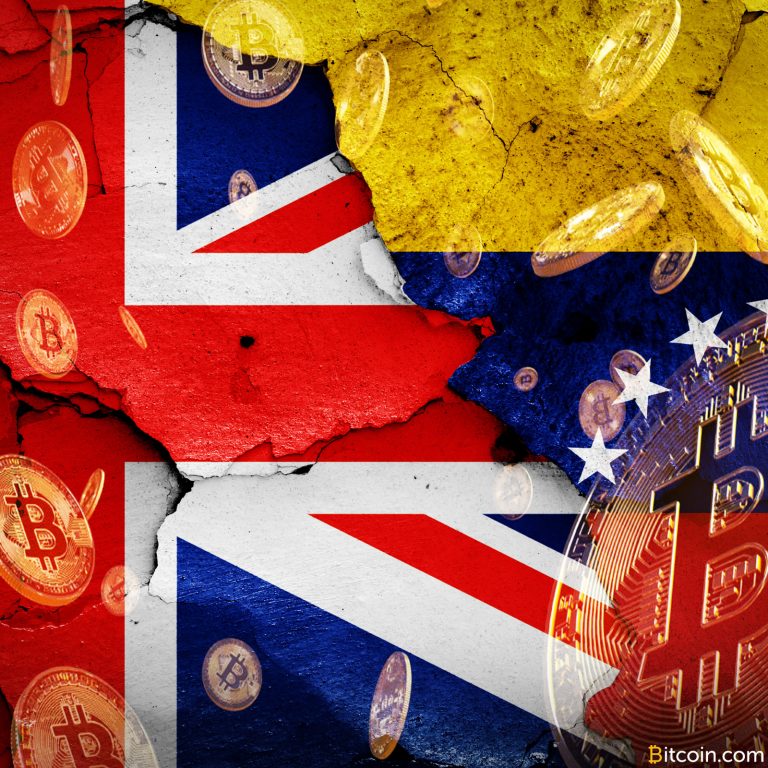
Venezuela’s economic crisis is impossible to ignore. President Nicolás Maduro’s attempt to withdraw $1.2 billion of the country’s own gold from the Bank of England (BoE) has been rejected. The notion of a sovereign state being denied access to its own wealth is a concept that’s hard for bitcoiners to countenance. One thing is certain: the case for storing wealth in censorship-resistant cryptocurrency is becoming stronger.

Also Read: Venezuelan President Raises Petro’s Value Again in Bid to Create ‘New System’

How the Venezuelan Political Situation Escalated

Bank's Refusal to Release $1.2B of Venezuelan Gold Strengthens the Case for BitcoinIn order to understand the Bank of England’s (BoE) decision to deny Venezuela its gold, a brief history lesson is required. How did one of the most oil-rich nations on earth end up on the brink of collapse? Since 2016, political discontent in Venezuela has been fueled by increasing hyperinflation, power cuts, shortages of food and medicine. Gold is a crucial part of Venezuela’s foreign reserves.

One huge turn of events involves the disputed presidency in Venezuela. Maduro was elected in April 2013 after the death of Hugo Chávez. In the meantime, Juan Guaidó has declared himself acting president despite Maduro being re-elected to a second six-year term in May 2018, which most opposition parties boycotted. On Jan. 26, the UK foreign secretary Jeremy Hunt said that the U.K. will also recognise Guaidó as the interim president of Venezuela if fair elections are not announced within eight days.

Hunt tweeted:


Cryptocurrency has already played an important role in this crisis. To counter escalating hyperinflation in February 2018, Maduro announced the launch of a state-backed cryptocurrency, the petro. During the launch, he is quoted as saying: “Venezuela makes history! Today we take a step forward with the launch of petro as a national currency and platform for strengthening our financial sovereignty.”

Absurd Issues Around BoE Transferring the Gold

Bank's Refusal to Release $1.2B of Venezuelan Gold Strengthens the Case for BitcoinThe BoE is one of the largest physical gold custodians in the world. Data published by the London Bullion Market Association (LBMA) states that around 7,500 tonnes of gold was held in London in March 2017, the equivalent of 596,000 gold bars. Previously it was reported that the refusal to return the gold was due to insurance related reasons. Now it is evident that the BoE’s decision to withhold the gold is political. In a November article, Reuters quotes an unnamed official as saying:

The plan has been held up for nearly two months due to difficulty in obtaining insurance for the shipment, needed to move a large gold cargo.

The U.K. has legitimate concerns and reasons for not releasing the gold. According to Bloomberg reports, Ricardo Hausmann, a Harvard economics professor and long-time critic of Maduro, has stressed that the first rule of business is to stop his government from liquidating international assets belonging to the country and stealing them.

The Gold Repatriation Trend

Gold repatriation occurs when governments choose to bring home their gold stored outside of their country. Over the years, this has become a growing trend which raises questions as to whether something is brewing that might have compelled them to initiate the move. Fears that certain states might confiscate gold bullion, for example, could be a trigger.

Prior to Venezuela requesting gold bullion back from the BoE, the German central bank completed the move of 674 metric tonnes from the vaults of the Federal Reserve Bank of New York and the Banque de France three years ahead of schedule. Last year Turkey joined the ranks of Germany and Hungary as the latest country to repatriate gold to its soil, according to reports from the country’s media. 

The Case for Crypto Increases 

Bank's Refusal to Release $1.2B of Venezuelan Gold Strengthens the Case for BitcoinBitcoin is backed by mathematics instead of state governments. It is possible that the recent sanctions and fear around physical gold could have been avoided if wealth had been held in the form of digital assets that can’t be censored or frozen by any third party.

In a recent interview with news.Bitcoin.com, Kai C. Chng, CEO of Digix, an asset tokenization company, explained how precious metals have always been a historic safe haven in times of economic uncertainty and are largely resilient to the fluctuations of international monetary markets. In times of crisis, this could change as people look for alternatives. “Should a global recession impact the purchasing power of traditional currencies, for those who already understand the benefits presented by cryptocurrency, we would expect to see increased interest in owning bitcoin, while those who are currently ill-acquainted with the cryptocurrency market are likely to show new interest in entering the space,“ said Chng. 

Today, nearly 90 percent of Venezuelans are living in poverty. It seems Venezuela will remain immersed in a grave political crisis and economic war, with millions of innocent people poised to suffer as governments squander funds. In these desperate times, Bitcoin seems less like a bold experiment and more like a lifeline.

Should the Bank of England return the gold bullion to Venezuela? Let us know in the comments section below.


Images courtesy of Shutterstock.


Need to calculate your bitcoin holdings? Check our tools section.

The post Bank’s Refusal to Release $1.2B of Venezuelan Gold Strengthens the Case for Bitcoin appeared first on Bitcoin News.


via Tanzeel Akhtar

Thursday, January 24, 2019

Why a Global Recession Would Be Good for Bitcoin

Macro trends suggest that a global economic crisis could be looming. Worries about a global recession have been fed by the newly published GDP report showing that China grew at its slowest rate last year since 1990. If a global recession were to happen in the future, many believe that cryptocurrencies, bitcoin primarily, would benefit.

Also Read: Davos 2019: Leaders Share Mixed Cryptocurrency Predictions

IMF Sees Serious Slowdown

Why a Global Recession Would Be Good for BitcoinThere are a number of indicators pointing to a potential economic downturn. In its World Economic Outlook, the International Monetary Fund (IMF) warned a no-deal Brexit could be a severe shock to the British economy. An escalation of Trump’s trade war with China is also another threat.  

The IMF has shared its financial market sentiment stating: “Escalating trade tensions, together with concerns about Italian fiscal policy, worries regarding several emerging markets, and, toward the end of the year, about a U.S. government shutdown, contributed to equity price declines during the second half of 2018. A range of catalyzing events in key systemic economies could spark a broader deterioration in investor sentiment and a sudden, sharp repricing of assets amid elevated debt burdens.”

Statistics released on Jan. 21 show China’s GDP growth slowed to 6.6 percent year on year in 2018, the slowest pace since 1990.

Cryptocurrencies Will Be Pushed Higher as an Alternative to the Dollar

If we continue to see a significant decline in economic activity what could this mean for cryptocurrencies? Ciaran Hynes, managing partner at Cosimo Ventures, opined: “Depending on when a recession hits and what its causes are, cryptocurrencies could experience several effects. If a recession were to happen in traditional markets in the near future, and the causes are related to excessive contraction of the dollar money supply, which was a big part of the 2008 crisis, then you probably get a rush to scarce cash and decline in relative market value of all assets that are liquid, such as gold.”

Why a Global Recession Would Be Good for BitcoinHynes explained that all unstable cryptocurrencies could fall hard and there could be a surge to the higher quality dollar-pegged stablecoins. Many crypto holders will not want to cross over into fiat, and we may even see a market premium for these stablecoins. “Weaker dollar-pegged stable coins — ones that are algorithmic only, or don’t have a transparent 100% reserve of actual dollars behind them — may be tested or even shorted until they collapse,” added Hynes.

If the next recession happens later or is caused by other factors, such as loss of confidence in the U.S. dollar itself, then we may see very different outcomes from those postulated above. Hynes predicted:

Cryptocurrencies would likely be welcomed and pushed higher as an alternative to the U.S. dollar.  As a result, all dollar-pegged stablecoins might then be sold off heavily and tested on their ability to store value.

Exodus Into Real World Assets Such as Gold

If a global recession were to impact the value of government-issued currencies and their purchasing power, we would likely see an exodus into real world assets such as gold, shared Kai C. Chng, CEO of Digix, an asset tokenization company. 

Chng said: “Precious metals have been a historic safe haven in times of economic uncertainty and are largely resilient to the fluctuations of international monetary markets. Should a global recession impact the purchasing power of traditional currencies, for those who already understand the benefits presented by cryptocurrency, we would expect to see increased interest in owning bitcoin, while those who are currently ill-acquainted with the cryptocurrency market are likely to show new interest in entering the space.“

Why a Global Recession Would Be Good for BitcoinAccording to Bitmex Research, bitcoin has traded like a safe heaven asset from 2011 to 2013. After that point it seemed to take on attributes of a “risk on” asset, for instance a very strong performance in 2017 alongside large cap Chinese tech stocks. Bitmex Research states that a flight to safety and liquidity now would prove negative for bitcoin and cryptocurrency prices. If bitcoin was able to shift again and rally as a safe heaven asset in a deleveraging environment, however, that would be very positive news for bitcoin. The research group noted though that it has yet to see any evidence of that yet.

Crypto Is a Hedge Against Macroeconomic Insanity

Will cryptocurrencies become a hedge against economic meltdown? Robert Viglione, co-founder of Horizen, said: “As much as I want to believe that cryptocurrencies are the ideal disaster asset, we really don’t have enough data to draw that conclusion.” He added:

It makes some sense in that bitcoin returns have zero covariance with any other asset class thus far, but we only have about 10 years of data. My hunch is that as crypto markets mature, they’re going to start picking up some general market correlation. For now, however, crypto is at least a decent hedge on all of the macroeconomic insanity.

Ned Myers, head of product at Alphapoint, a provider of distributed ledger technology, explained that when we think of the state of digital assets in the context of a potential recession, there are two considerations that come to mind:  

  • First, where the intrinsic value of fiat currencies may logically be linked to the credit quality of the underlying sovereignty, de-centralized currencies may not have that same correlation.
  • Second, to the extent that security tokens clearly delineate the payment rules of a security and improve the transparency of holdings through distributed ledgers, accelerated adoption of blockchain technology could improve transparency of securities holdings – a problem that was part of the storyline in 2008.

Many crypto advocates will be hoping that the next recession helps push cryptocurrency into the mainstream. During economic turmoil, investors will always flock towards safe haven assets that are largely resilient to fluctuations of international monetary markets. So far bitcoin has shown many characteristics of the ultimate safe haven — gold.

How do you think a recession would effect bitcoin? Let us know in the comments section below.


Images courtesy of Shutterstock.


Need to calculate your bitcoin holdings? Check our tools section.

The post Why a Global Recession Would Be Good for Bitcoin appeared first on Bitcoin News.


via Tanzeel Akhtar

Wednesday, January 23, 2019

Davos 2019: Leaders Share Mixed Cryptocurrency Predictions

The annual meeting in the Swiss mountain resort of Davos from Jan. 22 to 25, attended by business leaders, politicians, and economists is in progress. Cryptocurrency is once again on the agenda, but so far the discussions emerging from the conference have been mixed, giving attendees plenty of FUD for thought. 

Also Read: George Soros: Bitcoin Is Propped Up by Dictators   

Cryptocurrencies on the Agenda at Davos

Davos 2019: Leaders Share Mixed Cryptocurrency PredictionsThis year many high profile government representatives dropped out from attending the Davos conference aimed at the global elite. President Donald Trump canceled his trip due to the ongoing government shutdown, French president Emmanuel Macron said he would not attend after weeks of protests in France, and U.K. prime minister Theresa May pulled out due to the complications caused by Brexit.

Despite the high profile dropouts the show, must go on. Delegates at the Swiss resort have been busy discussing major issues around crypto. Bloomberg TV reports that Huw van Steenis, senior advisor to Bank of England Governor Mark Carney, said: “Cryptocurrencies fail fundamental tests of financial services.”

During a CNBC hosted panel, Jeff Schumacher, founder of BCG Digital Ventures, said: “I do believe it [bitcoin] will go to zero. I think it’s a great technology but I don’t believe it’s a currency. It’s not based on anything.”

Cryptocurrency Representatives Keep a Low Profile

From the conference, Angel Versetti, CEO of decentralized internet of things network Ambrosus, told news.Bitcoin.com there is a general sentiment of uncertainty and worry in the air, with broader menacing macro-trends indicating a potential looming global crisis not only economically, but also politically across different zones.

Compared to Davos 2018, many crypto delegates are keeping a low profile this year. Versetti said: “Already, almost every one of the great powers has canceled their attendance; heads of state from Russia, China, America, France, the UK, and India all opted not to attend. In general everything is toned down compared to last year.”

In 2018 we witnessed economic growth and the World Economic Forum (WEF) took place when cryptocurrencies were close to their peak value. Versetti said: 

While last year, people were talking about crypto and blockchain anywhere and everywhere, this year there is comparatively little discussion around it.

Davos 2019: Leaders Share Mixed Cryptocurrency PredictionsAnother observation made at Davos on Jan. 23 is that the flagship flashy crypto pavilions of last year, such as Consensys and Global Blockchain Council, have become much more modest and low profile.

“One can feel the crypto crisis there, because the pavilions are never full and most guests are from the crypto space itself, rather than from other industries. As the 1 percent continue to go back and forth on their position on crypto, big bankers’ skepticism on the role of cryptocurrencies in finance is unwavering. Some crypto events even shut down their pavilions and canceled their participation altogether,” said Versetti. 

Some attendees are remaining positive despite all the doom and gloom talk at Davos. Michael Sung, a technology investor and co-director of the fintech research center, told news.Bitcoin.com: “This year crypto will finally get grow up and get real, where the technology, business models, traction across industries, and regulation are all simultaneously maturing to enable practical enterprise applications. We are waking up from a crypto hangover where undisciplined unenthusiasm of last year will lead to better behavior which will drive the industry into professionalism such that institutional participation will be possible.”

More Balanced Panels and Views Shared

One key panel at Davos, called Building a Sustainable Crypto-Architecture, was more interesting as it featured a range of balanced views. The panel pitted well-known Bitcoin skeptics Gillian Tett from the FT and Ken Rogoff from Harvard against the founders of Circle, which is backed by Goldman Sachs and Bitpesa.

As the Building a Sustainable Crypto-Architecture panelists noted, it’s likely that regulation of the cryptocurrency space will increase. Regardless of the stance that lawmakers take, this much is for certain: business leaders will continue to flock to Davos every year and the vast majority will continue to be badly wrong about Bitcoin.

What are your thoughts on Davos and the leaders who attend the conference? Let us know in the comments section below.


Images and video courtesy of Shutterstock of World Economic Forum. 


Need to calculate your bitcoin holdings? Check our tools section.

The post Davos 2019: Leaders Share Mixed Cryptocurrency Predictions appeared first on Bitcoin News.


via Tanzeel Akhtar

Tuesday, January 22, 2019

Why Cryptocurrency Custody Solutions Are on the Rise

The last six months has witnessed significant growth in the number of businesses and banks launching cryptocurrency custodial services. These solutions give institutional investors peace of mind that their assets are secure, insured, and under the care of a trusted third party, freeing them from responsibility for safeguarding their cryptocurrency.

Also Read: Fidelity Launching Crypto Custody and Trading Services

Recent Crypto Custodianship Launches

Why Cryptocurrency Custody Solutions Are on the RiseThe number of crypto custody solutions being launched is growing rapidly. These services are aimed at institutional investors such as hedge funds, family offices and market intermediaries.

According to research by the Bank of New York Mellon, there is increasing demand in the market for a traditional, established custodian to provide secure storage of cryptocurrencies. For many it is the bridge that will support institutional capital moving into the cryptocurrency market. There have been reports of major banks testing and in some cases rolling out crypto custody solutions.

Most recently, Swiss investment bank Vontobel launched the ‘Digital Asset Vault.’ The service allows Vontobel’s clients, which include over 100 banks and wealth managers, to issue instructions for the purchase, custody and transfer of digital assets integrated within their familiar banking infrastructure and regulated environment. The German stock exchange Börse Stuttgart has launched a custody service for digital assets. State Street, Fidelity and Coinbase also offer services. 

Regulation in the U.S. requires advisers to keep client funds with a qualified custodian. Across the pond, the European Securities and Markets Authority (ESMA) has raised the issue that there is no harmonized definition of safekeeping and record-keeping for ownership of securities. This in turn makes it difficult to apply custodial requirements to a new asset class such as cryptocurrency. ESMA believes that greater clarity around the types of services and activities that may qualify as custodial under EU financial services rules, in a DLT framework, is needed.  

Custodial Services Are for Traditional Financial Banks

Why Cryptocurrency Custody Solutions Are on the RisePaul Puey, CEO of cryptocurrency wallet Edge, explained that while there has been a rapid increase in custody solutions, this trend has been limited to the traditional financial world of banks and funds that don’t leverage any of the utility and value of crypto. 

He said: “This would be akin to 1990s internet companies filing for telephone regulations to build VOIP solutions to replace phone carriers. Nothing very disruptive would come from that. Crypto is unique and powerful because custodians aren’t needed to hold digital value. We can replace institutional crypto investors with non-custodial apps that hold the money for users.”

It can be argued, however, that custody services are critical to the efficient functioning of financial markets. As highlighted above by the SEC and ESMA, these often require regulation in order to protect investors from potential misappropriation of their assets.

Michael Ou, CEO of Coolbitx, explained that regulatory factors will play a big role in driving compliance efforts of digital asset exchanges, particularly those in the U.S. or serving U.S. customers, saying:

Custody providers face a simple fact: KYC/AML compliance is a major time and resource strain. In traditional finance, you will hardly see a single entity offering KYC/AML compliance, a large marketplace of buyers and sellers, custody, and all other services that a single exchange offers now.

He explained that as the market matures, so does the division of labor within the market. Therefore it is far easier for exchanges to work with entities specializing in custody. According to Michael Ou, investors can expect to see custody solutions become a mainstream component of the cryptocurrency industry in the months and years ahead.

What are your thoughts on the growth of crypto custody solutions? Let us know in the comments section below.


Images courtesy of Shutterstock.


Need to calculate your bitcoin holdings? Check our tools section.

The post Why Cryptocurrency Custody Solutions Are on the Rise appeared first on Bitcoin News.


via Tanzeel Akhtar

Friday, January 18, 2019

Wednesday, January 16, 2019

Tuesday, January 15, 2019

Monday, January 14, 2019

Why Some Crypto Companies Consider KYC and AML Compliance Unnecessary

When it comes to cryptocurrency regulation, there is a lack of consensus on how to protect investors. Criminal activity such as fraud, hacks and theft is prevalent, not only in the crypto realm, but in the traditional financial world too.  Some exchanges have deemed know your customer (KYC) and anti-money laundering (AML) compliance as unnecessary, however, claiming it infringes on the user’s right to privacy. 

Also read: Following the Crypto-Anarchist Dream: 3 Reasons to Reject KYC and AML

Crypto Exchanges Refuse KYC

There are a number of crypto exchanges doing everything in their power to avoid having to introduce KYC. Ethfinex’ Trustless DEX launched without KYC, having pointed out that it is impossible to obscure the source of a person’s funds: every transaction is visible and recorded forever onchain. Cryptocurrency exchange Hodl Hodl allows traders to swap cryptocurrencies without the need to undergo compliance. These exchanges require no lengthy signup process and no interminable wait for KYC checks to be approved, but such platforms are the exception rather than the rule. For legal and regulatory reasons, exchanges and similar financial organizations within the crypto sector are usually obliged to perform KYC. 

Why Some Crypto Companies Consider KYC and AML Compliance Unnecessary

From Crypto Anarchism to Close Regulation

The concept of Bitcoin was born around 2008 during the financial collapse. Originally, cryptocurrencies emerged as a means to allow privacy-oriented value storage and transfer to take place. Even before Bitcoin’s inception, crypto anarchists were employing cryptographic software in order to avoid scrutiny and potential prosecution while sending and receiving information over networks in an effort to protect their privacy and political and economic freedom. A central element to this philosophy is the inherent distrust of states in favor of individual sovereignty and self-determinism.

In a recent op-ed, Bitcoin.com’s Sterlin Lujan wrote of the crypto anarchist dream being financially independent and removed from the state apparatus, while Wendy McElroy, the author of The Satoshi Revolution, has questioned what is meant by “the law.” She writes that a government should not be allowed to monopolize its citizens’ financial affairs as it monopolizes so many other aspects of their lives. “The term [the law] refers to nothing more than the rules that identify and regulate a system. When the system is human society, discussions of law tend to become matters of power because some people want to dominate,” writes McElroy. 

Some Laws Do More Harm Than Good

Why Some Crypto Companies Consider KYC and AML Compliance UnnecessaryThe crypto world has often been dubbed the Wild West in dire need of regulation and direction. But is that really the case? There is evidence to show that instances of money laundering and other financial crimes are significantly lower in the crypto space than they are in the traditional financial sector. Onerous KYC and AML regulations also serve to deter new entrants, increase compliance costs for crypto companies, and arguably stifle innovation.


Kraken exchange has complained of the cost of compliance, stating that the “cost of handling subpoenas (regardless of licenses) is quickly becoming a barrier to entry.” Rather than deter criminals and increase transparency, some argue that all KYC/AML does is financially exclude those who lack the documentation to prove their identity – a particular problem for the world’s 1.7 billion unbanked. While some exchanges, such as Binance, are famously KYC free, its decision to partner with blockchain forensics firm Chainalysis is evidence that Binance is taking its regulatory obligations seriously. The crypto exchange, the world’s largest by trading volume, is now preparing to introduce KYC for its customers, mirroring the actions of other exchanges such as Kucoin that have similarly caved in.

Despite KYC and AML being a multi-billion dollar industry, critics remain convinced that the practice does more harm than good. While some exchanges are able to evade compliance through operating offshore and prohibiting U.S. investors from signing up, the majority have no choice but to bow to regulatory demands or face the consequences.

Do you support KYC and AML? Let us know in the comments section below.


Images courtesy of Shutterstock.


Need to calculate your bitcoin holdings? Check our tools section.

The post Why Some Crypto Companies Consider KYC and AML Compliance Unnecessary appeared first on Bitcoin News.


via Tanzeel Akhtar

Friday, January 11, 2019

The Differences Between Forex and Crypto Trading

Many would argue that comparing cryptocurrency trading with forex is like comparing apples and oranges, but that’s not entirely accurate. On closer inspection, there is a number of similarities between the two. For example, the underlying market dynamics of supply and demand will usually govern the prices of the respective assets. Here traders share their thoughts on the mechanics of each.

Also read: Faced With Cash And Forex Shortages, Zimbabweans Turn To Bitcoin – Even When It’s Banned

Crypto vs Forex

The Differences Between Forex and Crypto TradingIt takes a certain type of savvy trader to navigate unpredictable market conditions and emerge in profit. Let’s start with the pros and cons to be found from trading both crypto and forex.

Alex Mashinsky, CEO of Celsius Network, notes that crypto and forex both represent a digital store of value and can be purchased and sold with ease. They both have high volatility which creates an opportunity for quick profits going long or short. 

“The pro of trading crypto and forex is that these are global markets dominated by large financial players who have algorithmic trading capabilities. Most individual players cannot compete or match the trading and speed of hedge funds and large banks which swim in these markets,” said Mashinsky.

He explained that the biggest difference between forex and BTC markets is that unlike forex, bitcoin started and scaled via global retail trade and not via institutional players. This makes the BTC markets behave in a very different pattern than traditional forex markets.

Kyle Cox, senior investment analyst at Invictus Capital, stresses that bitcoin has an ultimately finite supply of 21 million coins, with protocols that control new issuance meaning there is little room for manipulation. “Therefore, trading in bitcoin would be purely focused on demand, which in turn would be based on adoption and in turn the quality of the project,” Cox explains. “Higher adoption of bitcoin essentially increases the size of the network, which means more users, higher utility and an increasing price. The lack of outside or centralised influence is unique, and a benefit of the genesis crypto asset.”

Fair Amount of Skill and Luck Is Involved

The Differences Between Forex and Crypto TradingFiat currencies, on the other hand, have potentially unlimited supply, as each currency’s supply is determined by the monetary policy of the specific issuing country.

“Each country’s central bank (typically) regulates the supply of that currency available through various policy mechanisms linked to its repurchase or interest rate, which can, essentially, be defined as the opportunity cost of holding cash in that economy. These policy decisions are conducted with an acute awareness of domestic and global macroeconomic conditions and imperatives, and thus result in fluctuations in both supply and demand,” said Cox.

Currency traders looking to profit will, essentially, look to buy currencies that show signs of macroeconomic improvement through the selling of currencies that show the opposite. “There is a fair amount of skill, and it must be said, luck involved in this process, as any honest trader would attest to,” Cox noted.

BTC Involves Little Cost

The Differences Between Forex and Crypto TradingAnother factor to consider is the nature of the bitcoin blockchain means that BTC is traded on a peer to peer basis, which in its raw form involves little cost.

Cox pointed out that this is due to the fact there are no intermediaries in the classic sense, as is the case in the foreign exchange market where brokers and aggregators facilitate transactions between participants, which can often add a layer of fees.

“Where intermediaries come into bitcoin, and other cryptocurrencies, is through cryptocurrency exchanges,” explained Cox. “These exchanges act as central repositories of assets, facilitating transactions and levying fees on this basis. So yes, this aspect can be seen as somewhat of a similarity [to forex] however with different mechanics. In truth, it is difficult to make a generalized comparison of actual fees as they vary widely depending on exchanges, currency pairs, volume and many other factors.”

Forex Markets Have Deep Levels of Liquidity

The Differences Between Forex and Crypto TradingAnother crucial fact to note is that forex markets have deep and entrenched liquidity as a result of a long history of activity.

Cox explained: ”The phenomenon of globalization and technology have boosted activity in the trading of foreign currencies, as a result of ballooning cross-border transactions and wide availability of trading means and infrastructure. [Forex] is by far one the largest marketplaces on the planet, with daily trading volume in the trillions of U.S. dollars. Most of this volume is attributed to established, developed country currencies, such as the U.S. dollar, which serves as the reserve currency for the world.”

There are some similarities here with bitcoin, which can be considered as the dominant reserve cryptocurrency, and which most trading volume can be attributed to. That is where the similarity ends however.  “Bitcoin’s daily trading volume, which currently ranges in the mid-single digit billions of U.S. dollars, pales in comparison to that of the forex market,” said Cox.

A drop in the ocean, some might say. Bitcoin’s volatility is also considered to be far higher relative to that of the most dominant currency pairs in terms of volume. Cox explained that trading in emerging market currency pairs, which can show elevated periods of volatility, would be a far better comparison to trading in bitcoin.

Only a Small Percentage of Traders Extract Profit

The Differences Between Forex and Crypto TradingCrypto traders faced a tough year in 2018. After riding the highs of 2017, the low points in the current bear market have been tough to navigate through.

Cox said: “Trading, particularly that of a short-term nature, is a difficult practice that only a small percentage of players have ever managed to extract profits from, regardless of the asset in question.”

He added:

Of course, we often hear the success stories in the media, however, the many losses that have been incurred by participants seeking to time the market have been swept under the carpet.

Black Wednesday: George Soros Bet Against Britain

The Differences Between Forex and Crypto Trading

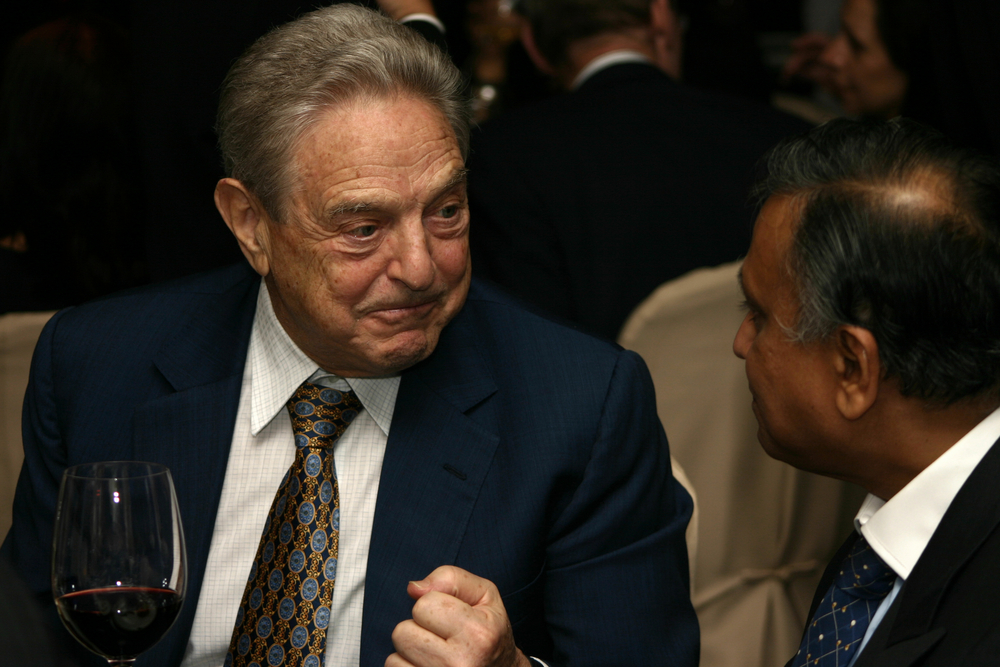
One high profile success case involved billionaire currency trader George Soros who made history when he bet against the pound sterling in 1992 and made $1 billion in one day.  There are a number of lessons which can be found by analyzing the underlying causes of this crisis and how they led to such problems. 

Cox pointed out that Soros is one of the few exceptions who has had multiple successes trading against central banks over many decades. Also known as the man who broke the Bank of England, Mr Soros stands out as having been involved in several lucrative currency trades that span decades. He is credited with playing a pivotal in the British pound crashing out of the European Exchange Rate Mechanism (ERM), which basically pegged the pound to the Deutsche mark.

The Differences Between Forex and Crypto TradingCox commented: “[George Soros’] strategy was simple yet brilliant. Britain at the time was suffering from high inflation and exchange rate versus the U.S. dollar was under pressure due trade with the U.S. Soros quickly realised that the Bank of England would not be able to maintain its peg, sold the pound short through a systematic series of trades. Following this strategy, he profited as the pound decreased in value and some estimate that he made $1 billion in the process. Undoubtedly a simple, and profitable, application of a sound knowledge of macroeconomic forces.”

In conclusion, while there are, in certain areas, extreme differences between the bitcoin and forex markets, there are also similarities and the potential for more convergence as digital assets cement themselves in the global financial system.

As Soros himself observed:

Markets are constantly in a state of uncertainty and flux and money is made by discounting the obvious and betting on the unexpected.

What are your thoughts on trading crypto versus forex? Let us know in the comments section below.


Images courtesy of Shutterstock.


Need to calculate your bitcoin holdings? Check our tools section.

The post The Differences Between Forex and Crypto Trading appeared first on Bitcoin News.


via Tanzeel Akhtar