Showing posts with label Felipe Erazo. Show all posts

Saturday, May 22, 2021

Fraudsters Impersonate a US Federal Agency by Sending Emails Asking for Bitcoin Wallet Keys

Fraudsters Are Impersonating a US Federal Agency by Sending Emails to Ask for Bitcoin Wallet Keys

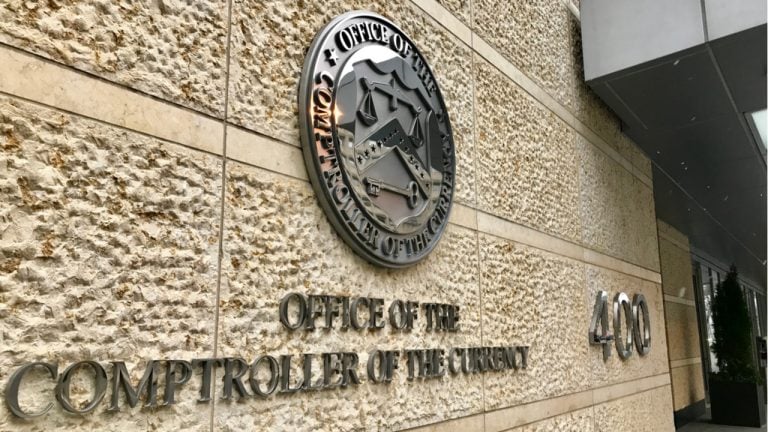
U.S. consumers have been receiving fake emails that attempt to impersonate a federal regulatory agency which has raised alarms among crypto community members. The U.S. Office of the Comptroller of the Currency (OCC) warned that such bogus messages ask people for their bitcoin wallet keys.

Fictitious Message Contains Several Grammar Mistakes and Typos

According to the alert published by the OCC, the fake email claims to be signed by senior officials of the agency. They took the opportunity to warn people that the federal entity holds no virtual currencies, such as bitcoin (BTC), on behalf of other agencies or deals with digital assets whatsoever.

Scammers who elaborated the message didn’t take care of grammatical mistakes and typos notably highlighted all over the phony email, which reads as follows:

US COMPTROLLER OF THE CURRENCY: Your fund $10.5M is ready to be paid to you.Note your fund can only be paid to you VIA a Bitcoin Wallet Address ID NO:Due to too much charges/fees been demanded by the banks and government officials befoethey can sign for the release of funds belonging to foreigners,the IMF.UNITED NATIONS and WORLD BANK have made a new policy that any debt or payment belonging to an individual above $1M should be paid through a bitcoin wallet address. You are instructed to provide with immediate effect a bitcoin wallet address id no,for your fund to be credited on the wallet for you now. Signed NAME REMOVED / Director US COMPTROLLER OF THE CURRENCYC

The OCC issued the following comment to warn people about the spam campaign launched by fraudsters:

“Do not respond in any manner to any proposal purported to be issued by the OCC that requests personal account information or requires the payment of any fee in connection with the proposal, or that suggests the OCC is a participant in the transfer of funds for or on behalf of others.”

Crypto Scams Have Been on the Rise This Year, Warns US Regulator

Crypto-related scams have been on the rise in the United States, as the U.S. Federal Trade Commission (FTC) addressed the issue recently with a warning.

The warning came in the wake of reports which unveiled that over $2 million has been taken by fraudsters impersonating the Tesla CEO Elon Musk and using virtual currencies scams.

What are your thoughts on the scam impersonating the U.S. banking regulator? Let us know what you think about this subject in the comments section below.


via Felipe Erazo

Friday, May 21, 2021

South Korean Governor Becomes the First Politician to Disclose Publicly His Cryptocurrency Holdings in the Country

South Korean Governor Becomes the First Politician to Disclose Publicly His Cryptocurrency Holdings in the Country

Regardless of the political turmoil that arose in South Korea due to the crypto-related regulations, a leading politician had come forward to reveal that he had made investments in virtual currencies publicly. Won Hee-ryong, the Governor of Jeju Island, unveiled that he invested in four different cryptocurrencies.

Wong Plans to Keep Updating People via Youtube About His Crypto Holdings Status

According to Chosun, the politician, who is the leader of a semiautonomous province in the country, admitted that he bought a total of 1 million won ($885) worth in bitcoin (BTC), ethereum (ETH), somesing (SSX), and the Kakao-issued klay (KLAY) token. Won justified his purchases by saying that he thought, “I had to do it.”

With such an announcement, Jeju Island governor becomes the first politician that publicly discloses its crypto holdings in South Korea. Interestingly, Won commented:

Although more than 5 million people are already trading virtual assets, various damages are occurring one after another due to inadequate related laws and policies. I will try to do it myself, communicate with the public and find alternatives about what the problem is and how to develop the field of virtual assets.

He praised the fact that virtual currency trading can be made on holidays. In fact, Wong revealed that he bought his cryptos on Buddha’s Birthday.

Moreover, one of his plans regarding digital assets is to provide updates on his holdings through a Youtube channel and open the door to discuss “blockchain and the 4th industry with experts.”

Special Legal Status in the Island Allows ICO Projects to Launch

The governor has been well-known in the country for its crypto endorsement, driving him to launch projects within the semiautonomous province.

In 2018, months after he was elected, Won wanted to work on an initial coin offering (ICO) project to lead to the Jeju Coin token’s launch.

Although ICOs are banned in South Korea, the island has a special legal status, allowing the governor to bypass such legal barriers. As of press time, there are no further developments on the matter.

What do you think about the crypto holdings revealed by the South Korean politician? Let us know in the comments section below.


via Felipe Erazo

Argentinean Police Detain Two People Connected to Alleged Crypto Scam Intense Live

Argentinean Police Detain Two People Connected to Alleged Crypto Scam Intense Live

As cryptocurrencies become a trending topic across Argentina, local authorities hunt virtual currencies scammers amid the coronavirus-driven crisis and high inflation levels. The Argentine Federal Police detained two members of an alleged pyramid scheme operating in a northern province.

Investigations Initiated After Two Complaints Filed With the Authorities

According to Valle Calchaquí, the operation happened within the context of an investigation pursued by the Fourth District Prosecutor’s Office of Santa María. They are making inquiries on an alleged crypto scam named Intense Live.

Two victims of the presumably fraudulent scheme filed complaints with the police in Santa María, located in the northern province of Catamarca.

During the authorities’ action, law enforcement found two vehicles owned by an alleged victim that paid part of his investment by giving the scammers cars.

Per the prosecutor’s office, victims could likely recover their stolen money during the alleged scam, at least the initial investment deposit. However, they clarified that any fiat cash given to the fraudsters could not be recovered.

Intense Live allegedly offers investment opportunities based on bitcoin (BTC) and other digital assets. Minimum investments started at $300, with the alleged scammers promising monthly returns of up to 30%.

Some victims told Argentinean authorities that Intense Live encouraged them to acquire investment packages of $3,000, with the premise of receiving $9,600 in profits after one year.

However, that wasn’t the case, and the alleged scammers never comply with their promises, driving investors to file complaints with the police.

Argentina Keeps Arresting More People Tied to Domestic Scams

Also, per Infobae, Intense Live had been on the Argentinean authorities’ loop, as they already arrested eight people on San Nicolás in connection with the bogus company in March.

Moreover, at the end of 2020, the Public Prosecutor’s Office for Complex Crimes of the Argentine city of Córdoba ordered the arrest of 12 people linked to the Onecoin Ponzi scam.

What are your thoughts on the operation launched by the Argentinean authorities? Let us know in the comments section below.


via Felipe Erazo

Thursday, May 20, 2021

South Korean Deputy Prime Minister Eases Anti-Crypto Rhetoric, Aims to Create More Domestic Market Opportunities

South Korean Deputy Prime Minister Eases Its Anti-Crypto Rhetoric, Aims to Create More Opportunities on Domestic Markets

The South Korean government seems to be easing its anti-crypto tone, as the Deputy Prime Minister came forward with a statement that opened the doors for future open dialogue on virtual currency topics. Hong Nam-ki unveiled that officials are assessing ways to get young people into “domestic asset markets” and thus bringing more opportunities in that regard.

Economic Agenda Also Targets Stock Market Investments With a Focus on Youth

According to the statement released by Hankook Ilbo, Hong Nam-ki – who is also the country’s finance minister, said that it’s necessary to “reinforce policy details and support efforts for the domestic asset market, where the interest of young people is high,” referring to cryptocurrency markets.

Such words came forward in the wake of the government’s plans to approach three aspects of the economy, said the Deputy Prime Minister, including youth employment, housing, and “asset formation.”

Furthermore, Hong highlighted the “high interest” among the South Korean youth in domestic digital asset market policies. That said, the media outlet stated that the Deputy Prime Minister also included the stock markets within the government’s economic agenda that targets younger people.

Interestingly, the fact that Hong has addressed the cryptocurrency topic, which had become a hot potato for the lawmakers, is a surprising move. In March 2021, he referred to cryptocurrencies with harsh words, saying that it’s an “overheated market” that “can be problematic.”

At that time, Hong commented:

Virtual assets and the crypto asset sectors are overheating compared to their actual value.

Democratic Party Seeking to Catch Youth Vote

Also, the government’s rhetoric on targeting younger citizens in their economic plan is, on the contrary, not a surprising move.

Considering that national elections will occur in 2022, the Democratic party is the ruling one. A political party that is now battling to catch these voters amid the disappointment that arose due to the stricter crypto regulations.

As Bitcoin.com News reported early this month, Koh Yong Jin, the Secretary of the ruling party of the National Assembly’s Strategy and Finance Committee, stated they’re contemplating ways to postpone the timing of the new financial rules on cryptocurrencies. “I’ll hear if it’s right to delay,” he said.

What do you think about the words from the South Korean Deputy Prime Minister? Let us know in the comments section below.


via Felipe Erazo
Nvidia Aims to Get Its GPUs Back ‘Into the Hands of Gamers’ by Reducing Mining Capabilities on 3 Graphic Cards

Nvidia Aims to Get Its GPUs Back 'Into the Hands of Gamers' by Reducing Mining Capabilities on 3 Graphic Cards

A major chipmaker keeps making efforts to calm down the gaming community’s anger toward cryptocurrency miners who are taking the lead in buying graphic cards massively, boosting its prices. Nvidia has announced that it will deliberately limit the capabilities for some of its newly graphic cards to keep a balanced inventory for gamers.

Cards With Limited Hashrate Will Be the Ones Shipped Starting May

According to the announcement published by the chipmaking giant, the measure will reduce the ethereum (ETH) hashrate to Geforce RTX 3080, RTX 3070, and RTX 3060 Ti graphics cards. The decision follows a similar maneuver done in February with all Geforce RTX 3060 cards.

Nvidia pointed out that the new graphic cards will be shipped in late May, although a specific date was not provided as of press time.

However, the chipmaker clarified that reduced hashrate only applies to manufactured cards with the “LHR” (Lite Hash Rate) identifier and not with graphic cards already purchased.

On the statement, the company said:

We believe this additional step will get more Geforce cards at better prices into the hands of gamers everywhere.

Cryptocurrency miners, specifically ETH ones, need fast graphic processing units (GPUs) to solve algorithmic puzzles – something that graphic cards like Nvidia provide could make smoothly. On the other hand, bitcoin (BTC) miners need the technology supplied by application-specific integrated circuits (ASICs).

Dealing With Expensive Prices of the GPUs

Such a fact has made graphic cards manufactured by companies like Nvidia see significant demand and become more expensive in the market. Now, an RTX 3080 card is being sold at a ticket price of $3,600 – an astonishing figure compared with its regular price of $880 when virtual currency mining was not a trending topic.

Other GPU-related manufacturers had to take measures to deal with the high prices of graphic cards and offer accessible prices to gamers. In March, AMD was looking to introduce a GPU for mining ETH.

The AMD Navi 12, a GPU first introduced exclusively for Apple Macbook Pro devices, could be the first crypto mining-related specific processor launched by the company.

What do you think about Nvidia’s announcement? Let us know in the comments section below.


via Felipe Erazo
Wednesday, May 19, 2021

Chinese Internet Cafe Owners Deal With the Pandemic Crisis by Using Their Facilities to Mine Cryptocurrencies

Chinese Internet Cafe Owners Are Dealing With the Pandemic Crisis by Using Their Facilities to Mine Cryptocurrencies

The Coronavirus pandemic has driven people to take advantage of new business lines to deal with the economic crisis, and cryptocurrency is once again a headliner. Internet cafe owners in China are using their facilities to set up crypto mining farms after temporarily shutting down in 2020.

Owners Are Earning Around $6,200 Monthly

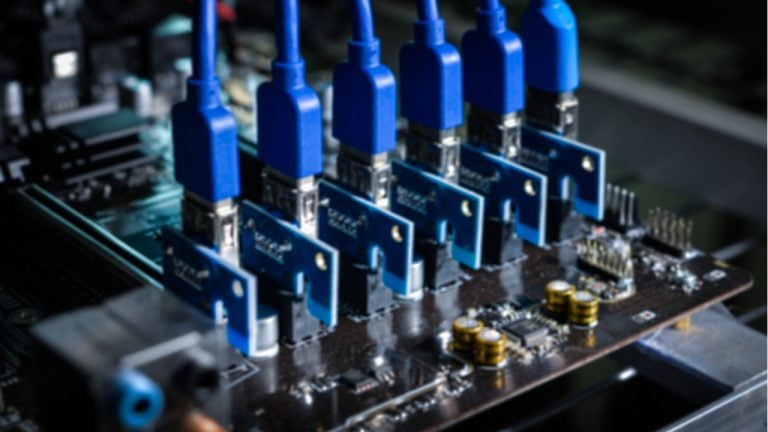
According to Sina, quoting a recently published report, almost 13,000 internet-fueled cafes that operate 24 hours a day, are depending on their high-end computers to mine digital assets, as their PCs were originally conditioned for gamers.

Some of them claim to earn over 40,000 yuan ($6,200) worth in virtual currencies on a monthly basis.

The report states that some owners are even using 200 computers to run mining operations. Wang Xi, a Chinese internet cafe proprietary, commented that the attendance in his business is still “not high.”

“Working days are less than 50%, and mining is done when computers are idle,” he added.

The cafe-based mining farm owner claims to have earned over 200,000 yuan ($31,000) since September 2020. He stated that some of his colleagues turned to digital asset mining because of its profitability:

Due to the impact of last year’s epidemic, Internet cafes were closed for a long time, and the flow of people was not particularly large. Only recently has it improved slightly. As far as I know, most Internet cafes in the entire Nantong urban area have chosen to mine.

He also provided further technical details on his mining rig:

I have a shop computer that uses a 1060 5GB graphics card. The mining power is 15 MB, and the income per trillion is 0.8 yuan. If you calculate the amount of 100 computers, the monthly income is 37,000 yuan ($5,750). The electricity consumption in the industry is only 0.6 yuan/kWh.

South Korean Internet Cafe Owners Are Also Profiting From Crypto Mining

Another owner quoted by the report, Zhang Li, who talked under a pseudonym, believes “mining is definitely the best choice that can be made within the scope of limited resources.” Crypto mining already allowed him to yield profits of around $7,750 monthly.

This maneuver to deal with the pandemic-driven crisis is not the first-of-its-kind in Asia. As Bitcoin.com News reported early this year, cafe internet owners, known as “PC bangs,” in Seoul, South Korea, are mining ether (ETH). The PC bangs are also relying on highly-end computers with top-notch graphic cards in the wake of the Covid-19 crisis.

What are your thoughts on Chinese PC cafe internet owners turning into crypto mining? Let us know in the comments section below.


via Felipe Erazo
Cuban Central Bank Issues Warning on the Rising Number of Crypto-Related Ponzi Cases

Cuban Central Bank Issues Warning on the Rising Number of Crypto-Related Ponzi Cases

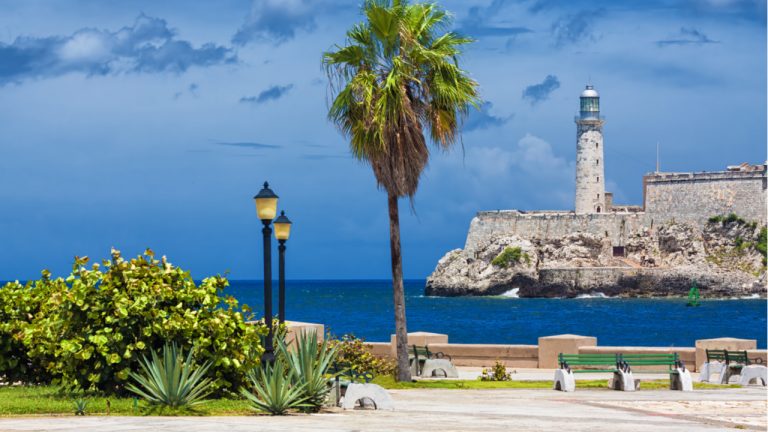
Cuba has witnessed some exciting times in the last few months as far as nationwide digital currency acceptance, but the road toward this goal is still under construction. The country’s central bank recently issued a warning about the rising number of cryptocurrency-related scam cases across the island.

Alleged Crypto Scams Are Mentioned in the Alert

According to the notice published by the Banco Central de Cuba, citizens should be aware of the Ponzi schemes hiding under legit-looking digital asset investments. The schemes have been scamming several people across the nation, whose has been hurt by a long-lasting economic crisis.

The central bank’s officers also released the names of some of the alleged scams operating without licenses in Cuba, such as Mind Capital, Mirror Trading, Arbistar, Trust Investing, Qubit Life/Qubit Tech, X-Toro, among others.

Arbistar has been under the loop of the Spanish authorities, as the bogus company is accused of being a million-dollar crypto scam that dumped on thousands of individuals in several countries. Banco Central de Cuba commented on such red-flagged firms:

“These organizations are characterized by offering, through misleading advertising on social networks and other platforms, the possibility of making ‘sophisticated investments’ even using crypto assets as a novel resource, with the intention of awakening the interest of consumers. Such ads generally promise a way to make a profit quickly and easily, with no apparent risk.”

Cuban Government Does Not Endorse Any Existing Crypto Project

Furthermore, the central bank points out that the Cuban government isn’t currently endorsing any virtual currency-related projects in the country and, in fact, “advises the public not to get involved in operations of this nature.”

Despite the warning issued by the Banco Central of Cuba, the president of the island, Miguel Díaz-Canel, discussed the possibility of including cryptocurrencies as part of his plan “for the convenience” of the national economy.

As Bitcoin.com News reported last week, Díaz-Canel wants to assess the feasibility of implementing such decentralized technologies and their impact on the country. However, he didn’t confirm whether or not he decided to adopt digital assets or create a central bank digital currency (CBDC) as of press time.

What do you think about the warning issued by the Cuban central bank? Let us know in the comments section below.


via Felipe Erazo

Tuesday, May 18, 2021

South Korean Ministries ‘Do Not Want’ to Take Charge of Crypto-Related Regulation, Claims Official

No South Korean Ministries Want to Take Care of Crypto-Related Regulation Problems, Claims Official

The crypto regulation crisis is on fire in South Korea, as politicians have struggled to reach agreements with top government officials to ease rulings. A local media outlet reveals that South Korean ministries “do not want” to take charge of the country’s digital assets’ regulation, after several meetings held in the last few days.

Prime Minister Took Part of the ‘Crypto Summit’

According to SBS, lawmakers held some meetings over the weekend at Prime Minister Kim Bu-gyeom’s office as part of “crypto summits” to address regulatory issues.

An unnamed government official quoted by the media outlet said that the talks with the Leader of the ruling Democratic Party, Song Young-gil, Yoo Young-min, the Secretary of the Office of the Blue House, and Prime Minister Kim didn’t have an optimistic conclusion:

Most ministries do not want to take charge of the problem. A solution will emerge only after the ministries’ responsibilities have been spelled out.

Participants in the meeting addressed the virtual currency bills proposed in the National Assembly, including the forthcoming crypto tax to take effect starting 2022. SBS highlighted that ten government institutions and ministries have some relationship with cryptocurrency-related topics.

Cryptos Are Still ‘Virtual Assets’ With No Financial Value in South Korea

However, the government remains reluctant to grant cryptocurrencies the term “virtual currencies,” instead of keeping naming them as “virtual assets,” which implies that such assets cannot be seen “as a financial asset.”

The Democratic South Korean ruling party has been considering postponing the crypto tax as the national elections loom. Younger voters, which is a rising population in terms of digital asset adoption, tend to be on the side of the Democratic Party.

Still, the government seems to be pursuing its agenda to apply taxation to crypto-related activities. As Bitcoin.com News reported early in May, officials from the South Korean Ministry of Strategy and Finance are set to apply a new rule for virtual currencies miners who earn tokens over $2,220 annually by imposing a 20% tax rate.

What are your thoughts on the report? Let us know in the comments section below.


via Felipe Erazo

Six People Connected to a $36M Crypto Scam Arrested, Scheme Operated From Multiple Locations in Europe

Six People Arrested in Connection to a $36M Crypto Scam That Operated From Multiple Locations of Europe

Authorities in Germany launched a massive operation that cracked down on a sophisticated crypto scam, resulting in the arrest of six people in different European countries. Initial reports state that such a fraudulent scheme stole over $36.2 million worth in virtual currencies from individuals across Europe.

Raids Conducted in Poland, North Macedonia, and Sweden

According to The National News, the investigation from the German police was initiated after locals accused a gang of stealing over 7 million euros ($8.5 million) in the country through bogus online trading platforms, which promoted high yield returns from investing in cryptocurrencies.

Five of the six people were taken into custody by the authorities in Bulgaria, and one in Israel, stated the media outlet, in collaboration with Europol. Raids were also done in Poland, North Macedonia, and Sweden as part of the investigation.

Europol issued a statement about how the millionaire digital asset scam operated:

The criminal group ran at least four such professional-looking trading platforms, luring victims through advertisements on social media and search engines. The members of the criminal group were posing as experienced brokers when contacting the victims via the call center they had set up. The suspects were using manipulated software to show the gains from the investments and to motivate the victims to invest even more.

Furthermore, law enforcement confirmed the seizure of properties, jewelry, luxury vehicles, electronic devices, and 2 million euros ($2.4 million) in cash allegedly connected to the scam’s masterminds.

Victims Also Reported in Spain

The call centers where the scammers ran their fraudulent investment scheme were based in Bulgaria and North Macedonia, ran mostly by Israeli citizens.

Also, authorities believe the criminals laundered stolen money via shell companies established in European Union countries.

But the extent of the victims reached Spain, where 300 complaints were reportedly filed by people who allegedly were scammed by the same fraudsters.

What do you think about the bogus crypto-related scheme taken down by the German authorities? Let us know in the comments section below.


via Felipe Erazo
Monday, May 17, 2021

Spanish Regulator Issues Guidelines for Fund Managers Planning to Invest in Cryptocurrencies

Spanish Regulator Issues Guidelines for Fund Managers Planning to Invest in Cryptocurrencies

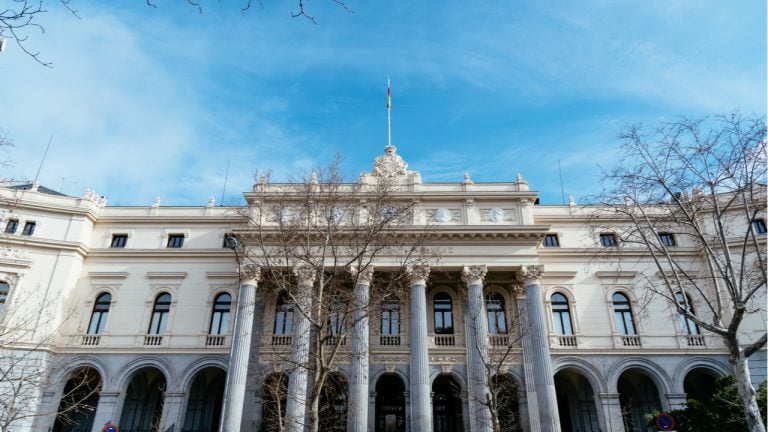
The Spanish financial regulator is easing the entity’s tough stance towards cryptocurrencies by announcing an unprecedented measure that green lights institutional investors to enter into such business decisions. The National Securities Market Commission (CNMV) unveiled guidelines that approve institutional crypto investment under certain conditions.

Fund Managers Should Specify ‘High Risks’ of Cryptos in Marketing Resources

According to El Economista, the set of guidelines allow Spain-based investment funds and collective investment schemes (sicavs) to trade virtual assets on a daily basis, but just the ones “in which the market price is determined from sales operations carried out by third parties.”

The so-called collective investment institutions (IIC) won’t be permitted to allocate money into derivatives and securities such as crypto-powered exchange-traded commodities or exchange-traded notes.

Furthermore, guidelines specify that fund managers under the regulation should always provide proper and clear warnings across their marketing resources for consumer protection purposes.

Despite the new set of rulings issued by the Spanish financial watchdog, no domestic fund managers had announced investments into the virtual currencies sphere as of press time under the specified categories.

However, firms like Blackrock Spain have started to tread waters and opened to the possibility to expose their funds into digital assets. Still, high volatility made Spanish companies reluctant to make a full exposure, said El Economista.

Crypto Reputation Among the Spanish Government and Regulators

The warnings issued by the CNMV are not surprising, considering the background in terms of stricter rhetoric on cryptocurrencies coming from both the government and the watchdog.

As Bitcoin.com News reported in February, Ana de la Cueva, the Spanish Secretary of State for the Economy, said that cryptocurrencies such as bitcoin (BTC) carry “a risk of default, given that the user does not have the protection offered by traditional payment systems against a default by the counterparty.”

Recently, Rodrigo Buenaventura, CNMV president, was vocal on his stance against bitcoin-related street ads, considering them “risky.”

What are your thoughts on the guidelines issued by the CNMV? Let us know in the comments section below.


via Felipe Erazo

Saturday, May 15, 2021

Chinese Investors File Lawsuit Against US-Based Alleged Crypto Fraudster Who Promised $200,000 Profits per Day

Chinese Investors Filed a Lawsuit Against a US-Based Alleged Crypto Fraudster Who Promised $200,000 Profits per Day

A group of Chinese investors has filed a lawsuit against an alleged crypto fraudster based in New York, United States, who ran a Wechat group where he handled the scheme. The scammer reportedly promoted the bogus investment opportunity by promising earnings of “$200,000 in one day.”

Scam Allegedly Ran From 2016 to 2020

According to the Epoch Times, the six plaintiffs – residents of China, Canada, California, Washington State, and Georgia – accused the individual, named in the documents just as “Sun,” of running a stock trading academy where he sold courses and provided investment tips.

The lawsuit was filed in the Federal Court for the Eastern District of New York, where the victims demanded Sun to return their initial investments, which they didn’t disclose publicly, plus the profits promised by him.

Sun claimed to operate a blockchain and digital asset-related investment group that ran from 2016 to March 2020.

The alleged fraudster falsified bitcoin (BTC) trading statements and distributed them through the Wechat group to add some sort of credibility to his expertise in the crypto sphere.

Alleged Fraudster Always Had Excuses Such as Tax Issues to Avoid Paying His Investors

He claimed to have been an active bitcoin trader who placed orders every single day of the week, said the court documents cited by the Epoch Times.

From June to July 2020, Sun flooded the chat with claims that he has been “easily making money” with cryptocurrencies, while his victims praised the fake trades simultaneously, even calling him “god.” One excerpt of the indictment reads:

On August 1, 2020, the day before the start of raising bitcoin and investment capital, Sun released two screenshots, showing that the trading gains of his closed positions were 558.9% and 763.75%, respectively. He explained that this operation ‘received 15 bitcoins.’ After a while, he posted another screenshot showing that the transaction income of the other contract was 330.06%. The money was enough for him to go to the shipyard to see the yacht and buy a boat. He said: ‘Withdraw the money and go to see the yacht tomorrow.’

However, by the end of 2020, things started to get shady for the investors who trusted Sun. When they asked him for their investments back, the alleged scammer always had excuses to not send them the money, such as “tax issues, problems with anti-money laundering measures, identity verification, among others.”

As of now, there has been no proof of Sun returning funds to any of his victims.

What are your thoughts on this alleged crypto-related fraud case? Let us know in the comments section below.


via Felipe Erazo

Friday, May 14, 2021

Report: Colonial Pipeline Paid $5M Worth in Crypto to Ransomware Gang, Restarts Services

Colonial Pipeline Paid $5M Worth in Cryptocurrencies to Ransomware Gang, Restarts Services

The global oil market was shaken by news from the United States as a ransomware attack hit the largest oil infrastructure operation in the country. A recent report claims hackers asked Colonial Pipeline to pay for an undisclosed amount in ransom to unlock the firm’s system – a demand the company allegedly fulfilled.

Darkside Gang Is Allegedly the Author of the Ransomware Attack

According to Bloomberg, Colonial Pipeline paid almost $5 million worth in “difficult-to-trace” cryptocurrencies to hackers allegedly from Eastern Europe. The report contradicts initial claims from the oil firm that it didn’t intend to arrange the ransom payment.

The media outlet also cites that the ransom was paid in “difficult-to-trace” virtual currency. However, CNN said on Wednesday that the group of cybercriminals known as Darkside demanded bitcoin (BTC).

As of press time, CNN updated the original article, confirming Bloomberg’s information, and removing bitcoin’s mention, thus leaving on the air the specific digital asset used for the payment, nor the date it was made. Both CNN’s and Bloomberg’s reports source anonymous people that are “familiar with the matter.”

After receiving the ransom, hackers proceeded to send Colonial Pipeline a decrypting tool to restore its entire systems, allowing them to resume fuel shipments and routine operations.

Investigations from the FBI point to Darkside as to the alleged authors of the extortion, who are mainly based in Russia and Eastern Europe.

The attack on Colonial Pipeline obliged the company to temporarily shut its pipelines down as the systems were compromised, as well as the billing infrastructure to deal with the clients nationwide.

Should the Affected Companies Pay for the Ransoms?

Companies attacked by ransomware often deal with the dilemma of whether to pay for the extortion or not, as authorities recommend not doing so. Anne Neuberger, the White House’s top cybersecurity official, addressed the matter, although she didn’t advise that firms directly pay for ransoms:

We recognize, though, that companies are often in a difficult position if their data is encrypted and they do not have backups and cannot recover the data.

Furthermore, law enforcement encourages companies and entities to not negotiate with hackers because they cannot provide enough guarantees to deliver what they promise.

What do you think about this news? Let us know in the comments section below.


via Felipe Erazo

Thursday, May 13, 2021

Argentinean Tax Body Asks Domestic Cryptocurrency Exchanges to Report Monthly Transactions and Wallet Balances

Argentinean Tax Body Asks Domestic Cryptocurrency Exchanges to Report Monthly Transactions and Wallet Balances

The local tax authority could soon hunt tax evaders who trade cryptocurrencies in Argentina following a notice sent to domestic crypto exchanges. The Federal Administration of Public Revenue (AFIP) ordered them to report all virtual currency-related transactions every month.

Payment Gateways Are Also Subject to the Ruling

According to Bae Negocios, the watchdog issued a “Form 8126” and forwarded it to every single digital asset exchange operating in the country to comply with the new ruling. Companies will have until the 15th of the month following the month reported to fill out the form.

The report states that exchanges should report “the list of accounts with which they identify each of the clients; registrations, cancellations, and modifications that occur; total amounts of income, expenses and final monthly balance” of the wallets.

Interestingly, Mercado Pago, a domestic payment gateway that users can use to buy cryptos such as bitcoin (BTC) via peer-to-peer (P2P) platforms, will be subject to the scrutiny of the AFIP.

Is a Crypto Regulation Coming to Argentina Soon?

The measure is announced after the Central Bank of Argentina (BCRA) asked in April 2021 domestic banks to forward them information about its customers who deal with bitcoin and perform any other kind of digital asset transactions.

Such request aims to evaluate whether the crypto market “should be required for an even bigger regulation or not,” suggesting that Argentinean authorities are assessing ways to regulate the local virtual currency sphere.

Despite forthcoming rulings on scrutiny among the virtual asset companies in Argentina, the country keeps showing an increased interest in such a market.

Bitcoin.com News reported recently that most Argentineans buy BTC, but also USD-pegged stablecoins, such as dai (DAI), usd coin (USDC), and tether (USDT).

The cited report pointed out that stablecoin preference in Argentina started to gather momentum in 2019 due to the US dollar’s buying cap imposed in the country.

What do you think about the measure announced by the Argentinean tax body? Let us know in the comments section below.


via Felipe Erazo
Cuban President Discusses Adopting Cryptocurrencies for the ‘Convenience’ of the National Economy

Cuban President Talks About Possibly Adopting Cryptocurrencies at the 'Convenience' of National Economy

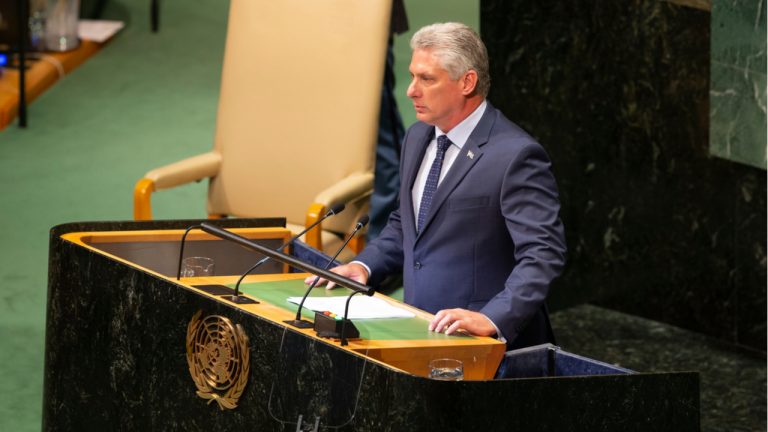
Cuba has been actively discussing the possibility of adopting cryptocurrencies over the last few months during high-political summits. This time, the president of the Caribbean island discussed crypto assets once again during a virtual currencies topic on the summit agenda, talking about the possibility to consider it for future economic plans.

Discussions Underway Despite Domestic Crypto-Related Scams

According to Periodico Cubano, Miguel Díaz-Canel told regional governors and politicians during a virtual summit about a possible upcoming crypto adoption phase for “the convenience” of the national economy.

He wants to assess the feasibility of implementing such decentralized technologies and their impact on the country. Interestingly, Díaz-Canel is an electronic engineer.

Although he declined to provide further insights on the matter, the Cuban president promised to inform citizens of the latest developments about his virtual currencies’ assessment.

However, during the meeting, Díaz-Canel further talked about an alleged crypto-related Ponzi scheme, even though he declined to name the shady company. The president also commented on the dangers that digital asset scams bring to the Cubans:

In recent times, there have been monetary operations executed by transnational companies that with the use of cryptocurrencies develop speculative schemes and seek to maximize profits through procedures that could be the cause of fraud.

For example, a Trust Investing representative in Cuba, Ruslan Concepción, was arrested by the Cuban authorities on illicit economic activities charges and remains under custody awaiting a trial, said EFE via Deutsche Welle. There is no major information on the origins of the bogus company, as most of its operations targeted Cubans.

Cuban State Political Party and Cryptos

Overall, the state political party, the Communist Party of Cuba (PCC), has been flirting with the crypto industry, but with no close approach yet.

As Bitcoin.com News reported in April 2020, some members of the PCC suggested that the country should make its inception into the virtual currency sphere as “an alternative to face the current economic crisis” that the island is living.

What are your thoughts on the Cuban president’s words? Let us know in the comments section below.


via Felipe Erazo
Wednesday, May 12, 2021

Cybersecurity Firm Spots a Crypto Stealer Distributed Through a Massive Email Spam Campaign and Discord Channels

Cybersecurity Firm Spots a Crypto Stealer Distributed Through a Massive Email Spam Campaign and Discord Channels

A crypto stealer seems to have spread through a massive spam campaign across several countries, including the United States, Australia, Japan, and Germany. The malware dubbed “Panda Stealer” has been spotted by a cybersecurity company. It is reportedly also distributed on Discord channels.

Malware Can Also Steal Data From Telegram and Discord Apps

According to the report published by Trend Micro, the stealer is a variant of another malware named “Collector Stealer,” which utilizes the same algorithms to bypass most detection tools. The malware is contained within a malicious Excel file in a .xlsm format.

Once the victim executes a series of Powershell scripts in the infected document, Panda Stealer deploys its malicious processes. It collects sensitive crypto-related data, including private keys and records of past transactions performed with wallets from virtual currencies like dash (DASH), litecoin (LTC), ethereum (ETH).

Researchers from Trend Micro provided further technical details on the malware’s similarities with other ones:

Panda Stealer was found to be a variant of Collector Stealer, which has been sold on some underground forums and a Telegram channel. Collector Stealer has since been cracked by a Russian threat actor called NCP, also known as su1c1de. (…) Like Panda Stealer, Collector Stealer exfiltrates information like cookies, login data, and web data from a compromised computer, storing them in an SQLite3 database. It also covers its tracks by deleting its stolen files and activity logs after its execution.

But the stealer is not limited to catching digital asset-related data from victims. In fact, the study revealed that it has the technical capabilities to steal credentials from Telegram, Nordvpn, and Discord, among others.

Moreover, Panda Stealer can take screenshots from the users’ computers and catch encrypted data in browsers, such as credit card information.

Recent Crypto Malware Stealers Spotted

Bitcoin.com News has reported the surge of crypto-malware over the past few months. Recently, a cryptocurrency-related malware program named “Westeal” has been advertised on darknet forums as the “leading way to make money in 2021,” raising alarms among the cybersecurity community.

The system has the resources to steal bitcoin (BTC) and ethereum, but the malicious code works under a subscription model.

What do you think about the study revealed by the cybersecurity firm? Let us know in the comments section below.


via Felipe Erazo

Bosnia and Herzegovina Is Preparing a Draft Bill to Regulate Cryptocurrencies

Bosnia and Herzegovina Is Preparing a Draft Bill to Regulate Cryptocurrencies

A European country in the Balkans region could start regulating the crypto environment within its territory. A bill is being drafted in Bosnia and Herzegovina that would establish a regulatory framework for cryptocurrencies for the first time in the country’s history.

Bill Aims to ‘Attract Entrepreneurs’ to the Country

According to Klix, the Union for a Better Future (SBB) of Bosnia and Herzegovina (BiH), a Bosniak political party, is set to draft a crypto bill after forming a group to research “technological, economic progress, and market modernization.”

The plan includes digital asset development, and thus, crypto-related rules are required to make it possible. The report states that Vedad Mešanović, a local financial expert, will lead the drafting of the bill.

Mešanović – who was recently included in the Forbes list of the 30 most influential people under the age of 30 – stressed the need to regulate the virtual currency sphere in Bosnia and Herzegovina, as state laws “do not follow the development of the cryptocurrency market” across the board. He added:

My job will be to prepare a draft of this law, to work out the details so that we can best bring a large number of companies and entrepreneurs here who would pay taxes here, that is, to create a good environment. With this draft, SBB’s job will be to use its strength to propose that law and to vote.

Croatia and Serbia Used as a Reference for the Crypto Bill

Per the report, the draft bill will also consider some regulations enacted in Serbia and Croatia. Of particular interest are those that regulate crypto miners and traders, who are required to pay taxes on capital gains, plus a city-specific surtax.

There is no timeline on when the bill will be discussed and the question is whether state parliamentarians will be ready to take a step forward to regulate the crypto industry, said the financial expert. Moreover, the Banking Agency of the Federation of Bosnia and Herzegovina, a state agency responsible for domestic bank regulations, said:

The use and operation of cryptocurrencies are not regulated by the current legislation in the Federation of BiH. The issue of the use of digital money and cryptocurrencies is a special challenge in other regulated financial systems, except in cases where central banks issue cryptocurrencies.

What are your thoughts on the upcoming cryptocurrency regulation in Bosnia and Herzegovina? Let us know in the comments section below.


via Felipe Erazo

South Korean Banking Association Concerned Over Surge of the Altcoin Trading Frenzy

South Korean Banking Association Concerned Over Surge of the Altcoin Trading Frenzy

A banking association in South Korea recently added weight to regulatory discussions across the country, raising concerns about the high altcoin trading volume. The Korea Federation of Banks (KFB) requested its members to audit trading volumes through their crypto exchanges’ customers’ altcoin activity.

Altcoins Trading Volume Outperformed Bitcoin Last Weekend in South Korea

According to The Korea Herald, the KFB is concerned about potential risks that South Korean banks could be exposed in front of high altcoin trading volumes, as they offer their services to domestic virtual currency exchanges.

The warning comes in the wake of a significant surge of the transaction volumes to around 95% in altcoins, said the media outlet.

An official from the Korea Federation of Banks commented on the matter:

One of the criteria that we recommend is the safety of digital assets, and that can be measured by the number of digital coins on an exchange. If an exchange deals with too many digital assets, it takes on more risks.

During 24 hours last Saturday, bitcoin (BTC) volume levels were only 4.26% on the domestic exchange Upbit.

That said, the banking association asks local banks to strengthen existing rules on overseeing suspicious transactions through the cryptocurrency exchanges and report them, according to the revised “Act on Reporting and Using Specified Financial Transaction Information.”

South Korean Regulators’ Harsh Tone on Cryptos

Overall, the plethora of crypto regulation news in South Korea keeps making the headlines, as the ruling mentioned above is underway.

In fact, the chairman of South Korea’s top financial regulator, the Financial Services Commission (FSC), Eun Sung-soo, recently warned that all of the digital asset exchanges in the country could be shut down. But his harsh rhetoric on the industry has not been well received among the domestic crypto community.

As Bitcoin.com News reported on April 28, 2021, South Korea’s presidential website is now being filed with thousands of petitions from furious people aged 20-39, seeking Eun’s resignation.

As of press time, South Korea has about 200 virtual currency exchanges.

What do you think about the warning issued by the South Korean banking association? Let us know in the comments section below.


via Felipe Erazo