Wednesday, January 30, 2019

The Daily: Fidelity Crypto Custody Update, Cryptopia Hack Continues

The Daily: Fidelity Crypto Custody Update, Cryptopia Hack Continues

In today’s edition of The Daily we feature a number of stories about financial companies adding cryptocurrency-related services including a custody solution from Fidelity and new CFDs for trading BCH vs precious metals. We also cover the latest update about the ongoing Cryptopia hack.

Also Read: Report: Two Hacker Groups Stole $1 Billion From Crypto Exchanges

Fidelity Crypto Custody Set for March

Back in October 2018 the Boston-headquartered financial services corporation Fidelity Investments announced the launch of a subsidiary called Fidelity Digital Asset Services LLC. The company is dedicated to providing cryptocurrency services including custody and trade execution to institutional investors such as hedge funds, family offices, and market intermediaries. According to a new report, the first service from the venture, a cryptocurrency custody solution, is now scheduled for March 2019. The company will reportedly begin with offering BTC storage with ETH expected to come next.

The Daily: Fidelity Crypto Custody Update, Cryptopia Hack Continues

“We are currently serving a select set of eligible clients as we continue to build our initial solutions,” Fidelity stated on Tuesday. “Over the next several months, we will thoughtfully engage with and prioritize prospective clients based on needs, jurisdiction and other factors.”

Cryptopia Exchange Hack Continues

Earlier this month we reported that $16 million worth of cryptocurrency was stolen in the ‘weird’ hack of New Zealand-based exchange Cryptopia on Jan. 14. But an investigation by data company Elementus has revealed that the incident is not yet over. The company reports that the Cryptopia hacker withdrew further funds on Monday, siphoning an additional 1,675 ETH from an another 17,000 Cryptopia wallets. This doesn’t represent a new breach, it should be noted, but rather reflects the fact that the hacker retains a copy of the private keys originally used to infiltrate the accounts. This enables them to remove any new funds they receive at will.

Among the wallets affected are over 5,000 that had already been drained in the original hack, but have since been topped up with new money. Elementus explains that most of these funds are coming from mining pools. “Presumably, these payments are being sent on behalf of miners who opted to receive their rewards automatically via ‘direct deposit,’ and have since forgotten about it.”

79% of Financial Advisors Asked About Crypto Assets

Bitwise Asset Management and ETF Trends have released the results of a survey on financial advisors’ attitudes towards crypto assets that was conducted during December 2018. The survey involved over 150 respondents including independent registered investment advisors (RIAs), independent broker-dealer representatives, financial planners and wirehouse representatives.

Key findings are that 79 percent of advisors received questions from clients on crypto in 2018, 9 percent currently manage an allocation to crypto in client portfolios and 22 percent plan to either start a new allocation or increase their existing allocation to crypto during 2019. Additionally, 55 percent of surveyed advisors expect prices to appreciate over the next five years with the mean BTC price target for December 31, 2023, at $17,571.

The Daily: Fidelity Crypto Custody Update, Cryptopia Hack Continues

“After a year in which the Bitwise 10 Large Cap Crypto Index fell 78%, the survey shows that interest in crypto investing from financial advisors not only survived, but grew,” said Matt Hougan, Global Head of Research for Bitwise Asset Management. “There are clear reasons why: Advisors tell us that they are getting inbound questions from clients, that they need ways to connect with a younger generation of clients, and that clients are investing in crypto outside of their advisory relationship anyway.”

Liquidity Provider Adds BCH vs Gold and Silver CFDs

B2Broker, a liquidity provider for the crypto and FX industry, has announced the launch of 40 new cryptocurency-based CFDs, comprising top cryptos against major fiat currencies. The launch also features a range of interesting pairs including BTC, LTC, ETH, XRP and BCH against XAG (gold) and XAU (silver).

The company has also announced that it has increased leverage for crypto CFDs to 1:5, and that is now able to provide as a base currency any fiat currency, USD-pegged stablecoins and top cryptos. Brokers and exchanges can connect directly via FIX API to the liquidity pool at the datacenters in London and Hong Kong.

B2Broker CEO Arthur Azizov commented: “Any broker can connect to us quickly and easily, with bridges offered free of charge to those operating MT5 and MT4 trading platforms. These latest developments further strengthen the company’s presence in the industry and reaffirms our position as a global leader.”

New Hong Kong Dollar Stablecoin

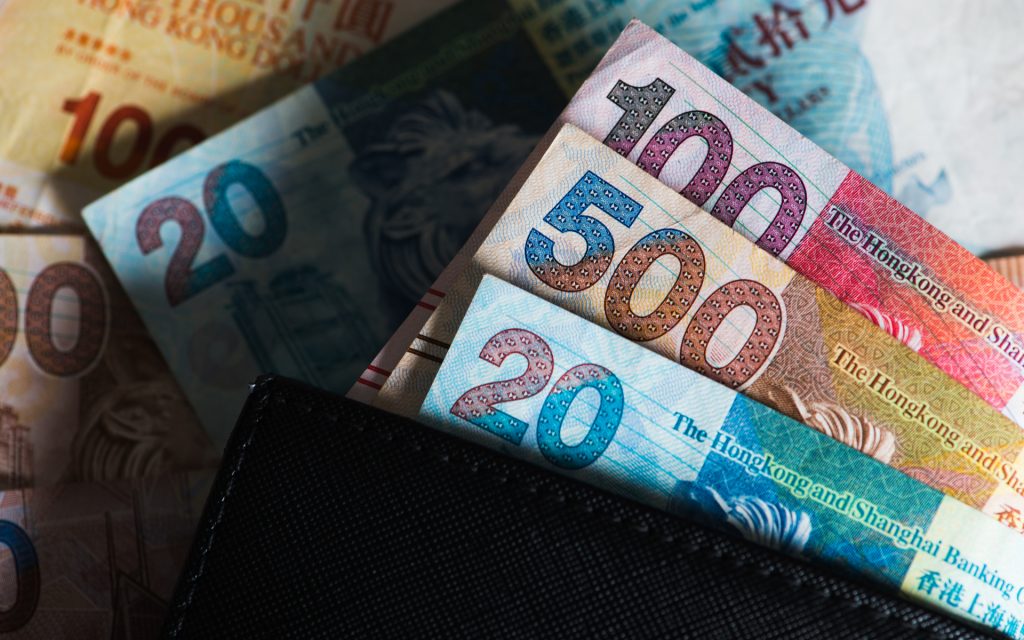
Bitspark, a cryptocurrency remittances platform, has announced the launch of Sparkdex.HKD, a stablecoin pegged to the Hong Kong Dollar (HKD). The token is tied to the company’s reserves of physical cash in HKD and Bitspark promises this will be regularly audited by a local audit firm in a quarterly report for the public. The coin already began listing on Sparkdex, Bitspark’s decentralized exchange (DEX), and Bitshares’ connected DEX, on 31 Oct, 2018 and can be integrated into other exchanges as well.
The Daily: Fidelity Crypto Custody Update, Cryptopia Hack Continues

“Bitspark was founded in Hong Kong, a front runner for innovation in finance. We see the launch of Sparkdex.HKD as a clear opportunity for Bitspark to bring the benefits of this technology to Asia. We’re planning to also launch a further 179+ stablecoins to service the company’s money transfer markets starting initially with emerging and frontier markets.” said Maxine Ryan, Bitspark COO.

What do you think about today’s news tidbits? Share your thoughts in the comments section below.


Images courtesy of Shutterstock.


Verify and track bitcoin cash transactions on our BCH Block Explorer, the best of its kind anywhere in the world. Also, keep up with your holdings, BCH and other coins, on our market charts at Satoshi’s Pulse, another original and free service from Bitcoin.com.

The post The Daily: Fidelity Crypto Custody Update, Cryptopia Hack Continues appeared first on Bitcoin News.


via Avi Mizrahi

Tuesday, January 29, 2019

Study Finds Three Quarters of Attendees at Crypto Events Are Male

Study Finds Three Quarters of Attendees at Crypto Events Are Male

A recently released report confirms a well-known observation – crypto-focused events are still largely male-dominated, not only in terms of registrants in general but also speakers. According to another finding, almost half of the attendees at the studied forums came from the U.S.  

Also read: Crypto Mining Could Bring Russia $1B in Taxes, Report Suggests

Crypto Industry Events Remain Male-Dominated

The research conducted by event software platform Bizzabo covers 100 conferences across 15 countries. These are all events visited by professionals from the crypto industry and related sectors who want to stay informed about the latest developments in the crypto space.

Study Finds Three Quarters of Attendees at Crypto Events Are Male

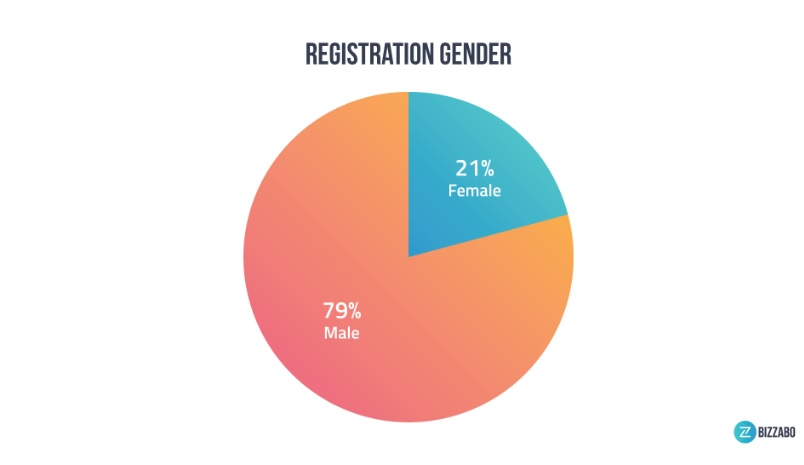
The results highlight the gender disparity the sector is known for. More than three quarters, or 79 percent, of the attendees at the studied events were male, while only 21 percent were female.

In another report on gender diversity and inclusion released in November, Bizzabo found that 70 percent of speakers at events across multiple industries including the crypto sector were also male. Alon Alroy, Chief of Customer Success at Bizzabo, noted:

Like the tech industry, at large, there is a lack of gender diversity in the overall virtual currencies space. We’re seeing that reflected in the attendance for these events, as well as the speakers. One cryptocurrency conference recently featured 84 men onstage and three women. That has to change.

Almost 60% of Registrants Are From the Finance Sector

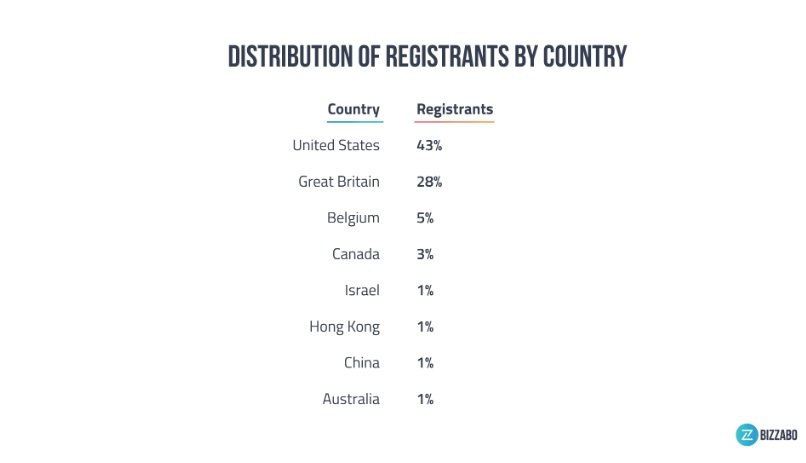
The authors of the study have drawn other interesting conclusions based on the data collected by Bizzabo. For example, 45 percent of the registrants and attendees at the examined events came from the United States. The United Kingdom is second with 28 percent, followed by Belgium at 5 and Canada at 3 percent. Israel, Hong Kong, China and Australia have been represented by 1 percent of the attendees.

Study Finds Three Quarters of Attendees at Crypto Events Are Male

Around 57 percent of all registrations for the crypto events in the study were made by people working in the finance sector, while 37 percent were employees of companies from the technology sector. Management consulting firms accounted for 6 percent of all attendees.

Alon Alroy further commented that the lack of gender diversity in attendees speaks about the industries most of the registrants come from. “The financial services and technology sectors have all struggled with inclusion and that has a cascading impact on the gender mix at these events,” the cofounder of Bizzabo elaborated.

What is your opinion about the findings in the study? Share your thoughts on the subject in the comments section below.


Images courtesy of Shutterstock, Bizzabo.


Make sure you do not miss any important Bitcoin-related news! Follow our news feed any which way you prefer; via Twitter, Facebook, Telegram, RSS or email (scroll down to the bottom of this page to subscribe). We’ve got daily, weekly and quarterly summaries in newsletter form. Bitcoin never sleeps. Neither do we.

The post Study Finds Three Quarters of Attendees at Crypto Events Are Male appeared first on Bitcoin News.


via Lubomir Tassev

Iran in Talks With 8 Countries for Use of Cryptocurrency in Financial Transactions

Iran is exploring various options, including holding negotiations with other countries to introduce cryptocurrency in global trade, as the Islamic state moves to sidestep U.S. economic sanctions. Mohammad-Reza Modoudi, the acting head of Iran’s Trade Promotion Organization (TPO), said the country was negotiating the use of cryptocurrency in its financial transactions with eight countries.

Also read: Cryptocurrency is Providing a New Lucrative Revenue Stream for Governments

Negotiations Aim to Dismantle U.S. Dollar Hegemony

Speaking to local Tasnim news agency on Jan. 28, Modoudi said: “Representatives from Switzerland, South Africa, France, England, Russia, Austria, Germany and Bosnia have visited Iran to hold related talks about the issue.” He expressed hope that Iran was capable of luring foreign investors into the country.

Iran in Talks With 8 Countries for Use of Cryptocurrency in Financial Transactions

In November last year, the U.S. announced severe economic sanctions against Iran that, with the exception of just eight countries, cut the rest of the world off from the country’s oil, shipping and gas market, including its financial system. An earlier round of sanctions in May targeted Iran’s currency, aviation industry and other sectors, as President Donald Trump broke away from his predecessor Barack Obama’s engagement with Tehran.

Measures against the financial system have already started to hurt international settlements. The U.S. arm-twisted global banking network Swift into severing ties with Iran’s central bank, leaving the country and its citizens in limbo. In the cryptocurrency realm, global exchanges such as Binance and Bittrex have unofficially dropped Iran from the list of supported countries to receive services.

Now, the oil-rich Middle East country has set its sights on virtual currency. Iran, the world’s third largest oil producer, is hoping to leverage cryptocurrencies to compensate for the squeeze in petrodollars arising from the economic sanctions. The blockade has also throttled trade relations with much of the world, where the U.S. dollar still dominates.

Iran in Talks With 8 Countries for Use of Cryptocurrency in Financial Transactions

Since mid-2018, Iran has engaged in research and development of its own digital currency that is likely to be linked to the rial, mainly for use in expanding banking system services and to fend off the sanctions.

Russian President Vladimir Putin recently indicated that Russia was “actively working” with partners to establish financial systems that are fully independent of Swift, without naming partner countries. This was after Iran had signed a trilateral blockchain cooperation agreement with Russia and Armenia on Nov. 14.

 Iran Publishes Draft Crypto Regulation Framework

Meanwhile, the Central Bank of Iran (CBI) has published its draft framework, dubbed “Version 0.0,” on regulating cryptocurrencies. According to an Al Jazeera report, Iran has reversed a previous ban on crypto assets “but still imposed restrictions on the use of digital currency” within the country.

The bank said the framework “is aimed at organising and defining boundaries of ongoing crypto operations in the country, and allowing traders to plan for their future.” The CBI recognized and approved the use of virtual currencies like bitcoin, the article said, and permitted initial coin offerings, cryptocurrency wallets, and cryptocurrency exchanges as well as mining operations.

Iran in Talks With 8 Countries for Use of Cryptocurrency in Financial Transactions

However, CBI said that “Using global cryptocurrencies as methods of payment inside the country is prohibited.” Also, Iranians are prohibited from holding large volumes of crypto, just as they aren’t allowed to possess fiat amounts exceeding €10,000 – something that has elicited sharp criticism from Iranian bitcoin investors.

Aljazeera quoted Perhman Azhdarpour, a 28-year old trader, as saying: “The ban on using internationally accepted cryptos as payment methods can negatively affect the work of me and many like me. We were hoping the central bank’s stance would not again restrict the use of bitcoin and other cryptocurrencies in any way.”

More than $10 million worth of BTC is traded in Iran each day, according to the Iran Blockchain Association. The Islamic republic banned its banks from handling transactions in popular cryptocurrencies like bitcoin last April, concerned about issues of money laundering and other alleged criminal activities. But the move was widely interpreted as a way to block capital flight in light of impending United States sanctions.

What do you think about Iran’s plan to tackle economic sanctions using cryptocurrency?  Let us know in the comments section below.


Images courtesy of Shutterstock.


Express yourself freely at Bitcoin.com’s user forums. We don’t censor on political grounds. Check forum.Bitcoin.com


The post Iran in Talks With 8 Countries for Use of Cryptocurrency in Financial Transactions appeared first on Bitcoin News.


via Jeffrey Gogo

Report: Two Hacker Groups Stole $1 Billion From Crypto Exchanges

A new report alleges that just two groups of hackers dominate the majority of cybercrime directed against cryptocurrency exchanges. Together, these groups have responsible for stealing about $1 billion of cryptocurrency so far.

Also Read: Arwen Enables Self-Custody for Traders of Centralized Exchanges

The Most Lucrative of All Crypto Crimes

Digital surveillance company Chainalysis has released its latest “crypto crime” report, claiming to identify two groups responsible for the majority of hacks in the field. Its findings were obtained in part by analyzing the different practices the thieves used for laundering their illicit gains.

On average, the incidents that the researchers traced from the two hacking groups involved $90 million per incident. They suspect that the first group is a “giant, tightly controlled organization” that may be partly driven by non-monetary goals. The second group is found to be smaller and less organized but absolutely focused on money and without much regard for evading detection.

Report: Two Hacker Groups Stole $1 Billion From Crypto Exchanges

“Hacking dwarfs all other forms of crypto crime, and it is dominated by two prominent, professional hacking groups,” the Chainalysis team wrote. “Together, these two groups are responsible for stealing around $1 billion to date, at least 60% of all publicly reported hacks. And given the potential rewards, there’s no question hacking will continue; it is the most lucrative of all crypto crimes.”

Most Stolen Crypto Laundered on Exchanges

According to the report, at least 50 percent of the stolen funds were cashed out through some type of conversion service within 112 days of the hacks. The researchers found that 64.3 percent of the funds were sent to centralized cryptocurrency exchanges, 11.9 percent to peer-to-peer exchanges and the remaining 23.8 percent went through other conversion services such as mixing services, bitcoin ATMs and gambling sites.

“Exchanges are regularly processing the stolen funds, allowing the hackers to convert the funds to traditional currencies or other cryptocurrencies,” the Chainalysis team explained. “This is in part because unless you’re the exchange that was hacked, these funds look like they have come from legitimate owners (that is, the original entities who were hacked); it is hard to tell which funds have been stolen and which haven’t without specialized investigation software.”

Report: Two Hacker Groups Stole $1 Billion From Crypto Exchanges

Chainalysis recently announced the launch of Know Your Transaction (KYT) for stablecoins, an anti-money laundering (AML) compliance solution for monitoring stablecoin transactions from issuance to redemption.

What do you think about the findings of this report? Share your thoughts in the comments section below.


Images courtesy of Shutterstock.


Verify and track bitcoin cash transactions on our BCH Block Explorer, the best of its kind anywhere in the world. Also, keep up with your holdings, BCH and other coins, on our market charts at Satoshi’s Pulse, another original and free service from Bitcoin.com.

The post Report: Two Hacker Groups Stole $1 Billion From Crypto Exchanges appeared first on Bitcoin News.


via Avi Mizrahi