

Warnings of an imminent financial crisis are in the media more than ever before. But could such an event be the tipping point that puts Bitcoin and cryptocurrency firmly into the mainstream? Politician and tech entrepreneur Rick Falkvinge says it would be the perfect time to finally convert people to crypto.
Also read: Billions Living Under Authoritarian Regimes Need Bitcoin Says Human Rights Activist
“Storm Clouds Building”
A global financial crisis is imminent – and we’re not prepared, experts have warned. The deputy head of the International Monetary Fund, David Lipton, said in December that he sees “storm clouds building” and fears “the work on crisis prevention is incomplete.” While Janet Yellen, the former chairwoman of the Federal Reserve, has said the loss of authority by banking regulators and a move toward deregulation are also warning signs of another economic disaster. 
A sustained trade war between the U.S. and China could damage the global economy, it has been warned, and the level of global debt has reached record levels. Combined with the risk of leveraged loans and a lack of tools available to deal with a future crisis, it would seem the warning signs are everywhere.
But what would this mean for the crypto-world? Could a crash do the crypto-market any good – as has been seen in Venezuela – or could it see people trying to cash out as quickly by selling their digital assets at the highest possible price?
Make Or Break Opportunity
The founder of Sweden’s libertarian Pirate Party, Rick Falkvinge, told news.Bitcoin.com that not only is a future financial crisis on the horizon, it will be the “make or break” opportunity to convert the masses to using cryptocurrency. “It’s like watching a mountainside full of wet snow, you can’t tell what’s going to set off the avalanche but you know for sure the avalanche is coming,” he said of the current warning signs.
“Since august 15, 1971 [the date of the Nixon shock] the bubble has been inflating. The situation is what we call metastable, it’s kind of like when we have one of the spinning tops. It stays stable for a little while but it can’t stay stable forever.”
But Mr. Falkvinge, a proponent of Bitcoin Cash (BCH) and an evangelist for digital rights, went on to say that the future crash will be the ultimate opportunity to convert the masses to cryptocurrency.
And the crypto world would have to prove that digital currency is of use and a better option than fiat, Mr. Falkvinge added. “We will have to make the case,” he said. “We have to provide the value for it to be a better offering. At the end of the day it’s got to deliver. That’s the point I’m coming to full circle here. At the end of the day a crunch – credit crunch, stock market crunch, housing market crunch – is when we really have an excellent shot at introducing the world to crypto and using it to break free of this nickel-and-diming that’s so prevalent in existing markets.”
He added: “We have to make the case. We have to provide the value for it to be a better offering. That’s a once in a lifetime opportunity and it’s not coming back. That’s the make or break.”
Do you think a financial crisis could do the crypto world good? Tell us in the comments below.
Images courtesy of: Shutterstock and The Pirate Party.
Need to calculate your bitcoin holdings? Check our tools section.
The post Rick Falkvinge: Imminent Financial Crisis Perfect Opportunity to Convert the Masses to Crypto appeared first on Bitcoin News.
via Mathew Di Salvo

 Bakkt, the digital assets subsidiary of the parent of the New York Stock Exchange , Intercontinental Exchange (NYSE: ICE), has announced it’s completed a first round of funding. The investors include Boston Consulting Group, CMT Digital, Eagle Seven, Galaxy Digital, Goldfinch Partners, Alan Howard, Horizons Ventures, Intercontinental Exchange, Microsoft’s venture capital arm, M12, Pantera Capital, Payu, the fintech arm of Naspers, and Protocol Ventures.
 Back in October, Intercontinental Exchange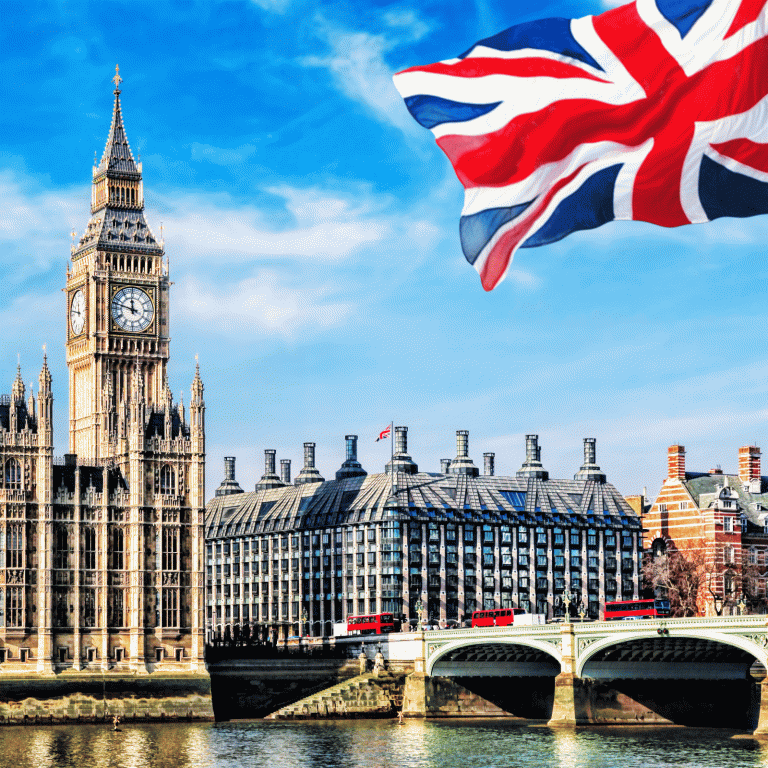
 The U.K.’s FCA has released new information regarding its investigations into crypto businesses to The Telegraph in response to a Freedom of Information (FOI) request. The publication reported on Saturday that the FCA revealed that “as of Nov. 12 it had opened inquiries into 67 firms involved in cryptocurrency businesses.” The Financial Times elaborated:
 Out of 67 inquiries, 49 have been closed. The FCA issued consumer alerts for 39 firms. “Alerts are issued by the regulator when it is concerned a company is operating without authorisation, and is a suspected scam,” the publication described. The other 10 inquiries were closed because the companies involved were either warned that they may need authorization to continue their activities or there was not enough evidence to proceed with the investigation. The regulator declined to name the companies under investigation.
 Following a report by the Treasury Committee published in September stating that “‘Wild West’ crypto-assets should be regulated,” the government earlier this month said that it is ready to give the FCA power to oversee the cryptocurrency industry. The authority will launch a consultation early next year to determine how the crypto market should be regulated.
 Authorities in Iran would interpret any cooperation with Telegram on the issuing of their crypto as “an action against the national security” of the Islamic Republic. That’s according to a recent statement by Javad Javidnia, secretary of the country’s Criminal Content Definition Task Force.
 This past spring, the operator of the messaging service, a company founded by famous Russian entrepreneur Pavel Durov, revealed that Telegram had over 200 million monthly active users around the world. The app has become extremely popular in the global crypto community as well as in jurisdictions with extensive internet censorship regimes.
 The attitude of the Islamic Republic towards cryptocurrencies has changed over time, especially after the Trump administration pulled out of the nuclear deal and reintroduced U.S. sanctions, which among other restrictions limited Iran’s access to the dollar. That’s not to say that Tehran has become really positive about decentralized cryptos such as Bitcoin but, for instance, the country took steps to
 Regulated stablecoins such as USDC, PAX, and GUSD have become increasingly popular through the latter half of 2018. These dollar-pegged coins, which are promoted as a more clearly audited take on tether (USDT), require corresponding fiat deposits for each token in circulation. One trader has ran into trouble, however, when trying to redeem his PAX tokens for fiat currency, with the story provoking mixed reactions from the crypto community. CCN first


 (@MustStopMurad)




 Tel Aviv-based cryptocurrency exchange
 A Los Angeles-based law firm has announced the filing of a class action lawsuit accusing graphics card manufacturer, Nvidia, for “violations of §§10(b) and 20(a) of the Securities Exchange Act of 1934 and Rule 10b-5 promulgated thereunder by the U.S. Securities and Exchange Commission.”
 Nvidia appears to have been significantly hit by the cryptocurrency bear trend, with the company having the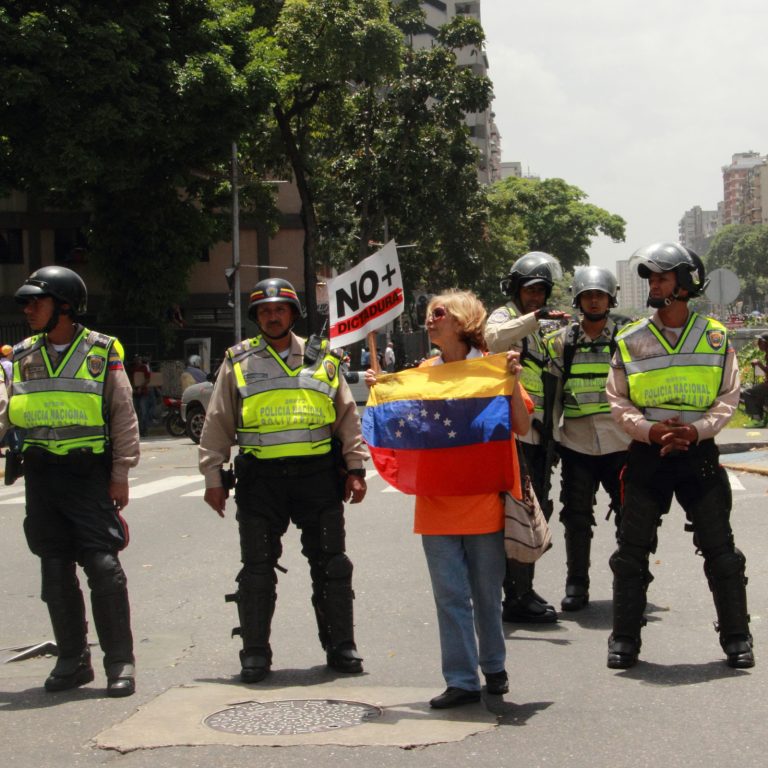
 Alex Gladstein, Chief Strategy Officer at the Human Rights Foundation, has published an article titled ”Why Bitcoin Matters for Freedom” in
  Beyond Venezuela, the article notes how Bitcoin can help citizens suffering from inflation in Zimbabwe, those who want to avoid mass surveillance in China, NGOs that have their bank accounts frozen in Russia, and refugees without access to basic banking services. It also explains that cash fiat is used without government permission, but can be made virtually useless by hyperinflation and that many countries are moving to become cashless societies – thus strengthening the need for cryptocurrency.
 Hong Kong-based cryptocurrency exchange
 A special “Protection Mode” is now automatically activated after signing in. It prevents any withdrawals of digital assets for the first 10 minutes of each session. During that time, users can lock their account if they suspect it has been compromised. However, clients will be able to start trading immediately after they log in and the mode does not restrict P2P fiat withdrawals of the Indian rupee.
 Huobi Group announced that its crypto mining subsidiary, Huobi Pool, is preparing to launch a new digital asset exchange in the first quarter of 2019. The platform will be focused on EOS and will allow users to trade the coin against a number of other cryptocurrencies. Commenting on the announcement, Huobi Pool’s chief executive officer Cao Fei stated: