Tuesday, July 2, 2019

PR: CoinDeal Celebrates Premier League Sponsorship Renewal With Token Launch

PR: CoinDeal Celebrates Premier League Sponsorship Renewal With Token Launch

This is a paid press release, which contains forward looking statements, and should be treated as advertising or promotional material. Bitcoin.com is not responsible for or liable for any content, accuracy or quality within the press release.

Coindeal’s popularity and number of new users are growing very fast. The exchange will soon be available in several states in the USA and has prepared their own CoinDeal token – CDL. This giveaway is addressed to its 300.000 current and 150.000 new users – internal exchange tokens are waiting to get them completely for free!

CDL Token

..is an amazing opportunity to start trading for free on one of the premier global exchanges with various benefits. The token will also allow for a higher liquidity within CoinDeal and for more pairings with cryptocurrencies and fiats. Only the first 450.000 users will receive CDL tokens. This giveaway is unique, since most token projects give only 5-7% of their token to the users via bounty programs and other mechanisms, however, CoinDeal has decided to give their users 90 % of all generated tokens. Something of this magnitude has been unprecedented and may very well create a totally new token distribution model.

The CDL token will be the backbone of CoinDeal and that’s why we want to give it to our users for free – these tokens are meant to be used. We didn’t want to create something that has no value and try to make money off of it, like you’ve seen with many ICOs. – Alex Strzesniewski – Business Development Director

If you already have a fully verified account on CoinDeal you just need to login and click the pop-up with information regarding CDL tokens.

Tokens will automatically appear in your wallet. CoinDeal claims that after the giveaway is completed and all tokens have been distributed to users, it will launch a variety of pairings with crypto and fiats. The total supply is 50,000,000 and the token itself has been created on the EOS blockchain and will boast much faster transaction times as well as drastically smaller network fees (as compared to most ERC20 tokens).

How to get free CDL tokens?

1. Register on CoinDeal
2. Go through the verification process (ID and Proof of Address)
3. Click “Get Free Tokens”
4. Check Your Wallet

All interested in the CDL token should act fast, as the number of tokens is capped and the necessary verification level to receive tokens via CoinDeal.com may take up to a few days.

By getting CDL you will receive
● Decreased trading fees
● Customer Support/ Fast Pass priority
● Multi tier token staking system can decrease fees to 0.000%
● Advanced trading features
● Social trading platform access (planned for 2020)

Staking over 150.000 CDL will give you a 0.0000% maker fee and a 0.0250% taker fee. After completed distribution CoinDeal will start buying back CDL tokens on a monthly basis.

You can gain more from this giveaway by sending your friends a referral link that you can copy from your account. You will receive 20% of their trading fees and they will automatically get free tokens after creating a Coindeal account.

Watch the video:
https://www.youtube.com/embed/vF7Rq-tk3lI

Taking care of Premier League friendship – 2nd season of the sponsorship of the Wolverhampton Wanderers F.C.

The last season 2018/2019 of cooperation was very successful for Wolves and Coindeal and they discovered many common features, so it’s obvious that they wanted to still work together. The CoinDeal team admits it was one of the biggest and most important marketing adventures in the development of the company.

The numbers speak for themselves. Thanks to the cooperation with Wolves, the media value in the period from the June 2018 to April 2019 amounted to over £50,000,000. Coindeal logo was visible on TV-screens worldwide more than 350,000,000 times and the official CoinDeal advertisement with Wolves players gained also over 1,000,000 of views on YouTube.

There’s nothing better than game day in Wolverhampton – we try to be there as often as we can, regardless, we always make sure to cheer on and follow all games even in the office. – Kajetan Mackowiak – one of the Founders

However, the crypto exchange shows that sponsoring is not just a way of advertising for the crypto business, but something more. Apart from the logo visible on the match shirts and the stadium, Coindeal team made friends with the Wolves team and cheered them on each match even for live. Their relation was also seen on the backstage video of the recording of the joint advertising. As they said at the end of cooperation Wolves were something more than partners – they were like family.

https://www.youtube.com/embed/6FvGS6FSGQo

USA market…

…is the next step in the development of the one of the largest crypto-fiat exchanges in Europe. The company is ready to enter the American market with 14 crypto to crypto markets for a start and the users from the States will have an opportunity to profit from the newest CoinDeal promotion with their free CDL Tokens.
Coindeal was founded over a year ago by three Poles. Rapid growth on the European and Asian markets was just the beginning. At the request of the users, CoinDeal decided to obtain all the necessary licenses and permits to open trading to American citizens.

The US is the land of opportunity, and this may very well be the defining moment in our company’s history. – Alex Strzesniewski – Business Development Director

Follow CoinDeal on Facebook and other social media channels:
https://ift.tt/2LuZ2eD
https://ift.tt/2xmGRQ5
https://twitter.com/CoinDeal_
https://ift.tt/2YspUQb…
https://ift.tt/2LuZ2v9

This is a paid press release. Readers should do their own due diligence before taking any actions related to the promoted company or any of its affiliates or services. Bitcoin.com is not responsible, directly or indirectly, for any damage or loss caused or alleged to be caused by or in connection with the use of or reliance on any content, goods or services mentioned in the press release.

The post PR: CoinDeal Celebrates Premier League Sponsorship Renewal With Token Launch appeared first on Bitcoin News.


via Bitcoin.com PR

PR: Pbet IEO Launches on P2PB2B Exchange

PR: Pbet IEO Launches on P2PB2B Exchange

This is a paid press release, which contains forward looking statements, and should be treated as advertising or promotional material. Bitcoin.com is not responsible for or liable for any content, accuracy or quality within the press release.

PBET’s IEO on P2PB2B has rolled out recently and the token promises immediate demand that eventually translates to higher value and strong ROI for investors.

Cyprus, July 2nd 2019: Great news for aspiring crypto investors looking for a prospective token. Rising crypto gaming platform Pbet will finally launch its IEO on P2PB2B exchange today for its signature token Pbet that holds strong potential for excellent ROI in near future. PBET will launch its IEO on 2 additional exchanges during this month only.

PBET is a state of the art platform that represents the unique unification of physical casinos, players and its own crypto portal to form a unified Omni-channel Crypto gaming platform. It’s aimed to create a seamless convergence between online and physical gaming via its unified gaming portal. The Pbet token is designed to generate a strong synergy in between these two channels whilst integrating cryptocurrency-based instant payment as well as combining partners in a token-based Reward Club.

The Pbet token is fast becoming a sought-after name in the crypto scene which eventually indicates a steady rise in the token value in near future. The token already commands a presence in 20 venues, including both online and offline casinos.

“We are delighted to launch the PBET IEO on our platform. The token shows high potential for growth and is backed by a committed team which is going to bring a revolution in the casino and crypto scene”. PBET’s physical casino management system is running in full bloom in land-based casinos and company is soon to witness a heightened demand. The immediate demand of the token will enhance its value drastically and we are a confident of a bright future of the token. Investors who have been in quest of boosted ROI in crypto sphere can have count on PBET.

“It feels amazing to start our IEO on P2PB2B today. It offers us a fantastic opportunity to roll out our token before the vast crypto community of such a leading exchange. We are positive about rising value of Pbet and we promise strong yields for investors who will put their faith in us. The IEO is for a limited time only and we invite contributors to grab quickly the chance before it’s too late”, added Frederick Vachon, founder of PBET.

PBET is on the mission to enable physical casinos enter the online world with a convenient turnkey, zero fee and revenue-sharing model. It will also help players to play online with instant payments and zero/minimal transaction fees.

The IEO will commence on July 2nd and conclude on July 14, 2019.

For more information or PR Enquiries contact.
PLC. Player Loyalty LTD. (PBET)
info@pbet.io

Supporting Link
https://pbet.io

This is a paid press release. Readers should do their own due diligence before taking any actions related to the promoted company or any of its affiliates or services. Bitcoin.com is not responsible, directly or indirectly, for any damage or loss caused or alleged to be caused by or in connection with the use of or reliance on any content, goods or services mentioned in the press release.

The post PR: Pbet IEO Launches on P2PB2B Exchange appeared first on Bitcoin News.


via Bitcoin.com PR
Monday, July 1, 2019

Side Effects of Economic Growth: Is Snowden Right to Say Bitcoiners Shouldn’t Be Bankers?

Site Effects of Growth: Is Snowden Right When He Says Bitcoiners Shouldn’t Be Bankers?

Growth is a goal that’s worth achieving, in most cases, and the current economic paradigm favors it. But when central banks start undermining their fiat economies and crypto companies begin to mimic financial institutions in its name, growth becomes an end in itself with self-destructive tendencies. Deutsche Bank’s head of strategy Jim Reid recently noted that when central banks are so aggressive, Bitcoin starts to look more attractive, while whistleblower Edward Snowden warned the crypto community that the next big bank is not what the world needs. Are they right?

Also read: How to Pay Employees or Get Paid With Bitcoin

While Aiming for Growth, Interest Rate Cuts Inflate Bubbles

Measures to generate and sustain growth, artificially and regardless of the consequences, have become a key policy, widely implemented through interest rate cuts and quantitative easing. Other considerations usually come a distant second, but as crisis after crisis has historically shown, that’s not necessarily the best approach for governments. Expansion, at the expense of basic values, is not the best option for businesses either.

Chasing growth regardless of anything often leads to compromising important principles. When the states do it, they usually distort market economy, resuscitate companies that under normal circumstances would simply go bankrupt, and create bubbles bound to burst at some point in the future. When businesses do it, they sometimes undermine their own industry for the sake of short-term survival or gains.

Side Effects of Economic Growth: Is Snowden Right to Say Bitcoiners Shouldn’t Be Bankers?

Since the 2008 financial crisis, catalyzing and maintaining economic growth has been the focus of many political efforts. Governments and central banks on both sides of the Atlantic have applied an old recipe, cutting interest rates to unprecedented levels. On the backdrop of continuing macroeconomic uncertainty and tensions in international trade relations, it has so far failed to stimulate significant investment and GDP expansion, even when countries like Sweden and Japan went to below zero rates.

With continuing pressure from Donald Trump’s administration, expectations have been growing that a new interest rate cut may be announced in the United States. Maintaining that his institution is independent from the president’s administration in Washington, the Chairman of the Federal Reserve Jerome H. Powell revealed last week that the central bank is weighing whether another rate reduction will be necessary.

Expectations for Rate Reduction Push Bitcoin Prices Up

During a public address on Tuesday, Powell admitted the case for a new cut has strengthened, citing reemerging economic “crosscurrents,” increasing uncertainty with regards to slowing global trade flows and decreasing manufacturing indicators, all of which lead to renewed concerns about the prospects for the global economy. For now, the Fed is trying to properly asses if these uncertainties will continue to affect the overall outlook and warrant a policy change.

It is believed among mainstream economists that low interest rates stimulate inflation, credit, and consumption. It’s worth noting, however, that inflation in the U.S. hasn’t reached and held the 2% target announced by the Federal Reserve back in 2012. The indicator has been estimated at 1.5% for the year that ended April 2019. With persistent economic uncertainty, interest rates tending to zero have not catalyzed investment significantly. Instead, what these policies have mostly “achieved” is to inflate new bubbles. Property prices in many regions have skyrocketed in the last few years.

Side Effects of Economic Growth: Is Snowden Right to Say Bitcoiners Shouldn’t Be Bankers?

Besides, not all bankers believe further rate cuts are helping the traditional economic and financial system. According to Jim Reid, global head of thematic research and credit strategy at Deutsche Bank, central banks have been overreacting. On Wednesday, commenting on Powell’s speech at a Council on Foreign Relations event in New York for CNBC, Reid noted BTC’s recent spike of 180% since April, stating:

If central banks are going to be this aggressive, then alternative currencies do start to become a bit more attractive.

Meanwhile, the Deputy Governor of the Central Bank of Russia, Vasily Pozdyshev, came out with another warning to the current financial system. During an international conference devoted to deposit insurance and bank liquidity, Pozdyshev said the development of digital financial technologies, including cryptocurrencies, may negatively affect the financial condition of traditional banks. In his words, regulators cannot afford a failure to respond to the growth of the fintech industry and the use of new technologies by large companies as this creates a threat to the banking sector.

The high-level representative of the Russian central bank believes 2019 is a turning point in the development of financial technology in the banking industry. “This year, the so-called bigtechs are seriously attacking the traditional banking model,” he stressed, elaborating:

A significant amount of small deposits will indeed go out of the deposit insurance system … I fully assume this may worsen the financial situation of banks and increase the likelihood of bankruptcy. No one has yet estimated the consequences.

What bankers like Reid and Pozdyshev are afraid of is that on one hand, failed government macroeconomic policies are pushing more people away from the banking system and towards alternative digital currencies. And on the other, that big tech corporations will take advantage of this trend at the expense of traditional financial institutions. These fears, echoed by politicians as well, were exacerbated significantly by the announcement of Facebook’s planned coin.

Snowden Slams Crypto Companies for Trying to Be Banks

Many, including Deutsche Bank’s Jim Reid, rightfully see the release of Libra’s whitepaper as another major reason for the latest crypto jump. And while the return to prices held over a year ago is definitely a positive sign, it’s worrisome that the interest of the general public towards decentralized cryptocurrencies is returning at a much slower pace. According to Google Trends, ‘Bitcoin’ searches are now at their highest for the year but still less than a third of the level reached back in December, 2017.

Although at this stage Libra looks more like a threat to government issued fiat currencies, as it does not share the permissionless and decentralized nature of most cryptocurrencies, certain developments within the industry might change that assertion. With more regulations, development of traditional-style crypto banking services and increasing efforts of major players to become part of the financial mainstream, some of the core strengths of cryptocurrencies are being ignored. At the same time, Binance and Shapeshift have already indicated their intentions to list Libra, even before it’s been minted.

Side Effects of Economic Growth: Is Snowden Right to Say Bitcoiners Shouldn’t Be Bankers?

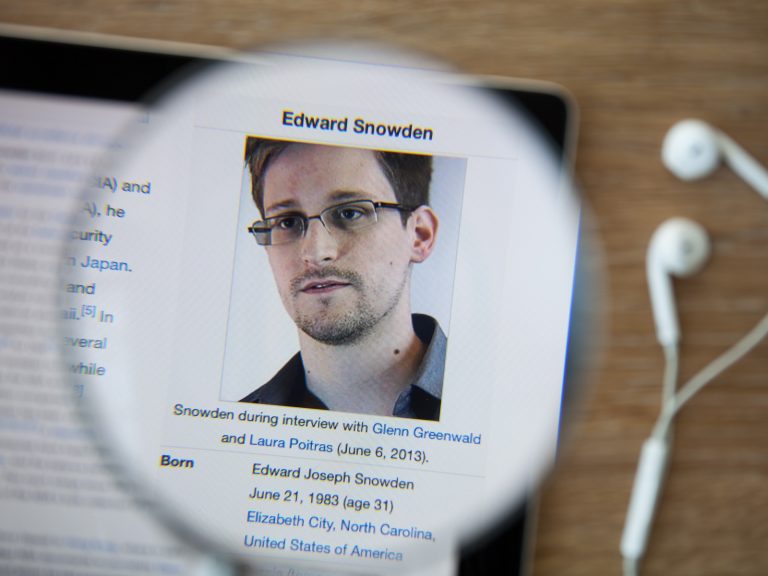
In a video address during the recent Bitcoin 2019 conference, former NSA analyst Edward Snowden noted that he considers the lack of privacy to be an existential threat to Bitcoin. Speaking about regulations in the crypto space, he commented on the excessive expectations of authorities and insisted that platforms such as cryptocurrency exchanges should defend the privacy of their users instead of exposing them, closing their accounts and freezing their funds.

The famous whistleblower shared his disapproval of how established crypto companies have consented to comply with government requirements regarding the collection of personal data which moves them closer to the status quo. He also criticized the big players for not lobbying hard enough for more favorable jurisdictions that would allow them to operate without interference. In his words, they are instead trying to fit in the current model and be the next big bank, while the world doesn’t need more banks.

Instead of exploiting the advantages of cryptocurrencies, many wannabe banks in the crypto industry have started offering more custodial and centralized banking services and products like crypto deposits, for example. The levels of compliance with various regulations sometimes far exceed the standards applied by ordinary banks. Seeking short-term survival, approval from authorities or growth as an end in itself, some platforms have compromised basic principles of the crypto ecosphere such as private peer-to-peer interaction. Thankfully, alternatives have emerged.

Do you think the crypto industry should focus on providing services that build on the unique features of cryptocurrencies instead of trying to fit in the traditional financial system? Share your thoughts on the subject in the comments section below.

OP-ed disclaimer: This is an Op-ed article. The opinions expressed in this article are the author’s own. Bitcoin.com is not responsible for or liable for any content, accuracy or quality within the Op-ed article. Readers should do their own due diligence before taking any actions related to the content. Bitcoin.com is not responsible, directly or indirectly, for any damage or loss caused or alleged to be caused by or in connection with the use of or reliance on any information in this Op-ed article.


Images courtesy of Shutterstock.


Do you want to dig deeper into Bitcoin? Explore past and present cryptocurrency prices through our Bitcoin Markets tool and head to our Blockchain Explorer to view specific transactions, addresses, and blocks.

The post Side Effects of Economic Growth: Is Snowden Right to Say Bitcoiners Shouldn’t Be Bankers? appeared first on Bitcoin News.


via Lubomir Tassev

Confronting Bitcoin Network Issues Using Nakamoto Consensus and a Mining Parliament

A Look at Confronting Issues Using Nakamoto Consensus and a Mining Parliament

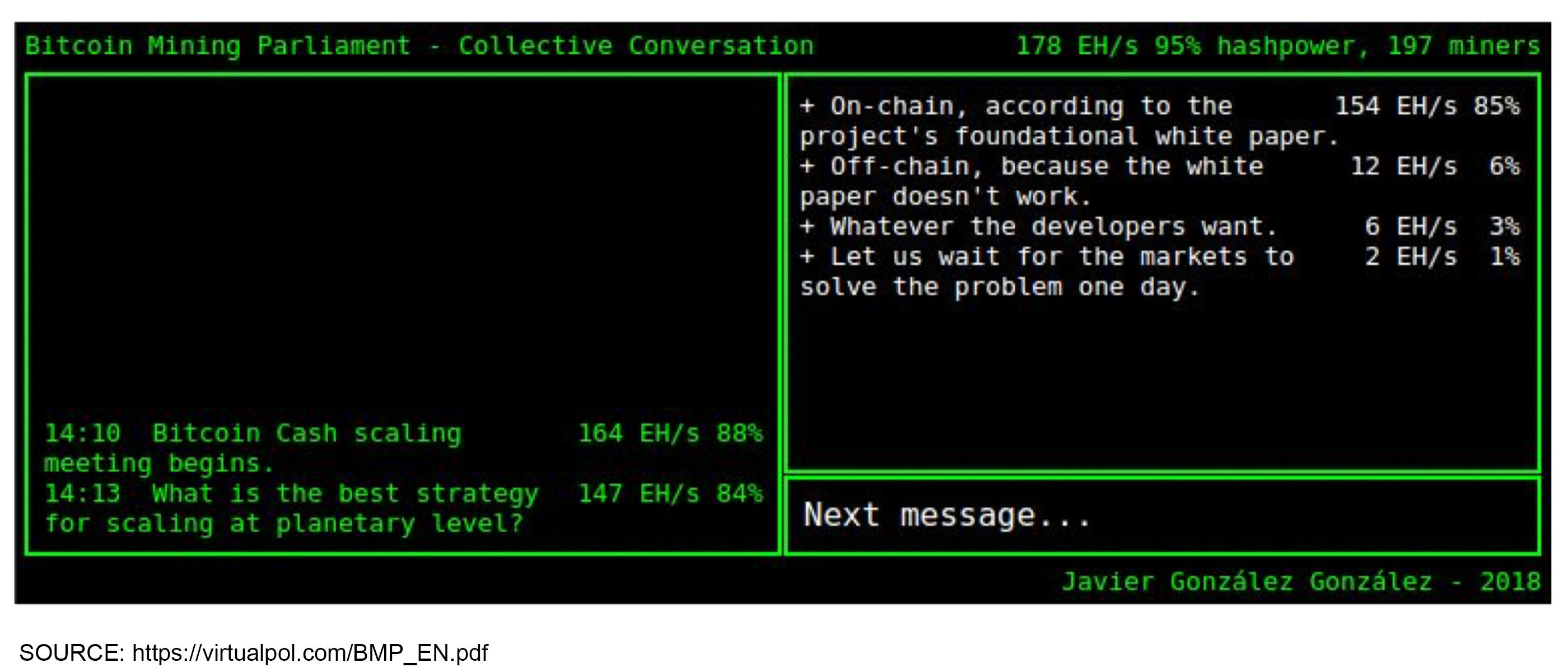
On June 28, Bitcoin Cash proponent Javier Gonzalez announced the launch of an interesting protocol called the Bitcoin Mining Parliament (BMP). The theory behind BMP is backed by the concept of Nakamoto Consensus where “miners are the executive power of Bitcoin” and “any needed rules and incentives can be enforced with this consensus mechanism.”

Also Read: Iranians Defy Warning and Share Pictures of Bitcoin Mining in Mosque

A Virtual and Transparent Bitcoin Mining Parliament Will Be Established

The system Satoshi Nakamoto created over 10 years ago has invigorated many people’s lives and has changed the course of history. The technology Satoshi unleashed has many benefits but one of the core innovations of Bitcoin is Nakamoto Consensus, a method that brings the network to a state of valid consensus despite imperfect information. Nakamoto Consensus uses proof-of-work, block selection, and an incentive structure to motivate network participants to act in harmony.

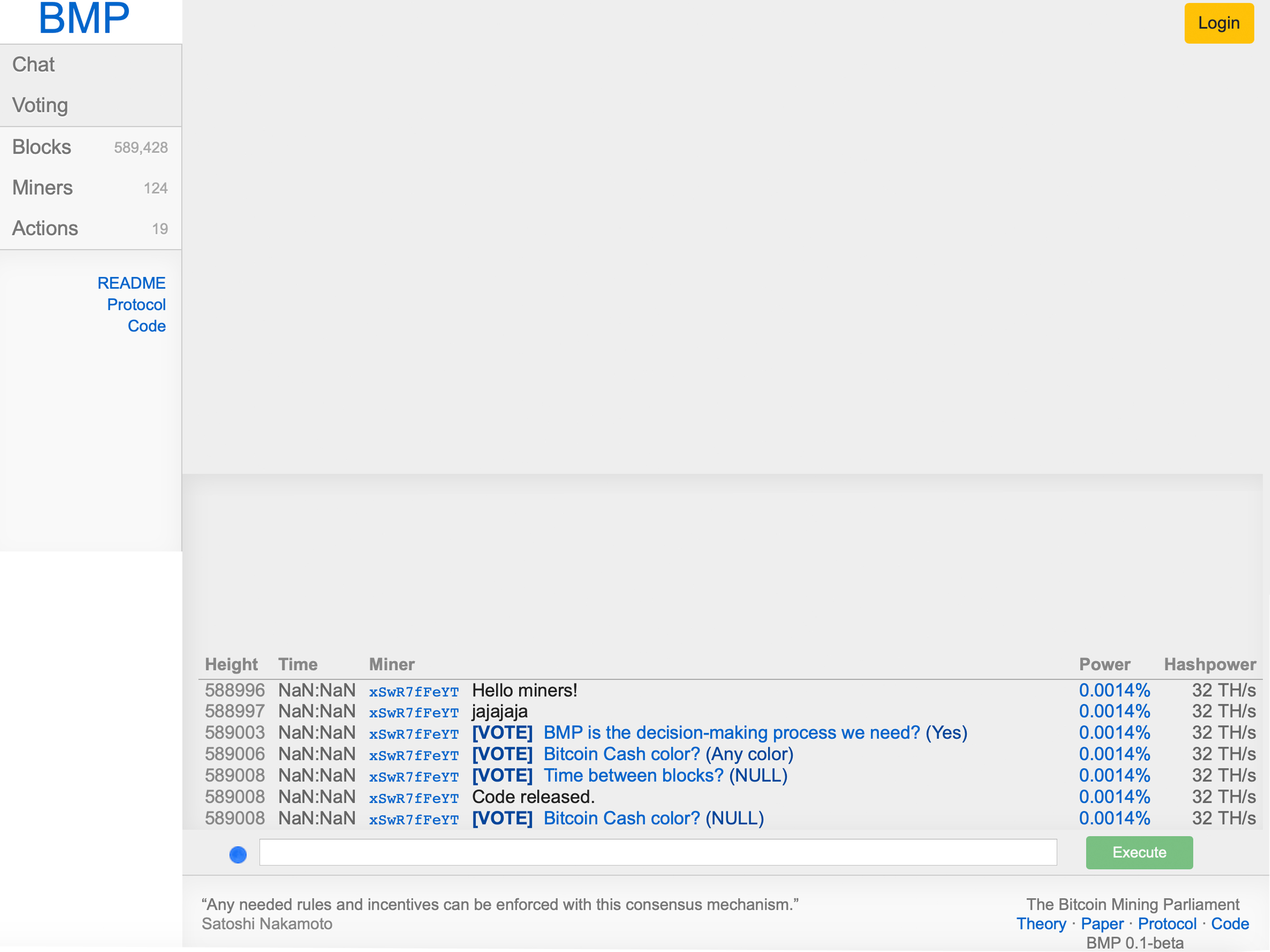
Over the last few years, there’s been a lot of arguments about the power non-mining nodes may or may not possess and the concentration of strength behind mining nodes that process blocks. Javier Gonzalez believes that miners are the executive power of Bitcoin for multiple reasons. The developer has launched a new open source protocol called the Bitcoin Mining Parliament (BMP) and a pool called Bmp.virtualpol.com in order for miners to utilize the protocol. At the moment the BMP project’s readme specifications detail that the platform is still in its early beta form but the tool is currently being used. At the time of writing, there are 124 miners participating with the BMP pool and the dashboard shows how certain things can be voted on with hashpower.

Confronting Bitcoin Network Issues Using Nakamoto Consensus and a Mining Parliament

“Miners can write -in proportion to their computing power- in the Blockchain of a network based on proof-of-work — Also -with sufficient consensus- they can write legitimate empty blocks in a minority chain in order to provoke its collapse,” Gonzalez’s BMP theory paper explains. “And they can do this if they consider this extreme decision convenient to the network and therefore their long-term interests.” The paper further states:

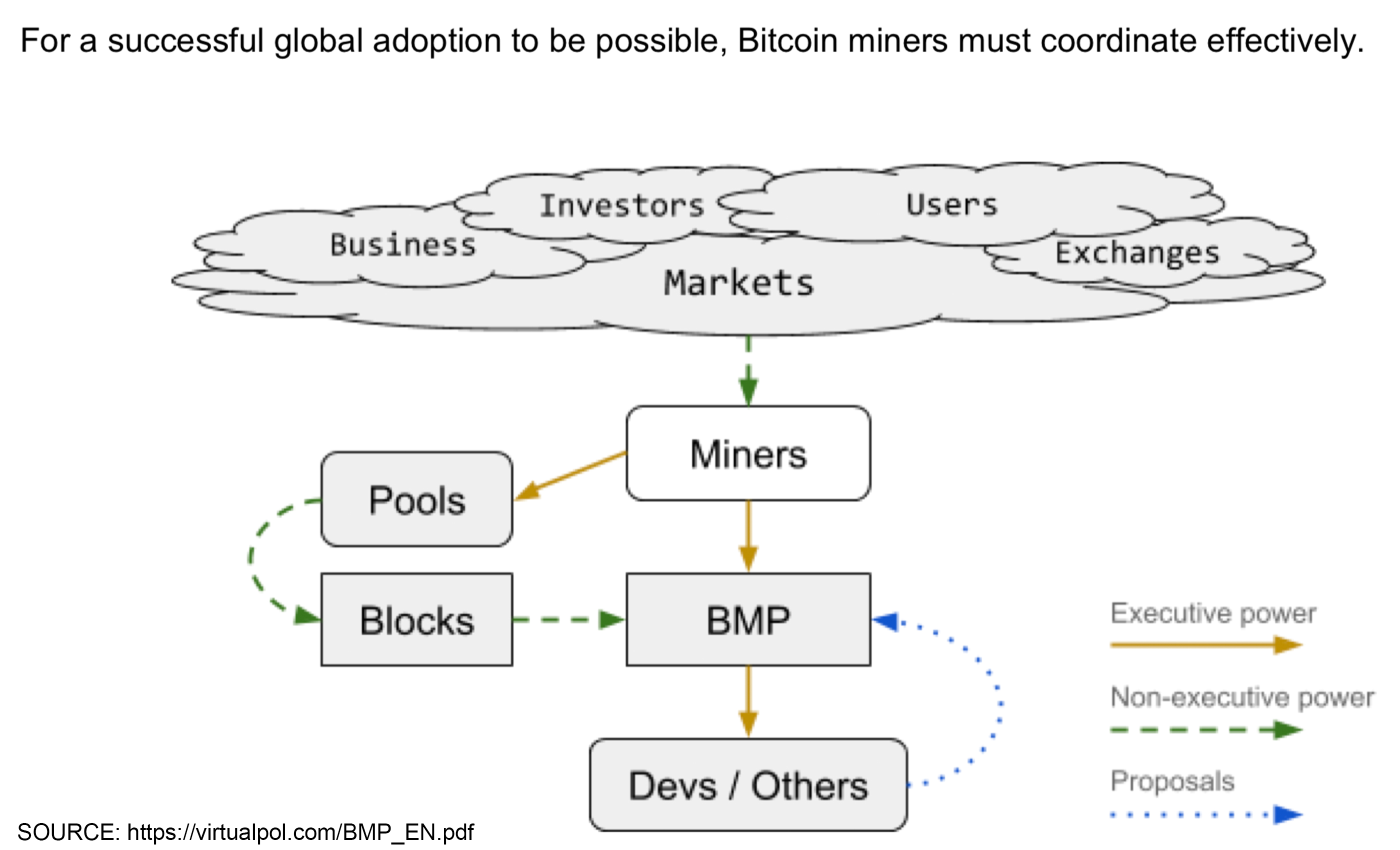
Miners can exert their power in real time, in an agile and eminently executive way, recording their decisions in a publicly verifiable way, thanks to the safest and most reliable voting system available which is known. Therefore, miners are in command in Bitcoin. And they will never act alone because they form a group of allies without conflict of interest (except in the competition for computing power).

According to Gonzalez’s BMP theory paper, in time he believes that it will be inevitable that a “virtual and transparent Bitcoin Mining Parliament (BMP) will be established.” Within this parliamentary group of miners, each participant can have voice and ”vote in proportion to their percentage of demonstrable exahashes per second.” A BMP could come to an agreement about certain features, resolve future conflicts, and even appoint legitimate spokespersons for the network. “They will have a closer and more accurate contact with the Bitcoin’s community of users and developers,” the paper highlights.

Nakamoto Consensus Ensures Rules and Incentives Can Be Enforced

According to the project’s philosophy, bitcoin miners estimate consensus with inadequate coordination. Gonzalez insists that Satoshi invented the role of miners because the network’s governance model needed to be entrusted to a higher entity that is more powerful than one individual or a small group of developers. Miners are rewarded for doing this and Gonzalez thinks that their interest will always be the same. Understanding this predictable pattern and relationship is ”the manifestation of what is known as Nakamoto Consensus,” Gonzalez asserts.

“Ignoring these facts will give rise to a brittle Blockchain with a tendency to break with every controversy — Accepting the consensus mechanism means the empowering of the miners in order to wield their legitimate power over the Blockchain to its exact degree,” the BMP creator’s paper explains. “Likewise, accepting this reality could guarantee indefinitely the compliance with the last line of the last page from the Satoshi Nakamoto’s original paper, which states:”

Any needed rules and incentives can be enforced with this consensus mechanism.

Confronting Bitcoin Network Issues Using Nakamoto Consensus and a Mining Parliament

Have We Ever Put Nakamoto Consensus to the Test During Conflict?

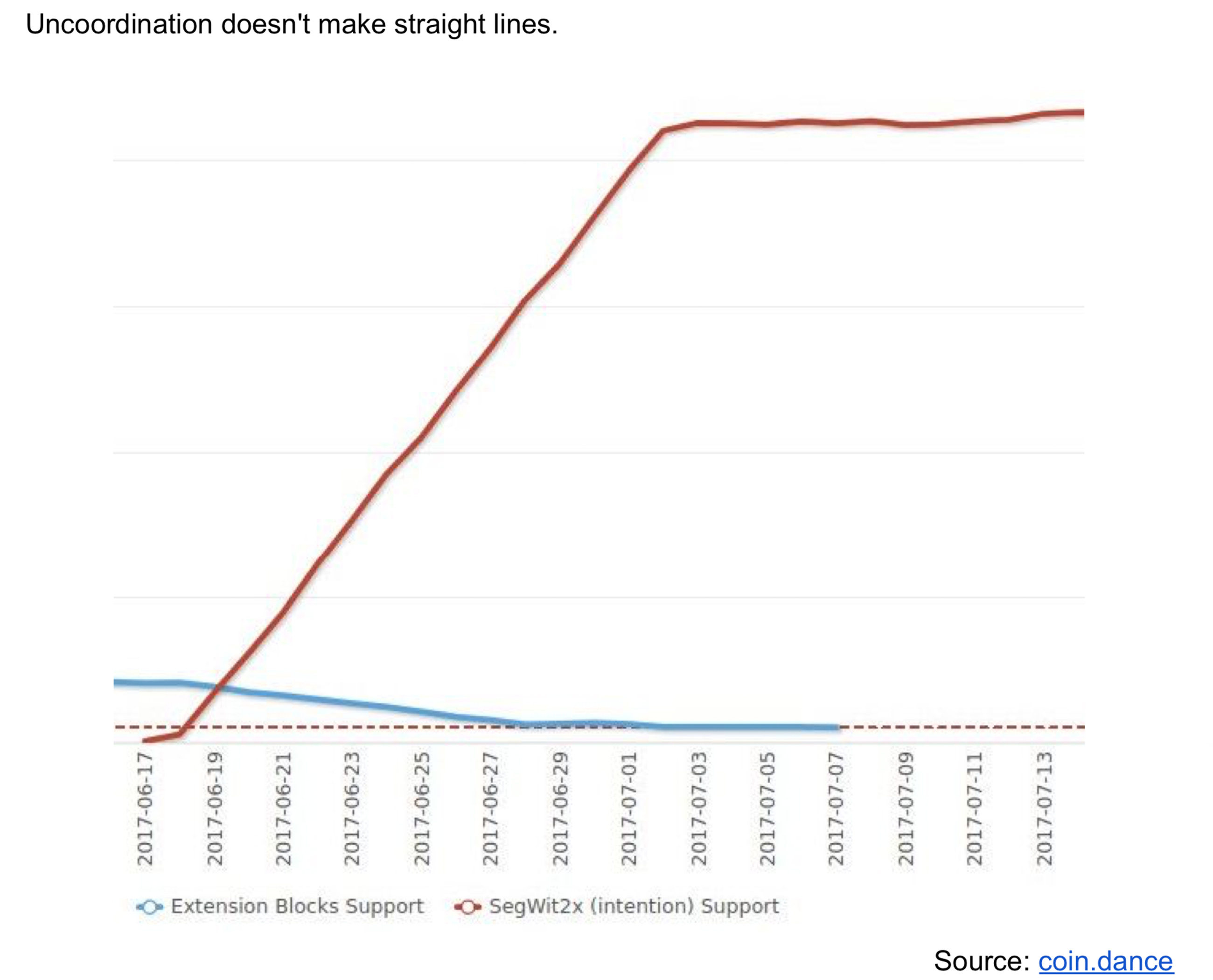
Of course, the subject comes with controversy, especially from those who don’t believe miners are the executive branch of the network. From many people’s perspective, Nakamoto Consensus hasn’t been truly been tested during times of conflict like Segwit2X for example. For instance, the infamous User Activated Soft Fork (UASF) never took place because Segwit2x was called off. With over 80% of hashpower willing to implement Segwit2X after they managed to get Segwit activated, miners never tested their strength by going forward with a block size increase. This was because the block increase event (Segwit2X) was called off due to the threat of USAF which never materialized into anything more than proof-of-social media. So the question remains: would the majority of miners at the time be able to increase the block size and avoid UASF issues by utilizing Nakamoto Consensus? We will never know until Nakamoto Consensus is used during a disagreement of this kind.

Confronting Bitcoin Network Issues Using Nakamoto Consensus and a Mining Parliament

With a concept like BMP, the mining governance model could essentially avoid such conflicts or end a weak minority chain without giving it a chance to survive. “Miners can take responsibility, better than anyone else, for preventing the risk of such events happening again,” the BMP white paper suggests. Gonzalez believes it’s a human tendency to become entangled with such conflicts and with “multiple development teams competing, confrontation is only a matter of time — To resolve this, miners must assume their executive role.” Gonzalez says that the BMP would be a binding power when most of the hashpower participates.

Confronting Bitcoin Network Issues Using Nakamoto Consensus and a Mining Parliament

A Parliamentary Group of Governing Miners Can Work Without Altering the BCH Protocol

Gonzalez is convinced that the BMP idea can be implemented in various ways that would not alter the Bitcoin Cash protocol or mining operations. The foundation of BMP would be registered users who can verify their hashpower. Gonzalez explains that in the coinbase transaction of each block (metadata that can store info in a block reward), pools would publish “the addresses of the main miners in multiple outputs, indicating in the OP_RETURN the percentage of hashpower corresponding to each miner.” The creator also underlines the fact that BMP is an “open source tool with no responsibility for actions taken by third parties.” Gonzalez adds:

The individual hashpower of each miner is calculated with his quota signaled with the hashpower registered in the block. A pool will never be able to control more hashpower than that demonstrated in its blocks. In this way, each miner will be able to demonstrate his effort, beyond the blockchain, in proportion to his percentage of hashpower.

What do you think about the Bitcoin Mining Parliament (BMP) created by Javier Gonzalez? Do you agree with his theory about miners being the executive branch within the Bitcoin network? Do you think Nakamoto Consensus has ever been truly tested? Let us know what you think about this subject in the comments section below.

Disclaimer: This editorial is intended for informational purposes only. Readers should do their own due diligence before taking any actions related to the mentioned mining tool or any of its affiliates or services. Bitcoin.com or the author is not responsible, directly or indirectly, for any damage or loss caused or alleged to be caused by or in connection with the use of or reliance on any content, goods or services mentioned in this article.


Image credits: Shutterstock, Javier Gonzalez, BMP, and Bmp.virtualpol.com


Want to create your own secure cold storage paper wallet? Check our tools section. You can also enjoy the easiest way to buy Bitcoin online with us. Download your free Bitcoin wallet and head to our Purchase Bitcoin page where you can buy BCH and BTC securely.

The post Confronting Bitcoin Network Issues Using Nakamoto Consensus and a Mining Parliament appeared first on Bitcoin News.


via Jamie Redman