Since Tether’s (USDT) migration to other networks beside the BTC-based Omni protocol, significant shifts have taken place seeing the heavily-printed stablecoin rise to prominence also via Ethereum’s ERC20 standard and Tron’s TRC20 implementation. Ethereum-based USDT supply currently sits at over 2.2 billion tokens, while the Omni equivalent stands at around 1.5 billion. The Tron network adds over 900 million tethers to this mix, with the popular and controversial USDT stablecoin showing no sign of slowing down.
Tether’s expansion to other networks from the Omni Layer since its creation in 2014 is testament to its almost ubiquitous popularity. An asset seen as enabling stability and liquidity in the typically volatile context of crypto trading.
Tether has not been without its skeptics and detractors, however. From alleged market manipulation involving ties to Bitfinex, to terms of service revisions detailing that the asset is no longer backed only by dollars, but also by “other assets and receivables from loans made by Tether to third parties,” those scrutinizing the coin have had more than a few reasons to raise an eyebrow.
USDT’s market cap increased over $2 billion in 2019, and the company minted a reported 1.7 billion coins. Image source: https://ift.tt/2fYx1LN
That notwithstanding, growth on the ERC20 and TRC20 standards shows that tether retains demand even when not associated with the Bitcoin Core protocol. Since the announcement of TRC20 tether in March 2019, USDT supply on the Tron Network has risen to over 900 million tokens.
In October 2019, the supply of USDT on the Tron network made up almost 12% of all tethers. Fast forward to January, 2020, and the total supply of Tron USDT is 916,550,610.601 at press time. Given that the supply of USDT across all its various networks is 4,207,771,504, this means that TRC20 tethers now make up nearly 22% of the total supply of tokens.
Ethereum-Based Tether and Major Holders
Last summer, when ERC20 tether transactions flipped the number of USDT Omni transactions, the crypto space took notice. The amount of tether on the Omni Layer at that time (2.5 billion) has since dwindled to just 1.5 billion at press time, with the ETH network currently housing over 2.2 billion tethers on chain.
The EOS network is also home to the stablecoin, and sees tether’s circulating presence there at just over 5 million tokens, with a Bitfinex-managed account holding 88.6% of this supply. Where Tron is concerned, a Binance account is the top holder, and on the ETH network the top holder is Huobi. USDT also has a presence on the Algorand blockchain.
Top USDT circulating supply holders on the EOS network.
Tether Into 2020
It will be interesting to see how tether develops into the new year, as the outcomes of various legal battles, potential chain swaps and migrations of USDT to other networks, and the long-debated claims of the asset actually being redeemable for dollars, all stand to be brought to greater clarity.
What are your thoughts on Tether? Is USDT’s continued growth and printing good for the crypto space? Let us know in the comments section below.
Disclaimer: This article is for informational purposes only. It is not an offer or solicitation of an offer to buy or sell, or a recommendation, endorsement, or sponsorship of any products, services, or companies. Bitcoin.com does not provide investment, tax, legal, or accounting advice. Neither the company nor the author is responsible, directly or indirectly, for any damage or loss caused or alleged to be caused by or in connection with the use of or reliance on any content, goods or services mentioned in this article.
Images courtesy of Shutterstock, fair use.
Did you know you can buy and sell BCH privately using our noncustodial, peer-to-peer Local Bitcoin Cash trading platform? The local.Bitcoin.com marketplace has thousands of participants from all around the world trading BCH right now. And if you need a bitcoin wallet to securely store your coins, you can download one from us here.
South Korea has confirmed that income tax cannot be levied on individual investors’ profits from crypto transactions under the current tax law. The government, however, is reviewing international trendsand the approaches of major countries to crypto taxation in an effort to amend the existing Korean tax law to include cryptocurrency.
The South Korean Ministry of Economy and Finance, which oversees the country’s economic policy, has stated officially that individual investors’ crypto trading profits cannot be taxed under the current tax law. Not all capital gains from financial investments are subject to taxation in South Korea, and taxes cannot be imposed on income from activities that are not explicitly defined under the tax law. Since the term “virtual currency,” or any other term it is known by, is not included anywhere in the tax law, its transactions cannot be taxed. The ministry clarified on Dec. 30:
Profits from individual virtual asset transactions are not listed income and are not taxable.
Amendments Are Being Discussed
While individuals’ crypto profits are currently tax-free in South Korea, the Ministry of Economy and Finance has been pushing to amend the tax law so they can be taxed. An official of the ministry said that discussions have already been taking place, adding that the revised bill is expected to be drawn up by the first half of 2020.
However, some major decisions must be made before the tax law can be amended. They include a precise definition of crypto assets, whether profits should be categorized as capital gains, and how the government plans to obtain trading records from crypto exchanges to accurately levy taxes. Emphasizing that cryptocurrency would need legal status before it can be added to the law, the ministry elaborated:
We are preparing a taxation plan for virtual assets by comprehensively reviewing the taxation of major countries, consistency with accounting standards, and trends in international discussions to prevent money laundering.
National Tax Service Targets Foreign Traders Using Domestic Crypto Exchanges
While domestic crypto transactions are not taxed, the country’s National Tax Service (NTS) has imposed 80.3 billion won ($69.5 million) in withholding tax on trades conducted by foreign customers of Bithumb Korea, one of the largest crypto exchanges in the country.
“Bithumb can pay [the NTS] 80.3 billion won and afterwards collect the amount from its foreign clients, but practically it’s impossible,” Kim Woo-cheol, a tax professor at the University of Seoul, was quoted by Korea Joongang Daily as saying. Bithumb reportedly has not been withholding taxes from its foreign customers and is preparing to file a lawsuit against the NTS over a “groundless” tax imposed on the company, local media reported Sunday.
The Issue of Categorizing Crypto Profits as Capital Gains
The NTS has categorized foreign traders’ crypto gains as miscellaneous income — the category which includes irregular income such as rewards or lottery winnings, Korea Joongang Daily detailed. In contrast, earnings from real estate or stock trading are categorized as capital gains. Noting that “Capital gains tax is collected for every deal, but tax for miscellaneous income is collected once each year,” the publication asserted:
Putting income from cryptocurrency trades under capital gains would have required the government to receive every trading record from domestic exchanges.
Ahn Chang-nam, a tax professor at Kangnam University, believes that it is “realistically difficult” for the government to know about every crypto transaction. “It seems like the NTS took a practical approach in categorizing gains from crypto asset trading as miscellaneous assets,” the professor opined.
What do you think of South Korea’s approach to crypto taxation? Let us know in the comments section below.
Disclaimer: This article is for informational purposes only. It is not an offer or solicitation of an offer to buy or sell, or a recommendation, endorsement, or sponsorship of any products, services, or companies. Bitcoin.com does not provide investment, tax, legal, or accounting advice. Neither the company nor the author is responsible, directly or indirectly, for any damage or loss caused or alleged to be caused by or in connection with the use of or reliance on any content, goods or services mentioned in this article.
Images courtesy of Shutterstock and the Korean government.
Did you know you can buy and sell BCH privately using our noncustodial, peer-to-peer Local Bitcoin Cash trading platform? The local.Bitcoin.com marketplace has thousands of participants from all around the world trading BCH right now. And if you need a bitcoin wallet to securely store your coins, you can download one from us here.
2019 was a crazy year for cryptocurrency enthusiasts and a number of interesting events happened throughout the last 12 months. It’s hard to keep track of the day-to-day activities taking place within the cryptosphere and there may be a few incidents some of our readers missed. At news.Bitcoin.com we took the opportunity to scan our most popular articles from 2019 in order to create a year-end list to share with our readers.
Bitcoin.com’s writers are entrenched in the cryptosphere and every day our writing team is on the hunt for cryptocurrency-related news. During the last 365 days, a number of our writers have published news stories seven days a week to keep our readers informed. There’s been a number of developments in 2019, as the community is dealing with digital asset regulations, crypto exchange hacks, central banks practicing monetary easing, and people claiming to be Satoshi Nakamoto. The following is a look at news.Bitcoin.com’s most popular crypto articles in 2019 by order of the highest-trafficked content.
In September, news.Bitcoin.com’s Kevin Helms reported on the Reserve Bank of India’s regulatory guidelines imposed, which limited bank customers’ withdrawals from 137 financial institutions. Customers from these bank branches were only allowed to withdraw “1,000 rupees (approximately $14) per account for six months.”
After the news spread, a number of India’s citizens revolted and the government had to send police assistance to a few different banks located in Mumbai. The report highlighted how the current banking system, no matter what country you live in, continues to grow untrustworthy.
Across 2019, a great number of central banks and countries participated in practicing monetary easing. However, one specific economy, that has been considered the foundation of Europe, has been showing signs of financial failure. In August, Lubomir Tassev explained that the German economy is facing an economic crisis that could cause a domino effect throughout the EU.
2019 statistics had shown that Germany’s strong industrial economy saw significant declines in production. “[Germany] is now seeing a significant decline in production – by 2.7% year-on-year in January and 1.9% in April compared to the previous month,” Tassev detailed. “Then in May, factory orders declined 2.2% from a month ago and registered an 8.6% annual drop, the biggest in a decade.” The following month the country invoked a five-year rent freeze in Berlin.
In May, the cryptocurrency community found another suspect who might be the infamous creator of Bitcoin. Kai Sedgwick reported on how the name Paul Le Roux found its way into the cryptosphere last spring. During the Kleiman v. Wright lawsuit, Document 187 had shown an unredacted name and Wiki link which belongs to the criminal mastermind Paul Le Roux.
The document led people to believe that Le Roux was smart enough to create Bitcoin and the coincidental timing of his arrest was around the same time Nakamoto left the community. Speculators really started wondering if Le Roux was Nakamoto when an anon from 4chan’s /biz/ messageboard insisted that “Bitcoin was a project of a evil genius … Paul Solotshi Calder Le Roux.”
Satoshi Nakamoto was a popular topic in 2019, and a few of news.Bitcoin.com’s highest-trafficked articles are written about this legendary character. The day before Halloween, news.Bitcoin.com published a story about the fascinating clues left behind by Bitcoin’s notorious creator.
The editorial discusses Satoshi’s planning, theories as to why Nakamoto left the community, and conspiracy theories like the idea that Bitcoin was created by the CIA. Satoshi left behind a bunch of clues and said some interesting statements back when the monicker spoke on bitcointalk.org and the cryptography mailing list.
All year long Indian cryptocurrency enthusiasts have been waiting on the final word in regard to digital currency regulations in India. News about the regulatory situation started coming to life in the spring and in March, India’s government told the supreme court that the crypto regulations being drafted were near completion.
Attorney Jaideep Reddy of Nishith Desai, a lawyer behind a writ petition opposing the crypto banking ban by the Reserve Bank of India, told news.Bitcoin.com at the time: “The matter was heard for a very short period of time — The matter started with the counsel for the Union of India stating that its committee is in the final stages of deliberations and that the matter should be heard after that.”
During the first week of August, it was discovered that the giant retail corporation Walmart patented plans for a stablecoin backed by USD. The news followed Facebook’s announcement to launch a coin called Libra. Walmart’s attempt also followed the time when the company attempted to start its own banking services back in 2006.
At the time, politicians and financial incumbents opposed Walmart joining the banking industry and the firm got so much pushback it decided to quit the banking attempt. However, with a ‘Walmart Coin,’ the company could skip all the banking charter laws and offer customers a different kind of “savings” incentive through cryptocurrency dividends.
News about cryptocurrency laws in India was of great interest to news.Bitcoin.com readers in 2019. On July 26, headlines detailed that an Indian official who led the committee which had created the crypto ban bill resigned.
Former Department of Economic Affairs (DEA) Secretary Subhash Chandra Garg decided to apply for voluntary retirement after receiving flak from the Indian cryptocurrency community. Supporters of friendlier digital asset laws in India, called the drafted bill “flawed” and after a few controversial tweets about crypto, he left his post. Moreover, a few days prior, members of the Indian government told the public that digital currencies were not banned.
In the first month of 2019, news.Bitcoin.com’s Lubomir Tassev wrote a review about eight different crypto debit cards people can use around the world. The editorial discussed cards issued by firms like Wirex, Bitpay, Revolut, Cryptopay, and Fuzex.
The report explained the negatives and the positive benefits to a loadable cryptocurrency card. In addition to detailed information about existing crypto cards on the market, Tassev also wrote about the upcoming card companies that planned to launch in 2019. The editorial highlights how the use of crypto debit cards “significantly expands the usability of digital coins in the world.”
Banking System Failures, More Satoshi Lore, IRS Cracks Down on American Crypto Owners, and Onecoin Crumbles
There were a hell of a lot more popular stories last year and the eight mentioned above just scratch the surface when it comes to news.Bitcoin.com’s 2019 archive. Other reader favorites in our library this year included subjects like a possible Deutsche Bank collapse, how Citi, Deutsche, and HSBC laid off thousands of employees, the Indian supreme court’s struggles with drafting regulations, and the Philippines seeing 10 government approved exchanges.
There were plenty of Satoshi Nakamoto stories and unique editorials involving the mysterious creator of Bitcoin. The news about the U.S. tax agency telling the public they planned on sending 10,000 letters to American cryptocurrency owners shocked our readers. 2019 also saw the downfall of the biggest multi-level-marketing (MLM) crypto scam of all time when the so-called ‘Bitcoin Killer’ Onecoin crumbled.
What do you think about the eight most popular news.Bitcoin.com articles from 2019? Let us know what you think about the subjects and articles in the comments section below.
Disclaimer: This article is for informational purposes only. It is not an offer or solicitation of an offer to buy or sell, or a recommendation, endorsement, or sponsorship of any products, services, or companies. Bitcoin.com does not provide investment, tax, legal, or accounting advice. Neither the company nor the author is responsible, directly or indirectly, for any damage or loss caused or alleged to be caused by or in connection with the use of or reliance on any ideas, concepts, content, goods or services mentioned in this article.
Image credits: Shutterstock, Pixabay, Wiki Commons, Fair Use.
Did you know you can verify any unconfirmed Bitcoin transaction with our Bitcoin Block Explorer tool? Simply complete a Bitcoin address search to view it on the blockchain. Plus, visit our Bitcoin Charts to see what’s happening in the industry.
Do you use a VPN? It’s a privacy-enhancing tool that everyone should be using, especially those with digital assets. Or do you happen to be older than the typical crypto trader? Both of these characteristics are part of a list of so-called ‘red flags’ that can get you in trouble with a new dragnet that is being established in Israel.
On December 31, 2019 the Israel Money Laundering and Terror Financing Prohibition Authority published a draft guide titled ‘Red Flags in the Virtual Assets Field’ for the public to review. The document contains a list of ‘red flags’ that is intended to help the private sector formulate a policy on anti-money laundering risks related to digital assets such as cryptocurrencies. It was compiled by the authority in collaboration with various financial regulators and members of the industry.
The authority noted that digital assets can promote economic innovation, but are “a challenge” to enforcement agencies seeking to conduct financial investigations and seize prohibited property originating from crime. Therefore, the guide was designed to help financial bodies identify activity that can be “problematic.”
The authority also said this guide was compiled in collaboration with various financial regulators and members of the industry. However, voices in the Israeli crypto community have already criticized it for having too many so-called ‘red flags’ which are the result of excessive and unjustified concerns by the regulators. “Such red flags hurt both the growing industry and technology, and the fundamental rights inherent in democracy: the freedom of the individual, the right to privacy, the right to property and freedom of occupation,” commented lawyer and accountant Ron Tsarfaty, the Chief Financial and Compliance Officer at Bit2c.
The Israel Money Laundering and Terror Financing Prohibition Authority was established in 2002 as an independent financial intelligence unit acting in accordance with the international rules against money laundering prescribed by the Financial Action Task Force (FATF). In 2018 Israel became the 35th member state in the FATF, the intergovernmental organization founded in 1989 by the countries of the G7. In June 2019 the FATF published its ‘final guidance’ on crypto assets and service providers, which has forced many industry companies around the world to change how they do business at the expense of clients’ privacy.
Targeting Older People, VPN and Tor Users
The guide draft lists dozens of red flags and explains that in the event that one or more of these is triggered the service providers must investigate the matter and if suspicions of money laundering or terror financing arise, report immediately to the authority or the police. Among the dozens of red flags listed, many focus on users who try to protect their privacy, for example by using coin mixers or dealing in dash, monero or zcash. There is also focus on users of VPNs, Tor and any other privacy enhancing technology.
The red flags also cover obvious cases such as darknet vendors, suspected ICO pump and dumps or Ponzi scams, and ransomware hackers. However, the list of suspicious activities and clients also includes older people, users of P2P or decentralized exchanges, people who appear to be in a hurry to trade and even people who donate to charities using crypto.
The long list of ref flags that service providers, such as crypto exchanges, are required to monitor includes the following:
Purchase of virtual assets in high amounts of cash;
Purchase of virtual assets in high amounts between private individuals;
Complex activity of conversion or transfer of virtual assets, without reasonable explanation;
Change of address, telephone number or other means of identification frequently, without reasonable explanation;
The recipient of the service is not within the typical population of virtual assets, such as an older person;
The recipient of the service refuses to present a legitimate source of funds or documents verifying the information provided, without reasonable explanation;
The recipient of the service shows indifference to the terms of service, including fees and costs;
The activity does not match the normal service recipient activity and the identification documents provided by it;
The recipient of the service demonstrates pressure or urgency to obtain virtual assets and is not ready to disclose the purpose of the acquisition;
The recipient of the service is a public person (including a relative or business partner of a public person);
The service recipient requests information about the service provider’s internal systems, policies and procedures regarding the prohibition of money laundering;
The service recipient provides inaccurate or incorrect information about the transaction or its relationship with the other party to the transaction;
The service recipient mainly uses anonymous or high value currencies;
The service recipient enters the service provider’s system using an IP address associated with VPN, The Onion Router (TOR) software or another software that allows users to employ increased anonymity;
The service recipient receives virtual assets from illegal gambling sites;
The recipient of the service transacts with foundations or nonprofits that receive virtual assets;
The recipient of the service carries out transactions in high frequency or high amounts, after a long period of inactivity;
The recipient of the service frequently changes its identification information, such as address, email, IP address or bank account;
The recipient of the service shows indifference to paying high fees for switching virtual assets to fiat compared to commissions paid to other service providers.
What do you think about the ‘red flags’ that can get Israeli crypto traders in trouble? Share your thoughts in the comments section below.
Images courtesy of Shutterstock.
Verify and track bitcoin cash transactions on our BCH Block Explorer, the best of its kind anywhere in the world. Also, keep up with your holdings, BCH and other coins, on our market charts at Bitcoin.com Markets, another original and free service from Bitcoin.com.
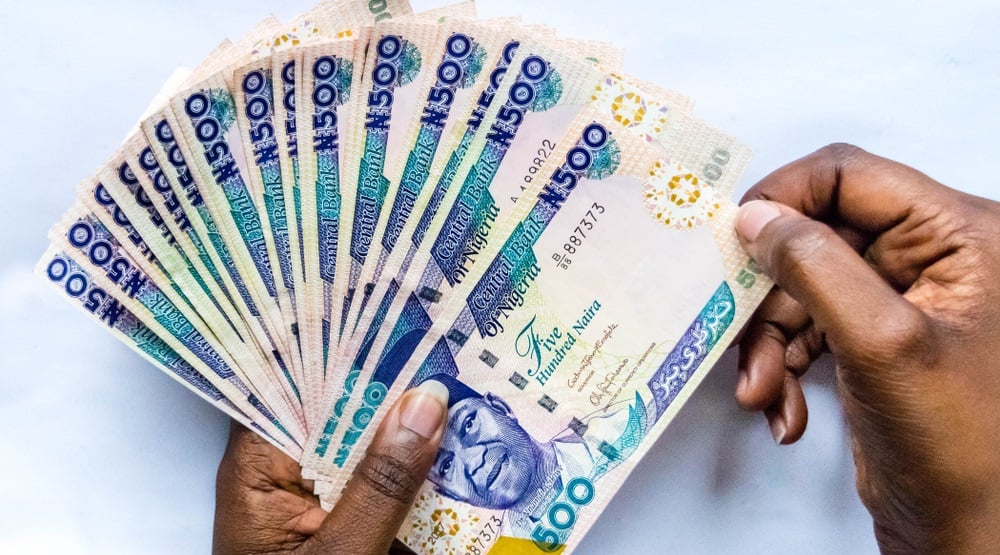
A crypto startup providing wifi hotspot sharing services in Nigeria has won funding from the country’s telecom regulator. Wicrypt placed second among 25 tech companies participating in an innovation competition organized by the Nigeria Communication Commission and it’s going to receive a grant worth 2 million naira to finance its project.
Wicrypt allows subscribers to earn money by sharing their mobile data with other users who pay for the service. The platform’s app has been developed for Android and iOS devices and is already available on Google Play and Apple’s App Store. Hosts can connect their wireless routers to Wicrypt as well and set a price for the wifi hotspot. Clients pay to gain access but are also free to reward the hosts for the network quality and speed.
To connect to Wicrypt hotspots, wifi users need to have a sufficient amount of Wicrypt credits (WCs), the platform’s website explains. The application verifies if a beneficiary has enough credits in their wallet to pay for the service. WCs can be acquired and redeemed with a wide choice of payment methods available to both sides. Ugochukwu Aronu, founder of the company based in the Nigerian state of Enugu, commented:
Wicrypt will help Nigerians earn money online using and sharing their mobile data.
The payment options include regular bank accounts and cards as well as crypto payments with bitcoin core (BTC), ethereum (ETH) and Binance coin (BNB). Deposits and withdrawals can also be made through the Kenyan mobile phone-based money transfer system Mpesa. Text-based payments offered by telecom companies are quite popular in African countries. These provide an opportunity for crypto payments to expand in developing nations, as is the case with Cointext, which provides users with a bitcoin cash wallet and an SMS channel to send and receive BCH.
Wicrypt has been chosen to receive 2 million naira in funding, which is more than $5,500, as a grant from Nigeria’s telecom regulator. Dozens of technological innovators took part in the three-day Innovation Competition and Exhibition conducted by the Nigeria Communication Commission. The NCC recently released the final list of 25 contenders and Wicrypt is second in the rating, the Nigerian Investment Promotion Commission (NIPC) announced. The companies that received government grants can invest the prize money into their business development.
Other Funding Programs Launched
The NIPC also notes that the Lagos State Government recently launched a 250 million Nigerian naira seed funding for startups focusing on innovations, including in the blockchain and other fintech fields. The initiative was announced by Governor Babajide Sanwo-Olu during the Art of Technology Lagos 1.0 conference held in early December with over 1,500 young innovators and tech solutions developers. Funds were also distributed among blockchain startups during another event, the Zenithtech Fair 2019 in November.
These funding projects may indicate a change in the attitude of Nigerian authorities toward the nascent crypto industry, at least on a regional level. The federal government has generally had a negative stance regarding the blockchain space so far, with the Central Bank of Nigeria issuing warnings against investment in cryptocurrencies which it does consider legal tender in the country. Nigerians, however, have been growing fonder of digital coins.
According to a study conducted by Binance Research, the trends in Google searches for “bitcoin” have noticeably shifted in the past few years, from the developed West to the East, including regions in Eastern Europe and Asia, but most recently on the African continent. A video with the results released this past fall shows that Nigeria has been topping the chart for a whole year until September 2019.
Do you think the Nigerian government is changing its policy toward the crypto space? Share your thoughts on the topic in the comments section below.
Disclaimer:This article is for informational purposes only. It is not an offer or solicitation of an offer to buy or sell, or a recommendation, endorsement, or sponsorship of any third party products, services, or companies. Bitcoin.com does not provide investment, tax, legal, or accounting advice. Neither the company nor the author is responsible, directly or indirectly, for any damage or loss caused or alleged to be caused by or in connection with the use of or reliance on any content, goods or services mentioned in this article.
Images courtesy of Shutterstock.
Are you a Bitcoin developer? You can create your own Bitcoin Cash app with the Bitbox and Badger Wallet SDKs, get started with BCH tokens through the SLP SDK, and build your knowledge base with our Bitcoin Cash developer guides.
Five years ago, the crypto community became aware of an alleged contract called the Tulip Trust. The supposed contract emerged when a few tech-based news outlets published stories on two former business partners Craig Wright and David Kleiman. According to the Tulip Trust contract story, Wright and Kleiman were ostensibly part of the group that invented Bitcoin. The trust claims that on January 1, 2020, approximately 1,100,111 BTC will be returned to Wright and now skeptics are patiently waiting for the arrival of a bonded courier.
The Infamous Tulip Trust: ‘All Bitcoin Will be Returned to Dr. Wright on Jan. 1st 2020’
Today is the day the alleged bonded courier is supposed to deliver Craig Wright the keys to roughly 1 million BTC ($8 billion). The reason a few people have this belief is because Wright told the court during his lawsuit against the Kleiman estate that the keys to the funds he owned within the Tulip Trust were to be delivered by bonded courier. Prior to the supposed courier’s delivery, Wright claimed the keys to this stash of bitcoins were unattainable and split among various key holders.
If you think Satoshi Nakamoto is waiting for a "bonded courier" from some "tulip trust" you are seriously f#$k'n stupid.
The bonded courier tale has been an ongoing joke throughout the crypto community for those who believe the story is a farce. Skeptics think that Wright won’t obtain any keys and he will come up with another excuse in order to keep kicking the Satoshi can down the road. On December 27, Wright spoke with the finance publication Bloomberg and told the news outlet he “cannot be certain that information will arrive.” In addition to the uncertainty of wondering if the bonded courier will arrive, Wright has stated that he won’t be dumping his BTC anyway.
“I do not intend to dump my family’s BTC as some people suspect or want, as this would hurt many people in the industry,” Wright told the columnist Olga Kharif.
On January 1, 2020, throughout various cryptocurrency forums and social media, the bonded courier story has been trending. There are lots of people discussing the subject in jest and one person said he was taking bets that Kleiman’s lawyers will be expecting an update about the alleged courier delivery. During the last two weeks, there have been numerous bonded courier headlines in the news and other Craig Wright stories closing out 2019.
For instance, the crypto community has also been joking around about Wright’s ‘fatal flaw’ prediction he made on November 12, 2018. “They will learn next year that there is a fatal flaw in BTC and by fatal I mean there won’t be any BTC by the end of next year,” Wright told the hosts of the Crypto Show during his interview. One Tulip Trust skeptic called Arthur van Pelt explained that today would be quite boring for CSW fans and over time they would grow leery of his excuses. Van Pelt stressed:
January 1, 2020, BTC is $7,215, while BSV is $98. Who had thought? The next non-event is today, the no-show of the Tulip Trust bonded courier. Then we’ll have a true event halfway this month. I’m expecting widespread apathy among BSV fans by the end of the month.
Did I already miss #CSW moving the Satoshi $BTC from the #Tuliptrust? – or is the bonded courier running late because its driver got drunk on NYE? #Bitcoin$BSV
Besides the jokes and memes about Craig Wright and the bonded courier story, which is eerily similar to one of the Back to the Future II subplots, there are plenty of BSV fans that still wholeheartedly believe. A number of CSW followers now say that the keys might not be used right away and they think Satoshi-related events will happen when the cryptosphere least expects it. In fact, BSV supporters decided to host a ‘Tulip Trust Party’ on the broadcast the Bitcoin SV Channel today.
The publication Coingeek, which is owned and operated by the BSV supporter and billionaire Calvin Ayre, has published numerous stories on the Tulip Trust phenomenon. The articles explain how Wright is expected to get between 821,050 and 1,100,111 BTC on January 1. On December 27, the news outlet published an editorial in regard to what would happen if Satoshi’s coins moved in 2020. Wright also speaks about the Tulip Trust funds in a post called: “Craig Wright sets record straight again on Tulip Trust.” The self-proclaimed Bitcoin inventor again highlights that there is “no guarantee” that the private keys will be made available at the dawn of the new year. “What a family does with its finances should be its own private business,” Wright asserted.
“As I’ve explained in court proceedings, I believe I will receive information in January 2020 that will enable us to identify coins I mined into my companies in 2009 and 2010, but cannot be certain that all of that information will in fact arrive,” Wright said in his interview with Coingeek author Jasmine Solana. Wright continued:
I have not said the private keys to those coins would become available, or if so, actually used, in January 2020. In the next few weeks, we will be holding trust meetings and working out the next steps going forward in 2020.
Despite the fact that Wright has already explained that the Tulip Trust information may not arrive as expected, the bonded courier story still has a lot of people curious. Since Gizmodo and Wired first published their stories about the alleged trust that supposedly holds 1 million BTC, it has sparked all kinds of fanatical theories. Since 2015’s hit pieces and with all the comments from Wright during the billion-dollar lawsuit that started in 2018, the Tulip Trust has transformed into quite the tale. Wright detractors believe that the bonded courier story is just a fantasy and the ‘leaked’ Tulip Trust document is nothing more than a long con.
Do you think the bonded courier will arrive today or sometime after January 1, 2020? Do you believe Wright’s stories and claims? Let us know what you think about this subject in the comments section below.
Image credits: Shutterstock, Pixabay, Wiki Commons, Fair Use, and Twitter.
Did you know you can verify any unconfirmed Bitcoin transaction with our Bitcoin Block Explorer tool? Simply complete a Bitcoin address search to view it on the blockchain. Plus, visit our Bitcoin Charts to see what’s happening in the industry.
The China Foreign Exchange Trade System (CFETS) announced that effective January 1, 2020, the system “will adjust weights for CFETS RMB Index,” decreasing the weighting of the USD for the second time in the currency basket’s history from 22.40% to 21.59%, and increasing the Euro from 16.34% to 17.40%. The change could signal further disassociation with USD due to ongoing U.S./China trade difficulties. Also, reports of increased trade with the EU over 2019 and the fact that both China and the European Union are actively working on central bank digital currencies (CBDCs), have some speculating that dollar hegemony is being challenged by the move.
The CFETS yuan index has been around since 2015 and aims to measure the yuan’s performance against a basket of 24 currencies. The newly announced adjustment will see the influence of USD over this basket trimmed back for the second time since its creation. The last time the currency saw its weight diminished was in January 2017, falling from 26.40% to 22.40%. The 2020 cutback sees the dollar fall again from 22.40% to 21.59%.
The euro, on the other hand, remains the second largest currency in the basket, and will see its influence rise from 16.34% to 17.40%. The official announcement states that the change is due to updated trade data, and according to Chinese news outlet Global Times “shows the fading role of the dollar in the currency basket as the trade war between the world’s top two economies has weighed on bilateral trade.”
Also taking a hit will be the fourth largest currency in the basket, the USD-pegged Hong Kong dollar, falling from 4.28% to 3.57%.
Trade Tensions and CBDC Development
The ongoing trade and tariff war between the U.S. and China may see some changes with the upcoming “phase one deal,” which could be signed this month, bringing a proposed reduction of U.S.-imposed tariffs on Chinese goods in exchange for purchase of American agricultural products. It is not certain whether the deal will go through. Relations with China’s biggest trading partner, on the other hand, appear to be thriving.
“The nation’s yuan-denominated trade with the EU, China’s top trading partner, posted a rise of 7.7 percent in the first 11 months [of 2019], per Chinese customs statistics,” Global Times reports. The Chinese government’s relationship with the EU is interesting, especially given that both the EU and China are actively working on implementing central bank digital currencies. The ECB recently published a report on their hypothetical “Eurochain” network, and China appears to be ready for pilot testing of the digital yuan. This in stark contrast to the perceived cold feet of U.S. financial planners when it comes to creating a digital version of the greenback.
Whether CFETS adjustments signal broader intentions related to these areas is yet to be seen, but the fact that Chinese authorities are measuring the strength of the yuan now less relative to USD — at least where the trade index is concerned — has been clearly demonstrated. The CFETS Bank for International Settlements (BIS) index also notably saw changes this time around in replacing the Venezuelan bolivar with the Icelandic krona.
What are your thoughts on the CFETS index adjustment? Let us know in the comments section below.
Image credits: Shutterstock.
Want to create your own secure cold storage paper wallet? Check our tools section. You can also enjoy the easiest way to buy Bitcoin online with us. Download your free Bitcoin wallet and head to our Purchase Bitcoin page where you can buy BCH and BTC securely.