Saturday, December 2, 2023

GHO Stablecoin Hits $0.98 Target as Strategic Initiatives Spearhead Turnaround

GHO Stablecoin Hits $0.98 Target as Strategic Initiatives Spearhead Turnaround

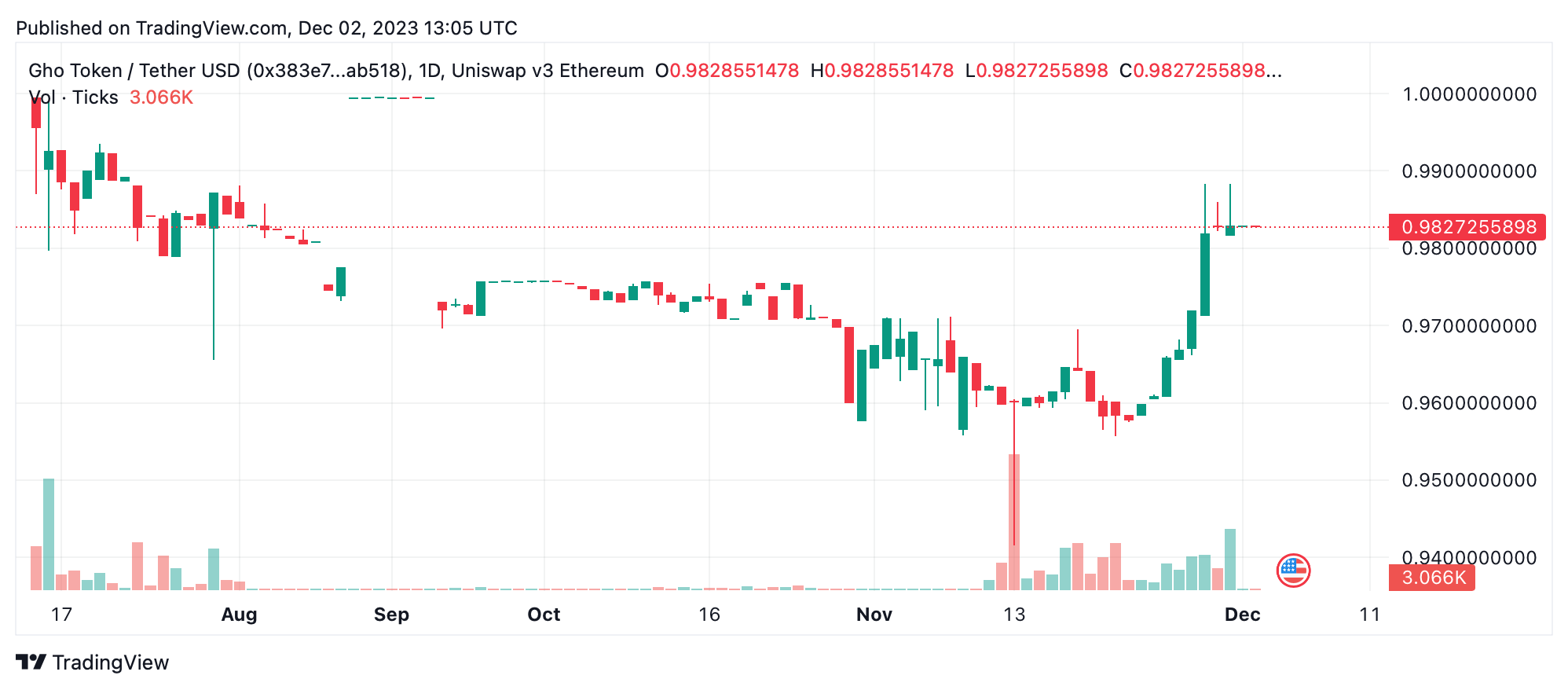
Beginning in mid-July 2023, the stablecoin from Avara (previously known as Aave), a decentralized finance firm, consistently traded below its target $1 peg, reaching a low of $0.917 on October 24. Nonetheless, in recent weeks, the Liquidity Committee of the project undertook efforts to rectify this gap, setting a goal to elevate the stablecoin’s value to around $0.98 by the end of November. Thus far, the initiative has proven successful, as the committee managed to increase the token’s value to the targeted range.

Avara’s GHO Stablecoin Nears $1 Mark

Since its inception, the decentralized finance (defi) stablecoin from Avara struggled, initially trading at $0.99 per unit on its first day. However, it has not reached that level again. Over the subsequent 141 days, the project’s team and Liquidity Committee brainstormed strategies to enhance the coin’s value.

Their efforts included bolstering liquidity through the Maverick Protocol, creating a Bunni pool for GHO/USDC, and launching Uniswap Merkl campaigns for GHO/USDC and GHO/USDT pools. From November 24 to November 28, 2023, the value of GHO surged from the $0.95 mark to the $0.98 level, a first since October 1.

GHO Stablecoin Hits $0.98 Target as Strategic Initiatives Spearhead Turnaround

Since November 28, the stablecoin has consistently maintained a value of $0.983 per coin. As of December 2, 2023, GHO ranks as the 26th largest fiat-based stablecoin by market capitalization.

On Saturday, the circulation of GHO tokens stands at roughly 34,830,945. However, with GHO trading below one U.S. dollar, its market valuation is at $34.26 million.

Currently, 980 unique addresses hold GHO, with the top ten addresses controlling 61.01% of the total supply. Moreover, the top 100 holders of GHO stablecoin collectively possess 99.47% of all circulating GHO.

While GHO has not yet climbed back to the $0.99 or $1 mark, the likelihood of reaching these levels appears increasingly favorable. Currently, the stablecoin has risen 7.29% from its all-time low of $0.917 per coin, recorded on October 24, 2023.

What do you think about GHO’s parity struggles? Share your thoughts and opinions about this subject in the comments section below.


via Jamie Redman

NFT Sales Boom in November — Bitcoin Dethrones Ethereum in Market Surge

Sales of non-fungible tokens (NFTs) experienced a notable surge in November, with a 129.01% increase in sales volume compared to October. Additionally, NFTs created on the Bitcoin blockchain surpassed those on Ethereum in terms of sales this past month. This shift can be attributed to a marked rise in Ordinal inscription minting and trading activities on the Bitcoin network in recent times.

Bitcoin Climbs Past Ethereum in Staggering November NFT Sales Surge

NFTs experienced a vibrant month in sales over the past 30 days, reaching close to $1 billion in transactions, with an exact figure of $944.33 million. This figure represents a slight increase, just above 129%, compared to the $412 million in sales observed in October. However, despite this upsurge, November saw a decline of 20.16% in buyer participation, while seller numbers fell by 18.90%, as reported by cryptoslam.io statistics.

NFT Sales Boom in November — Bitcoin Dethrones Ethereum in Market Surge

This month marked a significant shift with sales originating from the Bitcoin blockchain surpassing those from Ethereum. In the past 30 days, BTC-based NFT sales reached $382.88 million, exceeding Ethereum’s sales by $20.32 million, which totaled $362.56 million. Bitcoin’s NFT sales witnessed a significant 1,928.65% surge compared to October’s figures. Meanwhile, Ethereum’s sales also grew, registering a 57.28% increase over the sales in October.

In November, Solana’s NFT sales experienced a significant boost, soaring by 190.11% to reach $86.99 million. Conversely, Polygon saw a decrease of 33.90%, tallying $26.78 million in sales, while Mythos experienced a 30.32% drop, recording $25.66 million in sales volume. Dominating the month, BTC led with the “$SATS BRC-20” collection, amassing $93.44 million, a 974% increase from the previous month. The “$RATS BRC-20” collection from Bitcoin secured the second position, garnering $45.58 million in sales.

The $RATS BRC-20 collection skyrocketed by a massive 4,768,571% compared to the previous month. Ethereum’s Bored Ape Yacht Club (BAYC) ranked third in November with sales of $43.36 million, marking an 88.66% increase. Cryptopunks claimed the fourth spot, achieving $29 million in transactions, a rise of 169.61%. Sales from Mythos’ Dmarket reached $25.10 million, showing a 31.36% decrease from October. While Bitcoin led in overall sales, the most expensive NFT sold in November hailed from the Ethereum blockchain.

Fourteen days ago, the NFT “Uniswap V3 Positions NFT-V1 #14” was purchased for a substantial $1.66 million. Meanwhile, a “$BTCS BRC-20” NFT fetched $376K, selling just over 16 days ago, and the “Voting Token Lockup #3” from Arbitrum achieved a sale price of $300K. From Solana, the “Boogle #057” NFT was acquired for $126K, and Cardano’s “EMURGO x NMKR Cardano Summit” NFT garnered $59K, both selling just over ten days ago.

What do you think about the record-setting NFT sales in November and Bitcoin dethroning Ethereum in terms of sales over the past month? Let us know what you think in the comments section below.


via Jamie Redman

Crypto Firms’ Compliance With Regulation Should Not Be at the Expense of Innovation — Zak Taher

Crypto Firms' Compliance With Regulation Should Not Be at the Expense of Innovation — Zak Taher

Zak Taher, the CEO of Multibank.io, said he believes the United Arab Emirates (UAE) is the most attractive investment destination for overseas digital asset companies due to its effective governance and the leadership of its individuals. The UAE’s status within the global financial landscape, combined with its geographical advantages and favorable time zone, further enhances its appeal as an investment destination, according to Taher.

Taher on UAE, Digital Asset Innovation, and Regulation

According to Taher, the proof that the UAE possesses such important attributes is seen in the country’s world-leading crypto regulatory frameworks. To the United States, which has adopted an aggressive approach, Taher said the country’s desire to see crypto firms complying with regulation should not be at the expense of innovation. The Multibank CEO argued that ensuring a “robust balance” between consumer protection and innovation is key to safeguarding consumers without stifling innovation.

Taher meanwhile attributed the reluctance of some prospective crypto users to trade to their lack of confidence in the trading platforms. To instill confidence in these platforms, Taher urged crypto exchange owners to consider embracing regulation. He also suggested that crypto exchanges should prioritize human interaction, customer success, and communication to become more user-friendly.

In his written answers sent to Bitcoin.com News via Telegram, Taher also offered his thoughts on crypto derivatives and touched on some of the common compliance risks associated with these assets. Below, are Taher’s answers to all questions sent.

Bitcoin.com News (BCN): Some U.S. regulatory bodies have taken seemingly aggressive regulatory actions towards crypto exchanges and platforms. What is your view on this, and what should be the right approach to regulating an industry as innovative as crypto?

Zak Taher (ZT): Unlike other crypto exchanges, our core business has been in the financial field since 2005, providing us with extensive experience in navigating authorities and regulatory bodies worldwide. Our go-to approach involves a dual-prong strategy.

Innovation vs. Compliance Balance — When it comes to innovation and compliance, we recognize the inherent risks that innovation introduces. The optimal approach is to strike a robust balance between the two. This doesn’t imply restricting innovation but rather project managing it effectively.

Allocation of Resources: Expanding on the first approach, resource allocation takes center stage. Often, executives concentrate their budget on marketing, hiring top talent from Fortune 500 companies, while overlooking the importance of compliance and legal expertise. Just as in a war, where a strong shield is crucial for protection, allocating resources to compliance is imperative to safeguard both the company and its stakeholders.

BCN: The UAE seems to be at the forefront of crypto regulatory innovation, with the Virtual Assets Regulatory Authority (VARA) providing investors, developers, and companies with clear rules. Besides regulatory clarity, what makes the UAE an attractive destination for talent and capital?

ZT: The attractiveness primarily stems from the country’s effective governance and the individuals leading it. Its position in the global financial landscape, coupled with geographical advantages and a favorable time zone, contributes significantly. The world-class infrastructure, government support, and tax-friendly environment enhance the overall appeal.

The UAE government is dedicated to blockchain, cultural diversity, and ensuring a superb quality of life for residents. Such belief is evident in the establishment of one of the best regulatory frameworks to safeguard users in crypto transactions, reflecting a visionary approach.

BCN: Your company, Multibank Group, claims to be one of the world’s most regulated financial institutions with a long history in regulated derivatives broking. What expertise do legacy platforms such as yours bring to crypto in terms of security, user experience, and regulation?

ZT: It’s funny, in our discussions with crypto-specific affiliates and networks, they express surprise at our unique approach in focusing on partnerships, a strategy less common in the crypto space but prevalent in the FX domain. In terms of user experience, crypto exchanges often boast more user-friendly interfaces and customer journeys compared to FX and derivatives trading platforms. Regarding regulations, the close collaboration between Multibank Group and regulators worldwide proves advantageous. The team’s expertise in obtaining licenses is evident, with the group currently holding 14 licenses and counting.

BCN: Many people often sign up for crypto exchanges but end up not making a single trade. What are some of the issues faced by crypto newbies that stop them from trading or owning digital assets, and how can these be solved?

ZT: The cornerstone is trust, and the remedy lies in regulation. It’s not surprising that people, especially newcomers, hesitate to invest. It’s reminiscent of the caution exercised with a bank. Times have swiftly changed since the last bull market, contributing to increased hesitancy. A significant means of instilling trust in individuals depositing their hard-earned money into the exchange is through regulation. This assurance stems from holding proper licenses and expertise in Tradfi. This approach effectively mitigates fear, encouraging individuals to feel confident about making deposits. Additionally, the organization’s emphasis on human interaction, customer success and communication, positions it as a people-first company, offering a more connected level of account management, especially for novices needing a helping hand.

BCN: Recently, your platform introduced a “Panic Sell” button on its crypto exchange. What is the reasoning behind the introduction of this button?

ZT: In a bear market, the cryptocurrency exchange scene can resemble a bit of a cycle, with users shifting from one platform to another, often involving seasoned cryptocurrency enthusiasts. While this dynamic has its merits, it’s crucial to emphasize outreach to newcomers, a goal we actively pursue in the FX and Tradfi space. Our panic sell feature adds a playful element, allowing users to swiftly liquidate their tokens in challenging situations, giving them that edge. Such features are not only enjoyable but also prove helpful for crypto novices, particularly those seeking efficiency in their initial experiences in the space.

BCN: Derivatives such as options and futures have dominated cryptocurrency trading since their debut around 2014. As you may be aware, these products are also heavily favored by institutional investors. What common compliance and regulatory risks do you see for crypto derivatives?

ZT: In the realm of crypto derivatives, compliance and regulatory risks demand a multifaceted approach. To address anti-money laundering and counter-terrorism financing concerns, one needs robust know your customer (KYC) and know your transaction (KYT).

From a regulatory standpoint, vigilance in market abuse surveillance is crucial, involving the implementation of systems to monitor market manipulation, employing data analytics, and establishing whistleblower programs.

Global expansion requires a nuanced approach due to jurisdictional variations. Recognizing diverse regulatory approaches in each country is essential, especially for futures or options trading. Establishing common rules that align with regulatory guidelines becomes imperative to navigate the complexities of global markets effectively. This comprehensive strategy ensures regulatory compliance while fostering a secure and protected environment for users engaging in crypto derivatives.

What are your thoughts on this story? Let us know what you think in the comments section below.


via Terence Zimwara

3 out of 4 Web3 Games Launched Between 2018 and 2023 Now Inactive — Study

3 out of 4 Web3 Games Launched Between 2018 and 2023 Now Inactive — Study

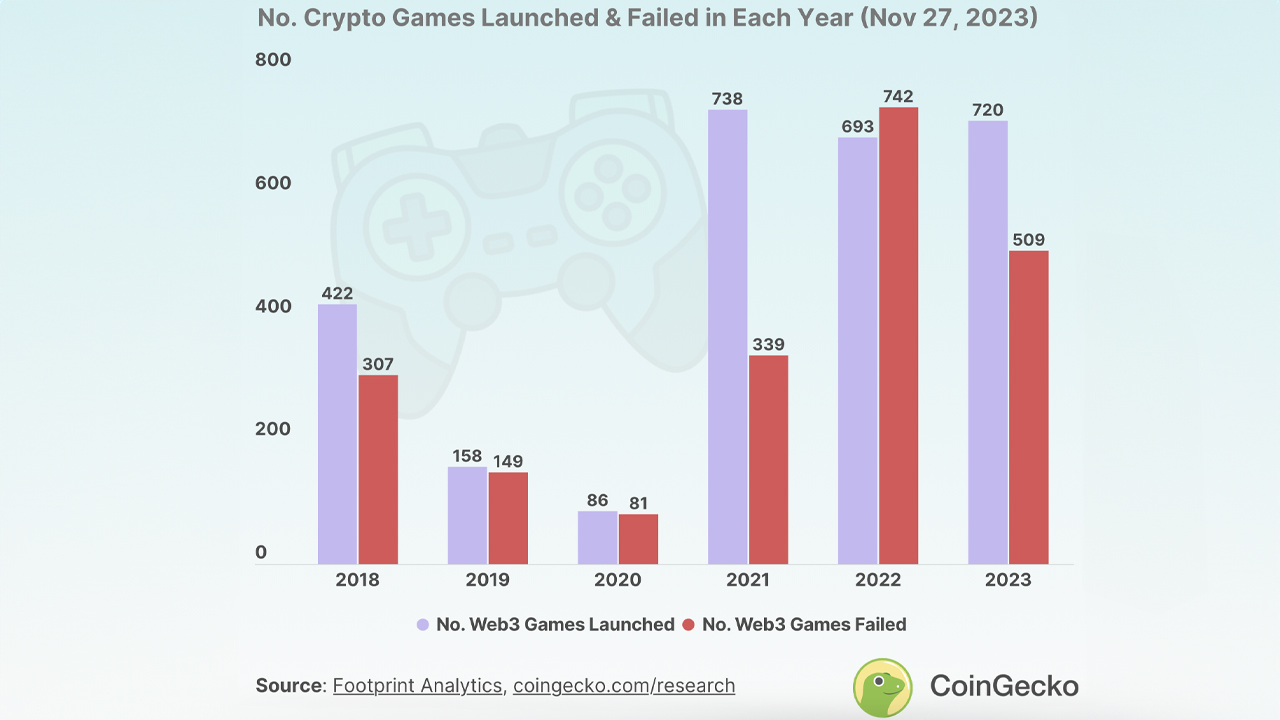
Between 2018 and 2023, 2,127 out of 2,817 Web3 games launched have either failed or are now inactive, an analysis by Coingecko has shown. The failure rate was the highest in 2019 (94.3%) and 2020 (94.4%) while in 2021, 339 out of 738 games failed, translating to a failure rate of 45.9%.

2020 Had the Highest Failure Rate

According to a new analysis by Coingecko, between 2018 and 2023, 2,127 out of 2,817 Web3 games launched have either failed or are now inactive. This means that for every four games launched, three have disappeared. Coingecko’s analysis also shows that during this period, the number of Web3 games that failed averaged 80.8% each year.

3 out of 4 Web3 Games Launched Between 2018 and 2023 Now Inactive — Study

As per Coingecko’s data, the failure rate during the five years was the highest in 2019 (94.3%) and 2020 (94.4%). However, in 2021, the year of the last crypto bull run, 339 out of 738 games failed, translating to a failure rate of 45.9%.

In terms of the actual number of failed games, Coingecko’s analysis identifies 2022 as the year with the highest number of dead games with 742. The failure rate in that year stood at 107.1%, meaning it was the only year when the number of failed games was higher than those launched (693).

Meanwhile, the analysis shows that 2023 has the second-highest number of games launched (720), while 2020’s 86 game launches are the least in each of the five years reviewed. The year 2020 recorded the lowest number of dead games in any of the five years with 81.

What is your opinion on this story? Share your thoughts in the comments section below.


via Terence Zimwara

Friday, December 1, 2023

Nigerian Supreme Court Extends Old Banknote Demonetization Deadline Again

Nigerian Supreme Court Extends Old Banknote Demonetization Deadline Again

The Supreme Court of Nigeria has again extended the lifespan of the N1000, N500, and N200 naira notes. The Central Bank of Nigeria (CBN) also reiterated that all banknotes, including the previously demonetized naira, remain legal tender “ad infinitum, even beyond the initial 31 December 2023, deadline”

Demonetization Deadline Extended Again

The Supreme Court of Nigeria has reportedly granted the Federal Government’s request to extend the lifespan of the N1000, N500, and N200 naira notes for the second time. With the previous deadline of December 31, 2023, set by the same court nearing, the Nigerian government was forced to seek an extension of the validity of the notes.

Before the latest ruling, the Supreme Court had previously invalidated a demonetization directive issued by then-President Muhammadu Buhari. At the time, the court blasted the Buhari government and then Central Bank of Nigeria (CBN) governor Godwin Emefiele for proceeding with the process without seeking the public’s views.

As reported by Bitcoin.com News, the CBN’s controversial old naira banknote demonetization was initially set to be completed by the end of 2022. However, many Nigerians were unable to return the old banknotes before the deadline and this eventually forced the central bank to move the cut-off day. Despite the deadline extensions, the cash shortages persisted.

To ameliorate Nigerians’ woes, many Nigerian state governors sued the federal government and urged the Supreme Court to reverse the monetary policy.

Consulting the Public

The Supreme Court panel led by John Okoro reportedly directed that the old naira banknotes should remain legal tender until they are replaced with the redesigned notes. This decision means the old notes will co-exist as legal tender with the redesigned ones.

Explaining the reasoning behind the judgment, Okoro said:

“The old versions of 200, 500, 1000 naira notes/currency shall continue to be legal tenders alongside the new or designed versions until the government decides to bring the circulation of the old versions to an end after it consults with critical stakeholders and after putting all required structures in place.”

Just weeks before the Supreme Court made its latest ruling, the Central Bank of Nigeria (CBN), which is now led by Olayemi Michael Cardoso, reiterated that all banknotes including the previously demonetized naira, remain legal tender “ad infinitum, even beyond the initial 31 December 2023, deadline.”

What are your thoughts on this story? Let us know what you think in the comments section below.


via Terence Zimwara
Blockchain Experts Meet With Colombian President to Discuss Technology’s Use Cases

Blockchain Experts Meets With Colombian President to Discuss Tech Use Cases

Samson Mow, CEO of JAN3, and other blockchain experts, met with Colombian President Gustavo Petro to discuss the possible uses blockchain and bitcoin tech could have to help modernize the management of certain institutions of the Colombian state.

Colombian President Gustavo Petro Discusses Blockchain and Bitcoin Implementation

Gustavo Petro, president of Colombia, announced on November 29 that he had met with several blockchain and bitcoin experts to discuss applying this tech to improve the management of several institutions and projects in the country.

The meeting, which saw the presence of JAN3 CEO Samson Mow, JAN3 Marketing Director Raul Velasquez, JAN3 CMO Edwin Rivas, RSK Labs co-founder Diego Gutierrez, Bingx International Operations Consultant Cristian Quintero, and Tropykus co-founder Mauricio Tovar, included the discussion of three main topics.

The first one had to do with modernizing the billing processes of the health system in Colombia, which he suggested could be monitored in real-time using blockchain tech instead of relying on manual procedures that still use ink and paper records.

Also, Petro hinted at utilizing blockchain tech to manage land registries and issue land ownership titles. Gabriel Angulo, IT VP of the National Agrarian Bank, was also present to review these discussions to articulate these efforts. In July 2022, Colombia announced the launch of the first National Land Registry built on top of the Ripple ledger in partnership with Peersyst Technology.

The last topic discussed included using Bitcoin in free work cooperatives in the Colombian popular economy, although no more details were shared on this subject. Petro also stressed that these technologies “can be promising for the prosperity of the people.”

The Ministry of Information Technologies and Communications of Colombia has already issued a reference frame for implementing blockchain tech in state projects that explicitly states these efforts must comply with the Colombian legal framework.

What do you think about the intentions of Colombian President Gustavo Petro in implementing blockchain tech to modernize state processes? Tell us in the comments section below.


via Sergio Goschenko

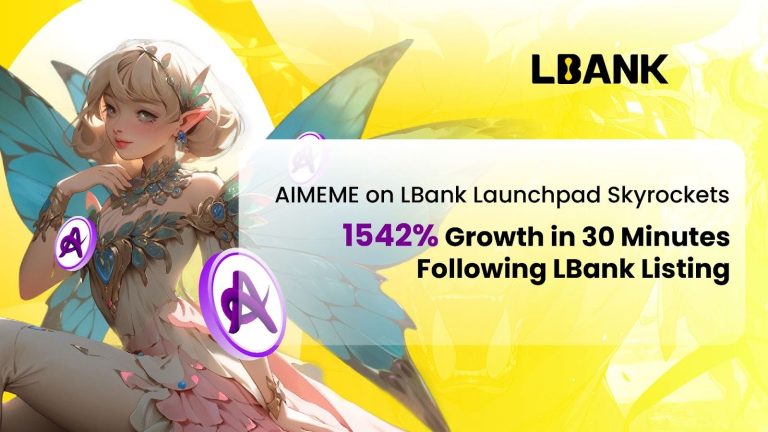
$AIMEME Soars: Achieves 1542% Growth in 30 Minutes Following LBank Listing

PRESS RELEASE. In a groundbreaking move within the cryptocurrency market, LBank’s Launchpad for ACGN Protocol’s native token, $AIMEME, has emerged as a focal point, marking a remarkable advancement in the crypto market. This achievement holds particular significance in the anime, comics, games, and novels (ACGN) sector.

$AIMEME initiated its trading journey at $0.01 on December 1st and experienced an extraordinary ascent to $0.15421 within the first 30 minutes, representing 1542% increase from its Launchpad initial price. The Launchpad garnered substantial attention, attracting 61,005 participants, resulting in a cumulative investment of 95,098,311 USDT.

Launchpad Highlights:

On November 30th, LBank introduced a subscription quota to ensure fair participation, with a hard cap on subscriptions. Participants reaching the maximum allowed subscription invested 50,000 $AIMEME.

Launchpad Mechanics:

The ACGN Protocol $AIMEME Launchpad on LBank implemented well-crafted participation rules, guaranteeing fair access. Over 13 days, LBank meticulously monitored user balances and set investment quotas based on averages. The eligibility criteria required users to engage in at least one trade on LBank, emphasizing the platform’s commitment to active and substantial asset-holding users.

About ACGN Protocol and $AIMEME

ACGN Protocol stands as an innovative AI-driven Web3 ecosystem tailored for the ACGN sector. It empowers users to create derivative content from original IPs, fostering an NFT content network that links derivatives with originals. This approach builds a comprehensive ACGN content creation ecosystem. $AIMEME, the protocol’s native utility token, is central to its tokenomics, driving and sustaining the decentralized ecosystem. It plays a pivotal role in governance and incentivizes active participation across various dimensions.

Tokenomics and Use Cases

With an initial supply of 1 billion tokens, $AIMEME’s distribution includes allocations for IEO, marketing, team, and ecosystem operation. Creators utilize $AIMEME for voting rights, governance decisions, covering AI tool costs, and publishing UGC games, enhancing its value within the ACGN ecosystem.

The ACGN Ecosystem

ACGN Protocol is more than a platform; it’s a thriving community for creators and users alike. It enables diverse ACGN content creation, enhances user interactions, and fosters collaboration. Integrating AI and VR technologies, the ecosystem offers novel ways to engage with the digital world, while the decentralized NFT ecosystem provides rewards and opportunities for creators.

Market Impact:

$AIMEME’s stellar performance in the Launchpad phase signals lucrative returns for investors. LBank’s success with previous Launchpads affirms its commitment to innovative and rewarding investment opportunities, even in challenging market conditions. This triumph is a testament to LBank’s strategic vision and dedication to fostering a community of believers and investors eager for the next bull market.

About LBank:

Founded in 2015, LBank stands at the forefront of the global cryptocurrency exchange landscape, offering a secure and user-friendly trading experience. With a steadfast commitment to innovation, LBank consistently pioneers groundbreaking opportunities in the dynamic realm of crypto space. Renowned for its cutting-edge platform and forward-thinking approach, LBank not only ensures the security of digital assets but also empowers users with access to the latest tools and features, shaping the future of finance.


This is a press release. Readers should do their own due diligence before taking any actions related to the promoted company or any of its affiliates or services. Bitcoin.com is not responsible, directly or indirectly, for any damage or loss caused or alleged to be caused by or in connection with the use of or reliance on any content, goods or services mentioned in the press release.


via Media