Wednesday, October 30, 2019

Argentina’s Example Shows That You Don’t Own Your Money

Argentina's Example Shows That You Don’t Own Your Money

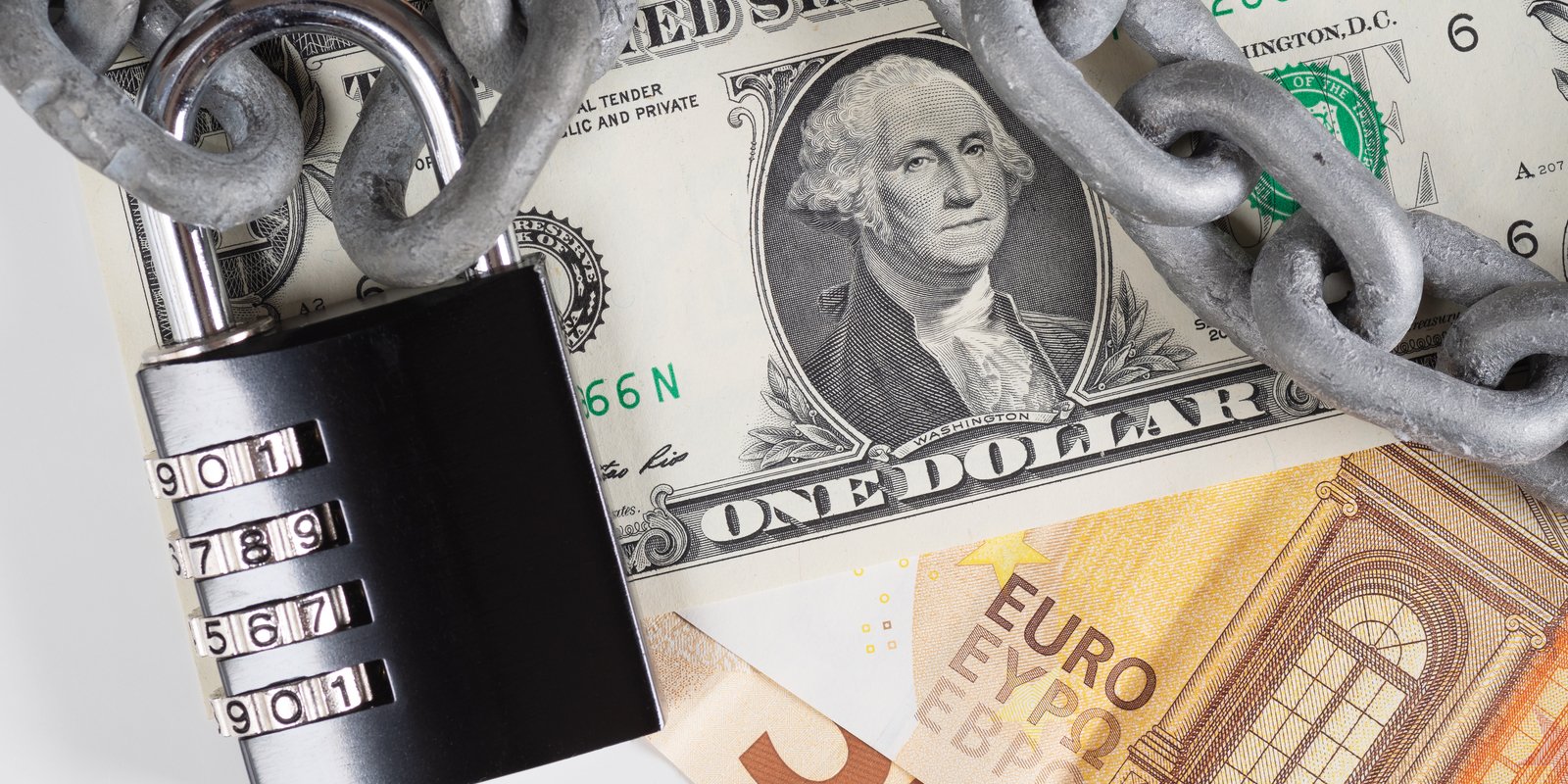
Cash shortages, bank closures and ATMs running out of funds seems to be the new norm for many countries, and recently increased capital controls in Argentina are further testament to this unsettling trend. Sunday’s election of president Alberto Fernández has resulted in Argentine account holders being limited to USD purchases of $200 via bank account and $100 via cash monthly. As protests continue to mount worldwide, the signs don’t look good for fiat money or the people who hold it.

Also Read: Low Interest Rates Are Crushing Young People and Fueling Global Riots

In the Name of Saving Central Banks

Unlike a normal business in the private sector, government organizations and the institutions embedded therein are often immune from market consequence. This fact was possibly hinted at by the creator of Bitcoin himself when he included the text “The Times 03/Jan/2009 Chancellor on brink of second bailout for banks” in the genesis block. The Argentinian central bank crackdown on USD purchases is further proof of this notable lack of consequence for policy makers.

According to reports, the new limit on USD purchases in Argentina is designed to “preserve the reserves of the Central Bank.” The Central Bank of Argentina (BCRA) said in a statement that “Given the current degree of uncertainty, the Board of Directors of BCRA decided to take a series of measures this Sunday that seek to preserve the reserves of the Central Bank. The measures announced are temporary, until December 2019.” The bank is worried about the potential collapse of the Argentine peso (ARS), which has devalued by almost 85% in just under four years.

Fernández is set to fully assume the role of president on December 10, and Argentines were already preparing for possible increased controls in the wake of his election. As the Buenos Aires Times relays:

Last week Argentines rushed to buy dollars and withdraw deposits ahead of the vote on concern that more controls were coming amid an economic crisis.
Argentina's Example Shows That You Don’t Own Your Money

From Prosperity to Fiat Panic

Though news.Bitcoin.com had reported in early September that the lesser capital controls of that time (a purchase limit of $10,000 USD per month) mostly affected businesses, the new, stricter regime of $200 per month affects potentially everyone. Though the measures are said to be temporary, uncertainty remains and understandably so. Governments have never been dependable when it comes to money management. Indeed, as Ana Eiras and Brett Schaefer of the Heritage Foundation noted back in 2001:

Poor economic policies and political instability contributed to Argentina’s decline from its noteworthy position as the world’s 10th wealthiest nation in 1913 to the world’s 36th wealthiest in 1998.

The article goes on to note that centralized policy guidance from the International Monetary Fund (IMF) only made things worse, claiming “Argentina is the only wealthy country to experience so great a reversal in recent history, despite the involvement of the International Monetary Fund (IMF). Indeed, the IMF’s loans and guidance have aggravated, not alleviated, Argentina’s problems.”

Argentina's Example Shows That You Don’t Own Your Money

Your Money Is Not Yours

Protests against unfair and reckless economic policy are currently happening worldwide. Along with Argentina, Chile, France, Hong Kong, Indonesia, India, Egypt and Lebanon are some of the current hotbeds of economic unrest. India’s case is particularly noteworthy as reports have emerged of people dying as a result of lack of access to the money in their bank accounts. As for Lebanon, banks have now been closed for over a week, with news outlet Aljazeera reporting on October 29:

Lebanon’s banking association said banks would remain shut on Tuesday for a tenth straight working day, but said the central bank had provided the liquidity necessary to pay out salaries for public sector workers, including members of security forces.

In Chile ATMs are reportedly running out of cash and becoming non-functional amidst the turmoil of current protests, seeing grocery stores begin to run out of food and infrastructure being burned and destroyed by frustrated demonstrators. Meanwhile, central banks and financial planners continue to drive the world economy further into debt-based dysfunction via negative rate policies, quantitative easing, and a fiat printing press.

When the rubber meets the road, it is always the individuals in these countries who must pay, as recent events are showing. When a restaurant serves awful food with poor service in the private sector, it goes out of business. When the state destroys an economy, they simply raise taxes, lock up the money, devalue it and make you pay for their mistakes. In light of this knowledge, the demand for economically sound, permissionless alternatives like bitcoin grows more and more pronounced, as individuals worldwide realize full ownership of their hard-earned assets is a basic human right.

What are your thoughts on situation in Argentina and ownership of fiat money? Let us know in the comments section below.

Op-ed disclaimer: This is an Op-ed article. The opinions expressed in this article are the author’s own. Bitcoin.com is not responsible for or liable for any content, accuracy or quality within the Op-ed article. Readers should do their own due diligence before taking any actions related to the content. Bitcoin.com is not responsible, directly or indirectly, for any damage or loss caused or alleged to be caused by or in connection with the use of or reliance on any information in this Op-ed article.


Image credits: Shutterstock, Federico Rotter, fair use.


Did you know you can buy and sell BCH privately using our noncustodial, peer-to-peer Local Bitcoin Cash trading platform? The Local.Bitcoin.com marketplace has thousands of participants from all around the world trading BCH right now. And if you need a bitcoin wallet to securely store your coins, you can download one from us here.

The post Argentina’s Example Shows That You Don’t Own Your Money appeared first on Bitcoin News.


via Graham Smith

Cryptophyl Exchange Reveals Fiat On-Ramp to SLP Token Ecosystem

Cryptophyl Exchange Reveals Fiat On-Ramp to SLP Token Ecosystem

The London-based exchange Cryptophyl is a trading platform focused on the Simple Ledger Protocol (SLP) and bitcoin cash (BCH) ecosystem. On October 29, the exchange announced the launch of the first fiat on-ramp to obtain well-known SLP tokens.

Also read: Avalon Mining Rig Maker Canaan Files for $400M IPO on Nasdaq

Purchasing SLP Tokens With Fiat

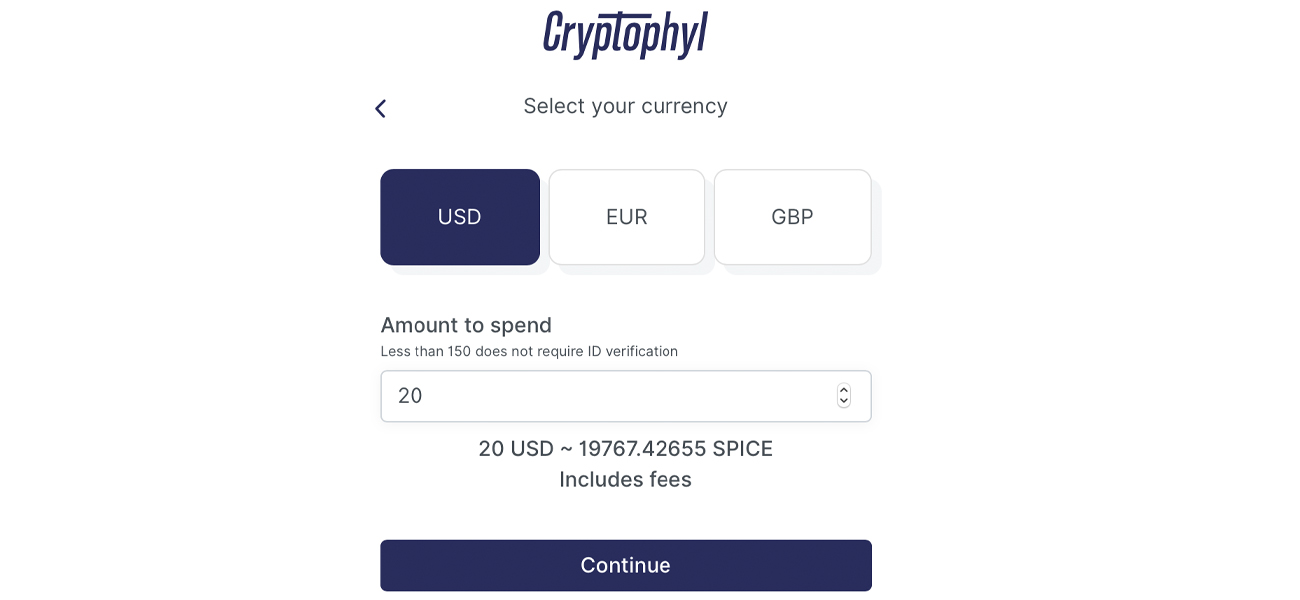
Cryptophyl.com has revealed the public can now purchase SLP tokens using fiat via credit cards, debit cards, and Apple Pay. The Cryptophyl team is collaborating with the payment processor Moonpay in order to facilitate the fiat on-ramp. The SLP token ecosystem has grown quite mature this year and thousands of tokens have been created using the BCH network. Data reveals there’s been 5,400 SLP tokens minted since the inception of the protocol and a slew of tokens have been listed on exchanges. Cryptophyl launched in August and initially offered spice (SPICE) trading with bitcoin cash but the trading platform now has honestcoin (USDH) and the Cryptophyl developed drop (DROP) token. Cryptophyl’s native exchange token drop leverages the ability to utilize onchain dividends by paying holders airdropped tokens directly to their wallets.

Cryptophyl Exchange Reveals Fiat On-Ramp to SLP Token Ecosystem

Now the Cryptophyl team has partnered with Moonpay to provide credit and debit card support to Cryptophyl’s exchange platform. Cryptophyl’s initial fiat payments launch will provide users access to spice and the stablecoin USDH. In the near future, credit and debit card payments can be used to obtain bitcoin cash and drop as well. “We are proud to partner with Cryptophyl to support instant purchases of SLP tokens,” said Ivan Soto-Wright, cofounder and CEO at Moonpay. “Reducing the barriers to entry is critical for mainstream adoption.” Moonpay users will have a connection to the SLP universe as well “expanding the reach of SLP to all users of Moonpay integrated products,” Cryptophyl’s announcement highlighted.

Cryptophyl Exchange Reveals Fiat On-Ramp to SLP Token Ecosystem
At first users will be able to access spice (SPICE) and honestcoin (USDH).

Making Bitcoin Cash Token Trading More Accessible

According to the Cryptophyl team, honestcoin (USDH) and spice (SPICE) are the most popular tokens on the trading platform. Moonpay and Cryptophyl’s fiat on-ramp will charge a fee of 3.99% per transaction. “It’s great to see the addition of credit card support to Cryptophyl,” Semyon Germanovich, Cryptophyl’s founder, detailed during the announcement. “We’re constantly working hard to make token trading more accessible. We’re excited to connect Moonpay’s existing userbase with some of the most popular SLP tokens out there.” Germanovich added:

This is a big moment for SLP tokens, and we’re thrilled to see SLP mature over time, and be a part of this journey. This is the beginning of many great things to come for Bitcoin Cash and the wider cryptocurrency ecosystem.

Cryptophyl Exchange Reveals Fiat On-Ramp to SLP Token Ecosystem

Since Cryptophyl’s inception, the trading platform has been focused on the token technology tethered to the BCH network. The exchange aims to continue expanding the list of SLP pairs on the trading engine. “This mission is achieved through the discovery, due diligence and subsequent listing of quality tokens that demonstrate real-world utility,” Cryptophyl’s announcement notes. “Moving forward, both companies have committed to work together to add all new Cryptophyl listed tokens to Moonpay.”

What do you think about Cryptophyl revealing its fiat on-ramp to the SLP token ecosystem? Let us know what you think about this subject in the comments section below.


Image credits: Shutterstock, USDH, SPICE, Pixabay, Moonpay, and Cryptophyl.com.


Did you know you can buy and sell BCH privately using our noncustodial, peer-to-peer Local Bitcoin Cash trading platform? The Local.Bitcoin.com marketplace has thousands of participants from all around the world trading BCH right now.

The post Cryptophyl Exchange Reveals Fiat On-Ramp to SLP Token Ecosystem appeared first on Bitcoin News.


via Jamie Redman

Tuesday, October 29, 2019

Avalon Mining Rig Maker Canaan Files for $400M IPO on Nasdaq

Avalon Mining Rig Maker Canaan Files for $400M IPO on Nasdaq

Mining rig manufacturer Canaan has filed for an IPO with the U.S. Securities and Exchange Commission to raise $400 million on the Nasdaq Global Market. Prior to this filing, the company had also attempted to go public in Hong Kong and China. Credit Suisse and Citigroup are among its underwriters.

Also read: 4 New High-Powered Bitcoin Miners Revealed

Canaan Files for US IPO

Canaan Inc., a holding company that owns China-based Canaan Creative, filed a registration statement with the U.S. Securities and Exchange Commission (SEC) on Oct. 28 for an initial public offering (IPO). “We are offering American depositary shares, or ADSs. Each ADS represents Class A ordinary shares, par value US$0.00000005 per share,” the filing details. The company hopes to raise $400 million.

The underwriters named in the filing for the IPO are Credit Suisse, Citigroup, China Renaissance, CMBI, Galaxy Digital Advisors, Huatai Securities, and Tiger Brokers. The company plans to apply to list its ADSs on the Nasdaq Global Market under the symbol CAN. Canaan also told the SEC that, based on a report by independent research firm Frost & Sullivan which it paid for:

We were the second largest designer and manufacturer of bitcoin mining machines globally in terms of computing power sold in the six months ended June 30, 2019.

The company plans to use the proceeds to research and develop ASICs related to AI and blockchain algorithms and applications, expand its AI and blockchain business globally, optimize supply chains, and repay debts.

Canaan’s corporate structure: Source: SEC filing

Canaan attempted an IPO in Hong Kong last year but let the application lapse in November. The South China Morning Post reported that Hong Kong regulators said IPOs by cryptocurrency businesses are “premature.” The company also attempted to go public in China three years ago through a reverse merger by buying a Shandong-based electric equipment maker, but that plan also fell through.

Canaan’s Nasdaq IPO filing comes only days after Chinese President Xi Jinping commented on the development of blockchain technology in China which sent shares of blockchain and digital currency-related firms soaring. Some even speculated that Xi’s speech caused the recent hike in prices of bitcoin and other cryptocurrencies.

About Canaan and Avalonminers

Founded in 2013, Canaan provides “supercomputing solutions through our proprietary high-performance computing ASICs,” its registration statement reads. The company currently sells bitcoin mining machines under the Avalonminer brand and mining machine parts. In July, the company started leasing its mining machines.

The company’s total revenue was $394.1 million in 2018, a 106.8% increase year-on-year, but its net income fell 67.4% last year to $17.8 million. For the six months period ending June 30, the total revenue fell 85.2% compared to the same period last year to $42.1 million. The company also recorded a net loss of $48.2 million during that time period.

According to the filing, since the company has less than $1.07 million in revenue for the last fiscal year, it qualifies as an “emerging growth company” pursuant to the Jumpstart Our Business Startups Act of 2012 (the JOBS Act). “An emerging growth company may take advantage of specified reduced reporting and other requirements that are otherwise not applicable generally to public companies,” the filing details.

The company recently introduced two new lines of Avalonminers: the A1146 and the A1166. The former rig processes bitcoins’ hashes at speeds of 46-56TH/s, with a power efficiency rated at around 57J/T, and a price tag of $1,978. The latter costs $1,204 and performs at 66-68TH/s with a power efficiency of around 47J/T. Both are expected to ship in February, according to the company’s website.

What do you think about Canaan filing for an IPO in the U.S.? Do you think the company will successfully raise $400 million? Let us know in the comments section below.

Disclaimer: This article is for informational purposes only. It is not an offer or solicitation of an offer to buy or sell, or as a recommendation, endorsement, or sponsorship of any products, services, or companies. Bitcoin.com does not provide investment, tax, legal, or accounting advice. Neither the company nor the author is responsible, directly or indirectly, for any damage or loss caused or alleged to be caused by or in connection with the use of or reliance on any content, goods or services mentioned in this article.


Images courtesy of Shutterstock and Canaan.


Did you know you can buy and sell BCH privately using our noncustodial, peer-to-peer Local Bitcoin Cash trading platform? The local.Bitcoin.com marketplace has thousands of participants from all around the world trading BCH right now. And if you need a bitcoin wallet to securely store your coins, you can download one from us here.

The post Avalon Mining Rig Maker Canaan Files for $400M IPO on Nasdaq appeared first on Bitcoin News.


via Kevin Helms

More Filthy Fiat: Two Dozen Central Banks Ramp up the Printing Presses

More Filthy Fiat: Two Dozen Central Banks Ramp up the Printing Presses

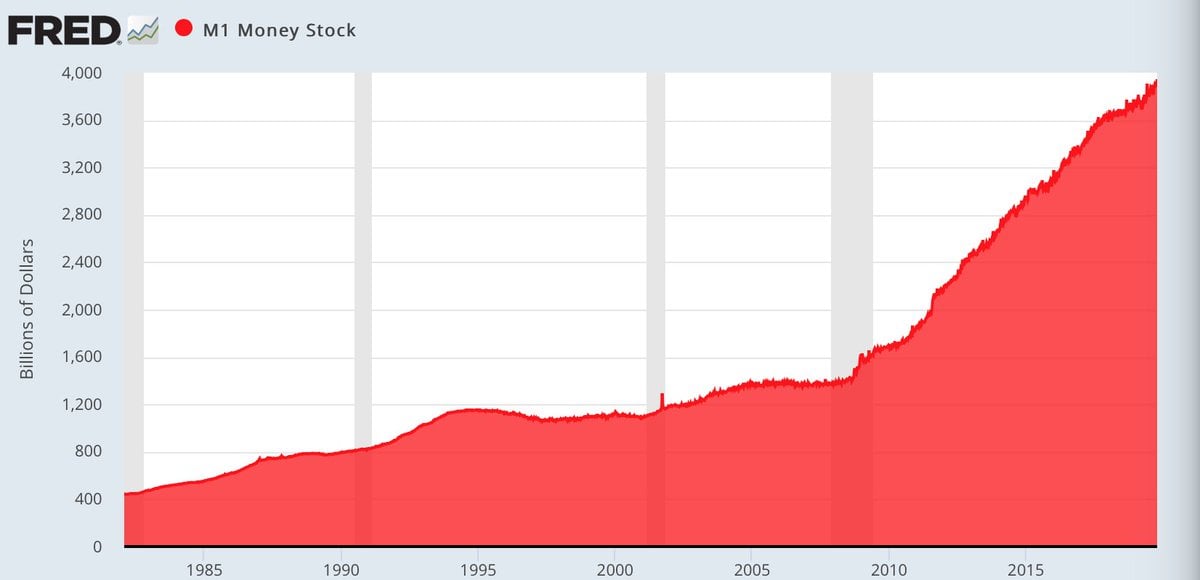
The global economy seems to be heading toward a financial crisis fueled by central planners that could devastate markets worldwide. This year onlookers are witnessing the largest synchronization of central banks printing massive amounts of fiat or participating in other forms of stimulus. The central banks’ easing policy hasn’t been this colossal in nearly two decades as the M1 money supply has touched an all-time high.

Also read: Why Central Banks Are Not Designed for Democracies

Expect More Easing as Central Banks Continue Fighting the Fires They Started

The central banks continue to print enormous amounts of fiat, slash rates, and do what they can to curb the devastating consequences of poor central planning. In 2019, the number of developed central banks bolstering easing policies makes it seem like a large-scale concerted effort. For instance, almost two dozen central banks are playing the roulette table by manipulating the global economy in a number of ways. Initially, when the gloomy economic forecasts started becoming a serious topic, the banks simply began cutting interest rates. A slew of institutions from regions like Japan had already been reducing interest rates and introducing negative rates as well.

The Federal Reserve cut rates for the first time this summer since the economic crisis of 2008 and cut them again in September. Despite the influx of $60 billion a month plus overnight repos, U.S. President Donald Trump still thinks the Fed could do better. All of the banks are citing rising inflation and lack of liquidity while at the same time acting surprised by the deep economic slump. For instance, on October 24, Ukraine’s central bank cut rates by 100 basis points. The Ukrainian monetary policy committee concluded that “inflationary pressures” have been too much and agreed to the easing.

More Filthy Fiat: Two Dozen Central Banks Ramp up the Printing Presses
Close to two dozen developed central banks are participating in monetary easing which is the largest synchronized move by banks since 2000.

The following day on October 25, the European Central Bank (ECB) and the People’s Bank of China (PBoC) executed a bilateral currency swap agreement. The ECB and PBoC have been participating in a variety of easing processes this year and explained the bilateral currency swap aims to strengthen forex and capital markets. The deal is the second three-year extension and the first deal was drafted in 2013. After the initiation of massive synchronized easing efforts worldwide, JP Morgan strategists have written a research note telling investors that they should expect even more monetary easing policies in the future. “The evolution of the macro outlook, the risk of spillover from the corporate to the household sector or from manufacturing into services warrant some caution, especially in the context of the lingering risks from trade war and Brexit, with the U.S. Presidential election later in the year,” JP Morgan’s analyst said.

More Filthy Fiat: Two Dozen Central Banks Ramp up the Printing Presses

While the Era of Central Banking Crumbles, Liberty and Free Market Solutions Will Reign

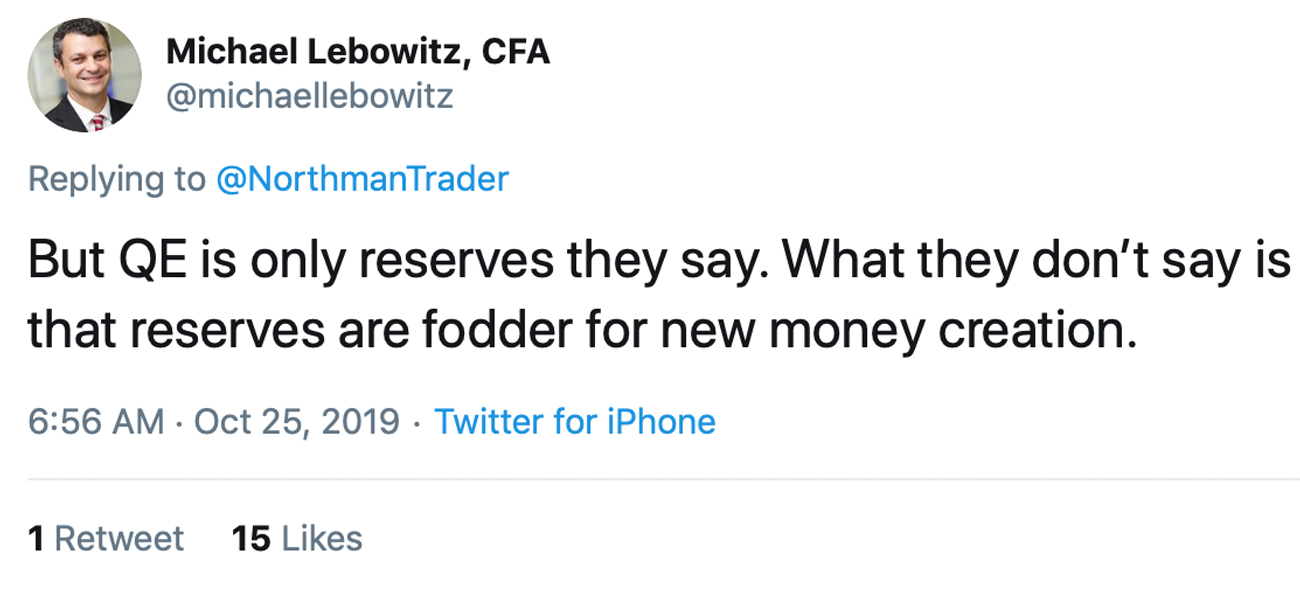
Sven Henrich, the founder of Northmantrader.com, a blog about macroeconomics and technical analysis, detailed this week that the M1 money supply has touched an all-time high and the Federal Reserve “keeps cranking.” “We can all speculate on the who’s and how’s, but one can note that M1 money supply magically suddenly gets kicked into high gear expansion once stocks get into trouble … The expansion since 2009 vs the historic run rate has been breathtaking,” Henrich said. “Perhaps this is the biggest underreported and undiscussed issue out there. I can’t pretend to fully understand it but I’m curious to hear why money supply has increased 4 fold since 2000 and was virtually flat for years during 2004-2008 and only since 2009 has been on this rip higher.” Henrich further stressed:

Yet they say there are not enough dollars around for overnight funding and that’s why they’re doing repos?

More Filthy Fiat: Two Dozen Central Banks Ramp up the Printing Presses

On October 28, at the Litecoin Summit in Las Vegas, retired U.S. statesman Ron Paul told the crowd that the era of central banking is crumbling and free market solutions like precious metals and cryptocurrencies offered a path toward liberty. “Liberty is the answer to so many of our problems — Liberty is not divisive, the government can not come in and work it out,” Paul explained. “People have to come together and work together.” The former presidential candidate added:

The American empire is on its last leg — It’s going to be rough.

With all the banks working together to fix what they have started, many economists believe they still will fail. Since the 16th century, central banks have increased the quantity of money in order to tackle the rising price of goods and services. The money supply increase has ultimately reduced the common person’s purchasing power using legal tender issued by the central banks. In 1958, Ludwig Von Mises’ lecture “Economic Policy: Thoughts for Today and Tomorrow” revealed how bureaucrats wholeheartedly believe “that bankers had some secret knowledge enabling them to produce wealth out of nothing.”

More Filthy Fiat: Two Dozen Central Banks Ramp up the Printing Presses

Instead, politicians and central bankers have caused rapid inflation, divided global citizens with class warfare, and continue to fund the military-industrial complex with no end in sight. In Ron Paul’s book “End the Fed,” the former senator’s words will be forever etched into the minds of young people striving for more liberty. “It is no coincidence that the century of total war coincided with the century of central banking,” Paul wrote at the time. So far, Paul and many other economists have been right about the central bank’s fraudulent acts, but no one truly knows if they can keep the long con going for much longer.

What do you think about the large scale easing efforts being promoted by central banks these days? Do you think they are just digging a bigger hole? Let us know what you think about this subject in the comments section below.


Image credits: Shutterstock, Twitter, Sven Henrich, Fred, Fair Use, and Pixabay.


Did you know you can buy and sell BCH privately using our noncustodial, peer-to-peer Local Bitcoin Cash trading platform? The Local.Bitcoin.com marketplace has thousands of participants from all around the world trading BCH right now. And if you need a bitcoin wallet to securely store your coins, you can download one from us here.

The post More Filthy Fiat: Two Dozen Central Banks Ramp up the Printing Presses appeared first on Bitcoin News.


via Jamie Redman

Why a VPN Is the First Layer You Should Pull On When Browsing the Web

Why a VPN Is the First Layer You Should Pull On When Browsing the Web

Virtual private networks (VPNs) can be useful for all kinds of things, from streaming foreign sports to protecting your identity from heightened online surveillance. For cryptocurrency users, VPNs are particularly precious, providing access to exchanges that are geo-restricted, and enabling crypto activities to be completed on the web without leaving a privacy-betraying footprint.

Also read: Stealth Miners on the BCH Network Attract Scrutiny

The Rise of the VPN

Virtual private networks can be traced back to 1996 when a Microsoft staffer conceived a peer-to-peer tunneling protocol (PPTP). In many ways, the protocol functioned as a precursor to the VPNs we see today, providing a private, secure connection between a computer and the world wide web, as it was then known.

The advantages of having a permanently encrypted conduit to the web are manifold. Think about how often you unwittingly connect to insecure public wifi, for example, with everything from credit card numbers and social media log-ins vulnerable to theft. A VPN, which lets you connect to a remote server while masking your true location, provides peace of mind by safeguarding data from third-party interception. Virtual private networks also block persistent IP tracking, which is trickier to prevent than insidious third-party tracking e.g. from Google.

Why a VPN Is the First Layer You Should Pull On When Browsing the Web

The Quest to Decentralize the VPN

VPNs can mitigate the worst data intrusions of centralized agencies (be it tech giants or governments), but they themselves are vulnerable to flaws inherent to centralization. This month, it emerged that popular provider NordVPN suffered a data breach in 2018 when a Finnish server in a rented data center was compromised. Although the company has asserted that no usernames or passwords were intercepted, the fiasco proves that VPNs are not invulnerable to the very attacks they endeavor to protect their users against.

Web3 architects intent on decentralizing all the things have naturally turned their attention to VPNs, where they see the potential to create more robust systems that aren’t vulnerable to the whims of central bodies acting unilaterally, be it hackers or law enforcement. Decentralized VPNs – dVPNs – work by apportioning a percentage of users’ upload bandwidth to carrying traffic for other users on the network. Although still very much in their infancy, dVPNS have the potential to obfuscate your crypto transactions and communications while eliminating the need for a central authority.

Why a VPN Is the First Layer You Should Pull On When Browsing the Web

One such project is Tachyon. As well as hiding your location, the protocol simulates HTTPS and SMTP, meaning it conceals the sites you browse, fooling others into thinking you’re visiting Youtube and Gmail respectively. Users’ requests are distributed through multiple different nodes with encryption, thereby overcoming the security vulnerabilities and inefficiencies of TCP/IP.

Another proposal, developed as part of the Web3 movement, is VPN⁰, a decentralized network built around a Distributed Hash Table (DHT), atop which sit several privacy-protecting mechanisms. What makes the network particularly unique is that it permits relay nodes to control which traffic they wish to transmit – without specifically learning what the content contains. This feat is achieved through the application of zero-knowledge proofs, a cryptographic technique in which the prover can validate to the verifier that a statement is true, without actually disclosing any information other than the validity of the statement. Developed by a trio of Brave browser security researchers, VPN⁰ awaits further development and funding.

Why a VPN Is the First Layer You Should Pull On When Browsing the Web

Why Cryptocurrency Users Should Consider a VPN

While everyday internet users are becoming more assertive with their privacy, motivated by widespread coverage of mass data collection and government snooping, bitcoiners have an even greater need for digital discretion. The cryptosphere, after all, has fallen prey to opportunistic hackers, with spear phishing and SIM-swapping just two examples of security breaches that have left traders out of pocket. A VPN is not a cloak of invisibility, granting its wearer carte blanche to evade or commit cyber crime with impunity, but it does heighten your security in a number of meaningful ways.

By encrypting your data when you trade, a VPN makes it more difficult for hackers to eavesdrop. Because VPNs conceal your IP address and prevent persistent IP tracking, your device’s location will not become connected to your wallet address. What’s more, using a remote server to mask your true location more effectively prevents targeted viruses and malware than many expensive software packages designed expressly for this purpose.

Of course, the advantages of VPN use extend beyond bolstering security. They can also widen your options by unblocking geo-blocked websites such as exchanges forbidden in your homeland. By granting unfettered access to otherwise verboten foreign portals, these networks can dramatically improve your trading experience. They can also prove a lifesaver, should your government suddenly censor access to an exchange in which you hold currency, for example.

Why a VPN Is the First Layer You Should Pull On When Browsing the Web

How to Choose the Right VPN for Your Needs

There are many VPNs to choose from, some free, some paid, and all with pros as well as cons.

Firstly, make sure you pick a VPN that does not store user logs, which could conceivably be handed over to third parties. Some VPN providers insist that this information is mandatory to guarantee optimal service, but in reality, they often sell your data to advertisers. Needless to say, this runs contrary to the very purpose of using a VPN in the first place. In any case, you certainly don’t want time-stamped details of your VPN sessions – as well as sites visited and files downloaded – falling into the wrong hands.

Once you’ve sourced a provider with a definitive zero-log policy, you should think about connection speed, the number of servers in different countries (prioritizing those with multiple severs in privacy-friendly nations), the level of encryption offered, traffic-restriction policies and customer support. It might also be smart to select a VPN that accepts payment in cryptocurrency, which can further enhance your privacy.

Practise Safe Browsing

Privacy absolutists are eagerly awaiting the day when decentralized VPNs become production ready, citing a distrust of centralized gateways’ privacy policies and questions surrounding network stability.

In the meantime, VPNs go a long way to ensuring safety and privacy in our hyper-connected world – and this applies to regular web users as well as those of us in the habit of transacting digital currency. Before you step out into the big bad web, take a moment to clad yourself in a VPN.

Do you think using a VPN provides added security when browsing the web? Let us know in the comments section below.


Images courtesy of Shutterstock.


Did you know you can verify any unconfirmed Bitcoin transaction with our Bitcoin Block Explorer tool? Simply complete a Bitcoin address search to view it on the blockchain. Plus, visit our Bitcoin Charts to see what’s happening in the industry.

The post Why a VPN Is the First Layer You Should Pull On When Browsing the Web appeared first on Bitcoin News.


via Kai Sedgwick

Exchange Tokens Have Outperformed BTC This Year

Exchange Tokens Have Outperformed BTC This Year

Few crypto assets have outperformed bitcoin this year, but the handful that have are predominantly exchange tokens. Their success attests to that of the token sale launchpads they have hosted, which have in turn driven demand for exchange tokens. But as IEOs start to wind down, can exchanges sustain the momentum, or will BTC recapture the lead and finish 2019 on a high?

Also read: China Ranks 35 Crypto Projects as President Xi Pushes Blockchain

2019 Was the Year of the Exchange Token

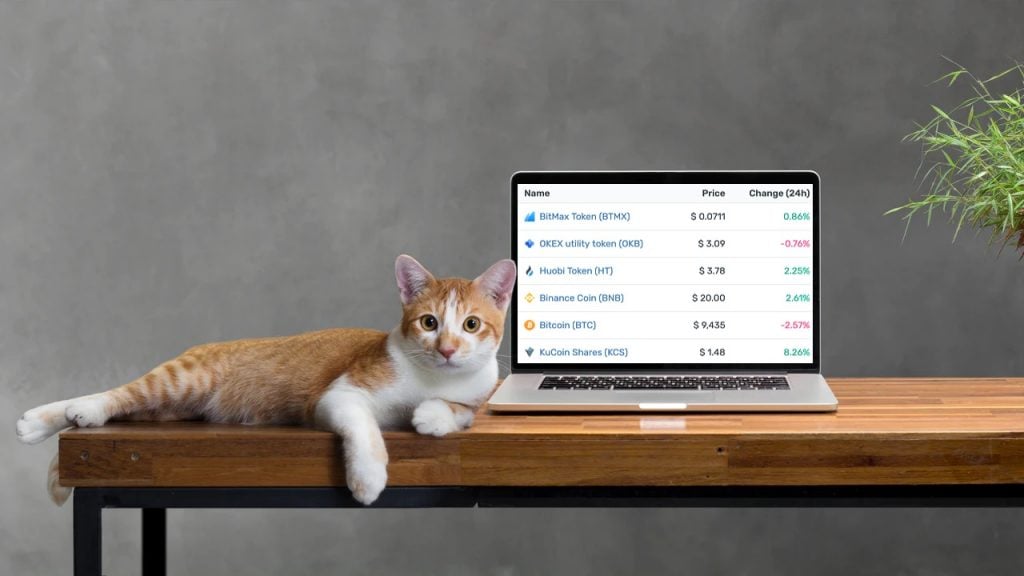
Bitcoin has had a good week, but despite putting a dent in every major crypto asset, thanks to Friday’s paint-melting rocket ride, it’s still got some catching up to do. Within the top 50 cryptocurrencies by market cap, aside from chainlink, which has recorded an 816% gain for the year, the only notable tokens to have bested BTC are huobi token (247%) and binance coin (235%). Just behind BTC (148%) is another exchange token, kucoin shares (138%).

Move outside of the top 50, and lurking at 118 by market cap is this year’s best performing exchange token, belonging to Bitmax. BTMX is up an impressive 394% for the year, just ahead of Okex’s OKB, which sits 91st by market cap with yearly gains of 358%. While there’s plenty to critique about the utility of exchange tokens, and their ability to sustain their new price levels, there’s no disputing that 2019 has been their year.

Exchange Tokens Have Outperformed BTC This Year

Can Exchange Tokens Escape the Fate of ETH?

Anyone who was hanging around the crypto space in 2017 will recall the meteoric rise of all crypto assets, ETH especially, which peaked at $1,400 on January 13, 2018, propelled there by the ICO craze. What came next is well documented, with ETH among the hardest hit when the crypto market receded. It has taken almost two years for ETH to recover its sense of purpose – which is now defi, apparently – and to start recouping its heavy losses.

Q4 tends to be a quiet time of year for token sales, and given the lackluster performance of the IEOs that have launched to date, there is evidence that the public’s appetite for exchange-hosted token sales is diminishing. ICOspeaks, which records forthcoming token sales, lists just two scheduled IEOs and ICOs apiece. Save for the long tail of pay-to-play IEOs listed on smaller and less salubrious exchanges like Exmarkets and Latoken, there’s not much on the horizon.

Ben Zhou, CEO of Bybit exchange, told news.Bitcoin.com: “Platform tokens were originally designed as a customer reward program, while being pumped up because of IEO hype over the last year. As what happened after the ICO retreat, investors will definitely revisit the intrinsic value of platform tokens – the success of the platform and the willingness of the platform to reward its customers.” Zhou went on to explain that there are ways to reward users without reliance on a token; in Bybit’s case, for instance, through issuing bonuses to users upon registration and for various campaigns. Bybit’s CEO claims that “This has been met by widespread approval by our customers.”

It would be as premature to call the demise of IEOs as it would be to predict the downfall of native exchange tokens. Crypto exchanges are one of the most profitable sectors in the industry to date, and are not about to slip away quietly into the night just because the whole IEO game has tapered off. As Binance has shown, the token launchpad is merely the first in a string of features to mandate native token usage, with subsequent products, including futures markets, also drawing heavily upon the exchange token. Kucoin is busy replicating this formula to a tee, with its Kumex derivatives platform due to launch in a few weeks.

Exchange Tokens Have Outperformed BTC This Year
This year’s best performing exchange tokens according to Cryptorank.io

Where There Are Exchanges, There Are Exchange Tokens

As gatekeepers to the cryptoconomy, exchanges can effectively force usage of their native tokens, through baking in trading discounts, IEO airdrop participation, and other incentives that make it advantageous to hold exchange tokens. For the leading proponents of this business model, such as Binance and Huobi, increasing the value of the token provides another revenue stream in itself. Rather than dumping their own stash of tokens onto the market, however, it is in the interests of these giants to support the value of their native token through whatever means they can, while monetizing in other ways.

BSV Price Drops 13% After Binance Announces Plans to Delist the Coin

Increasing the utility of exchange tokens allows the exchanges to portray themselves as more than merely a conduit for speculating on shitcoins, but rather as vital cogs in the cryptosphere. Their token is the yardstick by which their health is signaled to the world. As a result, exchanges will stop at nothing to see the price sustained. The only thing that could conceivably put a stop to that is a rampant bitcoin. Should BTC go on another run, as it did last Friday, no crypto asset will be safe.

Do you think exchange tokens can sustain their momentum? Let us know in the comments section below.


Images courtesy of Shutterstock.


Did you know you can verify any unconfirmed Bitcoin transaction with our Bitcoin Block Explorer tool? Simply complete a Bitcoin address search to view it on the blockchain. Plus, visit our Bitcoin Charts to see what’s happening in the industry.

The post Exchange Tokens Have Outperformed BTC This Year appeared first on Bitcoin News.


via Kai Sedgwick

Speculation Abounds Over the Cause of Bitcoin’s Recent Rally

How the Recent Crypto Rally Compares With Previous Bull Runs

Crypto’s most recent bull run began last Friday, October 25, after a significant plunge in prices just days earlier that had some prognosticators worried about a return to late 2018 and early 2019’s bleak crypto winter. Since the recent spike, prices have held relatively steady, suggesting this rally is not just a flash in the pan. That being the case, a look at bull runs of times past and what this could mean for the market today is in order.

Also Read: After Breaking New Records Bakkt Announces Crypto Consumer App

What Goes Down Must Bounce Back Up, Right?

With BTC plummeting almost $1,000 from October 22-24, some crypto sages were poised on their soapboxes in the Twitter town square ready to announce the coming cryptocalypse. As seen recently though, prices have reinvigorated with gusto and stabilized around the market as a whole. 2017’s November and December mega rally was preceded by a rapid plunge in prices across the market in mere days as well, prompting some to view current conditions as a consolidation signal similar to those times.

Speculation Abounds Over the Cause of Bitcoin's Recent Rally
Late October BTC prices via markets.Bitcoin.com

There is no shortage of theories and speculation as to where things may go next, or why the dynamic moves of last week occurred. Bitcoin core prices spiked over $2,500 from around $7,300 to the $10,000 mark in a matter of a couple days, and other top market cap cryptocurrencies experienced significant positive moves as well, and remain strong.

Speculation Abounds Over the Cause of Bitcoin's Recent Rally
A long-term view of all cryptocurrencies. Source: coinmarketcap.com

Past Bull Markets – Similarities and Differences

As zealous as those in the crypto game might be to call each and every bullish signal the beginning of hyperbitcoinization and each slight dip a shocking death knell, the markets tell a more stable and sensible story from a macro perspective. Prices and percentages of market capitalization of leading cryptos understandably follow more gradual contours, long-term. The diversity of leading assets at the very top broadens where capitalization is concerned, while the market as a whole narrows and becomes more focused on select assets.

Speculation Abounds Over the Cause of Bitcoin's Recent Rally
Coinmarketcap.com

If 2017’s skyrocket into green was a crypto-wide gamble taking everyone along for the exhilarating ride, recent spikes have been a more seasoned bet, leaving legions of washed up altcoins out to dry. As far as speculated causes for the most recent bull trend goes, there are a few favored explanations – and many being shot down with equal conviction.


This most recent rally could have been inspired by a tether printing spree, Chinese government endorsement of blockchain, Bakkt’s growing futures market, worldwide economic calamity or any other number and combination of factors.

Similarities across bullish trends have luminaries, experts and economists attempting to draw sound connections. For example, Bitcoin’s April 2018 rally was attributed to institutional interest and “flights to decorrelation” by experts, bearing similarity to current speculation and prediction centering around global economic turmoil and the bitcoin futures market. Last spring and summer saw bitcoin core jumping back to $10,000 in June, signaling a bull market that was attributed by many, once again, to a combination of tech industry hubbub such as Facebook’s groundbreaking Libra announcement, government economic policies and futures markets.

Speculation Abounds Over the Cause of Bitcoin's Recent Rally

Regarding the current rally, Binance CEO Changpeng Zhao referenced positive signals from stocks in the Chinese blockchain industry, tweeting on October 28:

Those gains in stock markets will spill over to crypto soon… Told ours guys to scale up system capacity, waiting.

Also of interest to speculators is a breakaway gap on the Chicago Mercantile Exchange’s (CME) futures chart following last week’s spike. Trader @TheCryptomist predicted the gap would be filled before BTC heads back upwards toward $12,000.

Speculation Abounds Over the Cause of Bitcoin's Recent Rally

Top Performers and Future Moves

As far as price performance in the context of the most recent rally goes, barchart.com paints a picture of the last five days, with NEO, BCH and BTC leading the pack. NEO has seen a near 50% gain in price, BCH over 16% and BTC 14% at press time.

Speculation Abounds Over the Cause of Bitcoin's Recent Rally
Barchart.com

If the crypto market tells us anything, it’s that no prediction or position is sacred, no matter how vaunted the status of the speaker, or how statistically sound the forecast may seem to be. Crypto speculation is always open to being dashed to smithereens against the unforgiving rocks of market reality. Still, when zoomed out far enough, even volatility can take on a calmer appearance. Steady growth and sustained interest in the crypto space is a constant narrative for now.

What are your thoughts on the recent crypto market moves? Let us know in the comments section below.


Image credits: Shutterstock, fair use.


Did you know you can buy and sell BCH privately using our noncustodial, peer-to-peer Local Bitcoin Cash trading platform? The Local.Bitcoin.com marketplace has thousands of participants from all around the world trading BCH right now. And if you need a bitcoin wallet to securely store your coins, you can download one from us here.

The post Speculation Abounds Over the Cause of Bitcoin’s Recent Rally appeared first on Bitcoin News.


via Graham Smith