The Bank of Tanzania said on Sept. 25 that it has kickstarted an initiative that seeks to boost the country’s foreign exchange reserves by buying gold with local currency. The bank said its objective is to acquire six tonnes of gold from miners and traders in 2023 alone.
The Tanzanian Gold Reserve
The Tanzanian central bank said on Sept. 25 that it had commenced the so-called domestic gold purchasing program which aims to boost the country’s foreign exchange reserves. According to a report in The Chanzo Initiative, the start of the gold-buying program came nearly six months after the Tanzanian government unveiled the process to launch the gold reserve.
In a video update shared a few days before the Sept. 25 announcement, the Bank of Tanzania (BOT) governor Emmanuel Tutuba said the institution had already bought some 418 kilograms of gold. However, the commodity was subsequently sold and the revenues generated have since been transferred to the country’s forex reserves. The central bank’s objective is to acquire six tonnes of gold in 2023, Tutuba reportedly said.
The Foreign Exchange Shortages
As previously reported by Bitcoin.com News, Tanzania has been grappling with shortages of U.S. dollars. To deal with this, the central bank reminded players in the country’s foreign exchange market of their obligations which include dealing with licenced foreign currency brokers. At the time, the central bank said these steps were intended to “foster macroeconomic stability and safeguard the stability of the financial system.”
Meanwhile, in the statement shared via X (formerly Twitter), the Tanzanian central bank said it will use local currency to pay for the gold.
“The Bank of Tanzania wishes to inform the public of the commencement of the domestic gold purchasing program which aims to bolster foreign exchange reserves through acquiring and holding gold. The bank is therefore purchasing gold from domestic miners and traders in Tanzanian shillings,” the read the statement.
The bank added that all stakeholders are invited to partake in the scheme.
Register your email here to get a weekly update on African news sent to your inbox:
What are your thoughts about this story? Let us know what you think in the comments section below.
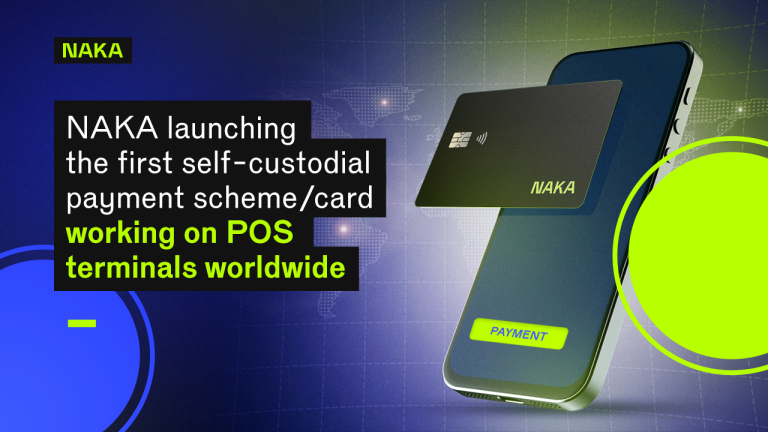
PRESS RELEASE.SLOVENIA – Sep 27th, 2023 – NAKA introduces a new decentralized approach to finances, built upon a pioneering blockchain-based payment scheme and a payment card that links to the wallet managed by MetaMask and can be read by any POS terminal worldwide.
NAKA has developed a new technology that bridges the gap between the traditional payment industry and the blockchain world. It encompasses a unique payment scheme running fully on smart contracts and a self-custodial payment card that is available to anyone without any bank intermediaries. The NAKA payment scheme and card are fully compatible with the EMV standard, an acronym representing Europay, Mastercard, and Visa. This allows compatibility with virtually any point-of-sale (POS) system on a global scale.
The initial testing phase for NAKA’s card and scheme will take place in two strategically selected locations: Switzerland and El Salvador. These regions have established robust infrastructure for accepting Bitcoin payments at POS terminals, making them ideal for testing NAKA’s cryptocurrency and card payments. NAKA’s payment acceptance system will seamlessly support Bitcoin on the Lightning Network (LN) and the stablecoin USDt on the Polygon, Tron, and Ethereum networks, augmenting its versatility and usability.
Here is what you need to know about NAKA:
What is a NAKA card?
NAKA designed a self-custodial payment card that can be obtained by any user. The card connects to a non-custodial wallet and enables its user to manage his funds at his discretion. The new NAKA card is opening the door to decentralized financial services, benefiting unbanked individuals and those who lost trust in centralized financial institutions.
The card is backed by the NAKA payment scheme, a blockchain-based payment network that executes transactions and settlements by relying on smart contracts. This pioneering technology is disrupting the flow of transactions as we know it today.
What makes NAKA unique?
NAKA cards can be used with the existing payment acceptance infrastructure.
Compatible with the legacy payment industry standards, the NAKA scheme and card have the potential to be used on any conventional POS device.
During its test phase, the NAKA card will be supported at all NAKA point-of-sale locations across Switzerland and El Salvador launching in October and November this year.
The NAKA card is self-custodial.
NAKA cardholders use the NAKA decentralized application (dApp) to connect their NAKA cards to a wallet, managed by MetaMask and fund their cards with their MetaMask assets (USDt on Polygon supported) or top them up directly with USDt on the Polygon network.
Anyone can issue the NAKA card without obtaining additional licenses.
The NAKA card can be issued by any legitimate company either as a so-called primary issuer, where the issuing of cards is communicated directly with NAKA, or through a NAKA sponsoring issuer.
For more information about becoming a NAKA issuer visit our Partners webpage.
Where can you use NAKA?
The NAKA card will officially launch at the Plan ₿ Forum in Lugano, Switzerland, on October 20th and 21st, 2023. NAKA’s CEO, Dejan Roljic, will perform the first-ever transaction with the NAKA card during his live speech in Villa Ciani. During the two-day event, the selected few will become the first cardholders of NAKA and will be able to try out card payments with USDt across the venue and the entire Lugano region.
NAKA powers three Bitcoin Cities
After the official launch, NAKA will be supported in three Bitcoin Cities across the globe: Lugano, Switzerland; San Salvador, El Salvador; and Ljubljana, Slovenia. After the initial phase, NAKA will expand to other markets as well.
VisitNAKAwebsite to learn more about the products and services that will help you unlock your money.
About NAKA
NAKA is a FinTech company developing a comprehensive suite of financial products and services, including a dedicated self-custody payment card, a blockchain payment scheme, and a holistic point-of-sale payment solution, offering a complete payment ecosystem. Built on the foundation of GoCrypto’s success story, NAKA’s blockchain-powered financial ecosystem bridges traditional and decentralized finance, committed to decentralizing finances and achieving financial inclusion for all. Its vision is to pioneer decentralized technology solutions that empower individuals, transcending boundaries to provide universal access to financial freedom for everyone.
This is a press release. Readers should do their own due diligence before taking any actions related to the promoted company or any of its affiliates or services. Bitcoin.com is not responsible, directly or indirectly, for any damage or loss caused or alleged to be caused by or in connection with the use of or reliance on any content, goods or services mentioned in the press release.
Amazon, the worldwide tech behemoth, has announced that it will invest up to $4 billion in Anthropic, an artificial intelligence (AI) firm that has developed Claude, a generative AI assistant. As part of this strategic partnership, Anthropic will train its models on top of Amazon silicon, and Anthropic will make its models available through Amazon Bedrock.
Amazon to Pour up to $4 Billion Into AI Model Company Anthropic
Amazon, one of the leading tech companies in the world, has announced a strategic partnership with artificial intelligence (AI) firm Anthropic that includes an investment of up to $4 billion in exchange for a minority stake in the company.
According to a press release issued by Amazon, Anthropic will now use Amazon Web Services (AWS) as its primary cloud services provider. Anthropic will also use Amazon-produced silicon, including its Trainium and Inferentia chips, to “build, train, and deploy its future foundation models, benefitting from the price, performance, scale, and security of AWS.”
Anthropic has positioned as a rival for Openai since earlier this year when it debuted Claude, an AI assistant with capabilities that contend with Chatgpt, one of the most popular AI chatbots in the market. Recently, it announced Claude Pro, a paid subscription model directed to heavy users of Claude.
In May, the company took advantage of the AI buzz in the market, raising $450 million in a series C funding round led by Spark Capital with participation from Google, Salesforce Ventures, Sound Ventures, Zoom Ventures, and others, to grow its product offering and support businesses using Claude based solutions.
More Details
Anthropic, founded by former Openai employees, announced that organizations will be able to harness Claude by using Amazon Bedrock, a cloud service that allows customers to access AI models. Amazon AWS customers will use Claude to “incorporate generative AI capabilities into their work, enhance existing applications, and create net-new customer experiences across Amazon’s businesses.”
Amazon will ease the deployment of these models via Bedrock, letting customers worry about fine-tuning Claude’s capabilities for their specific needs.
Dario Amodei, co-founder and CEO of Anthropic, stated:
Since announcing our support of Amazon Bedrock in April, Claude has seen significant organic adoption from AWS customers. By significantly expanding our partnership, we can unlock new possibilities for organizations of all sizes, as they deploy Anthropic’s safe, state-of-the-art AI systems together with AWS’s leading cloud technology.
What do you think about Amazon’s investment in Anthropic? Tell us in the comments section below.
Moneygram, a leading money transfer company, announced plans to launch its own non-custodial digital wallet in partnership with the Stellar Development Foundation. The wallet will enable users to convert between fiat and digital currencies when sending cross-border payments.
Moneygram Partners With Stellar to Launch Non-Custodial Digital Wallet
Set to launch in the first quarter of 2024, the new digital wallet will allow Moneygram customers to cash out their digital assets at any participating Moneygram location worldwide. Additionally, the wallet will let users send digital assets to other wallet users. However, privacy advocates might take issue with the fact that Moneygram will apply its compliance screening to all wallet users.
“Our vision to connect the world’s communities by empowering our customers through innovative financial solutions takes another step forward today,” said Alex Holmes, CEO of Moneygram. Holmes added, “The Moneygram non-custodial digital wallet advances this mission even further.”
Offered without fees until June 2024, the non-custodial wallet will use Stellar’s blockchain network and integrate with Moneygram’s existing fiat on- and off-ramps. Moneygram plans to expand the wallet’s capabilities after its launch, introducing new features that further connect global money transfers with blockchain payments.
Building on Moneygram’s 2022 ventures in the crypto space, the company launched a USDC crypto-to-cash program last June, allowing users to cash out digital currencies. In November, Moneygram began permitting customers to buy and sell cryptocurrencies directly within its money transfer app. The non-custodial wallet represents the company’s most recent effort to increase access to digital assets.
What do you think about Moneygram non-custodial wallet? Share your thoughts and opinions about this subject in the comments section below.
The U.S. Treasury Department’s Office of Foreign Assets Control (OFAC) sanctioned an Ethereum wallet used by the Sinaloa Cartel to launder money from fentanyl sales in the U.S. Mario Alberto Jimenez Castro, an accused money launderer for the cartel’s Los Chapitos faction, allegedly directed the use of cryptocurrency and wire transfers to pay cartel leaders in Mexico, according to OFAC.
U.S. Treasury Targets Sinaloa Cartel Member’s Ether Wallet in Crackdown on Fentanyl Distribution
OFAC said Tuesday it sanctioned ten individuals, including several Sinaloa Cartel affiliates and fugitives, for contributing to the international proliferation of illicit drugs. In addition to sanctioning people, OFAC designated the Ethereum wallet with the address “0x9c2” used by Jimenez Castro.
“Jimenez Castro has directed U.S.-based couriers to pick up cash in the United States and deposit it into various virtual currency wallets for payment directly to the Chapitos and for reinvestment in fentanyl production,” OFAC said.
The Sinaloa Cartel is considered one of the most powerful drug trafficking groups in Mexico and is a major supplier of fentanyl in the U.S. OFAC said the sanctions target members of Los Chapitos, a faction run by the sons of imprisoned Sinaloa leader Joaquin “El Chapo” Guzman.
OFAC said the sanctions demonstrate “the [Biden] Administration’s strengthened approach to saving lives by disrupting the trafficking of illicit fentanyl and its precursors into American communities.”
The sanctions freeze any U.S. assets held by the Ethereum wallet and prohibit Americans from conducting transactions with the wallet. OFAC said it will continue targeting foreign drug traffickers contributing to the opioid epidemic through sanctions.
What do you think about OFAC sanctioning an ethereum wallet allegedly used by Sinaloa Cartel leader? Share your thoughts and opinions about this subject in the comments section below.
JPMorgan Chase & Co.’s U.K. division, Chase UK, is putting the brakes on cryptocurrency-related payments. Come October 16, any Chase UK customers attempting to make a bank transfer or card payment linked to crypto will find themselves thwarted.
Chase UK to Halt Crypto Payments in Mid-October
Chase UK customers are about to hit a roadblock for payments tied to cryptocurrency dealings. The bank’s rationale? A spike in scams and fraud. An email from the institution cautions, “If we think you’re making a payment related to crypto assets, we’ll decline it.”
A representative from Chase verified the email’s legitimacy to Bloomberg and shed light on their stance. Coindesk’s Sandali Handagama also reported on the Chase UK email on Tuesday prior to Bloomberg’s confirmation.
“We’ve seen an increase in the number of crypto scams targeting U.K. consumers, so we have taken the decision to prevent the purchase of crypto assets on a Chase debit card or by transferring money to a crypto site from a Chase account,” the Chase spokesperson revealed.
Chase made its move after a series of regulatory overhauls in the United Kingdom within the past six months. For instance, the U.K. Financial Conduct Authority (FCA) introduced new guidelines for the crypto industry. Concurrently, the financial powerhouse Paypal has briefly suspended U.K.-based crypto transactions, pointing to these regulatory adjustments.
What do you think about the decision Chase UK made about crypto payments being blocked? Share your thoughts and opinions about this subject in the comments section below.
Bitcoin cash rose by as much as 5% on Tuesday, as bulls extended recent gains following last week’s consolidation. The token rose for a second consecutive session, moving closer to a resistance level of $225 in the process. BNB also climbed, pushing towards a ceiling of its own at $220.