Tuesday, September 3, 2019

Indian Exchanges Innovate as Calls for Positive Crypto Regulation Escalate

Indian Exchanges Innovate as Calls for Positive Crypto Regulation Escalate

Indian crypto exchanges are innovating, launching new products and improving services for their users, despite the country’s regulatory uncertainty and unresolved banking restrictions. Meanwhile, the Indian crypto community continues its efforts to convince the government that the draft bill to ban cryptocurrencies is flawed, calling for positive regulation instead.

Also read: Crypto Can Boost Indian Economy – How Banning Will Hurt it

Better Trading Environment

Undeterred by regulatory uncertainty and an onerous banking ban, five crypto exchanges in India revealed their new projects last week. Crypto exchange Coindcx has shared with news.Bitcoin.com that it has partnered with Australia-based crypto trading platform Koinfox. CEO Sumit Gupta explained that the collaboration gives Koinfox’s users access to his exchange’s liquidity aggregated from major global exchanges. Meanwhile, users of his exchange will have access to Koinfox’s advanced trading tools, including algorithmic trading and risk management strategies. The integration will be live by mid-September, he confirmed.

Besides an exchange service and a P2P platform, Coindcx also offers margin trading in over 200 markets as well as crypto lending. The lending program currently supports nine cryptocurrencies: BTC, USDT, BNB, XRP, ETH, TUSD, TRX, BTT, and LTC. Users can earn monthly interest of up to 1.5% depending on the coins lent. Further, they will soon be able to trade in crypto derivatives, Gupta revealed.

Indian Exchanges Innovate as Calls for Positive Crypto Regulation Escalate

Two other cryptocurrency exchanges, Bitbns and Okex, also announced their partnership last week to better serve the Indian market, but have not unveiled any specific details of the collaboration. Meanwhile, cryptocurrency exchanges in India have been suffocating from the banking restrictions imposed by the Reserve Bank of India (RBI). The central bank issued a circular in April last year, banning regulated financial institutions from providing services to crypto businesses. The ban went into effect 90 days later. It has been extensively challenged in the supreme court, which is scheduled to revisit the case on Sept. 25.

Smart Token Fund

Another Indian cryptocurrency exchange is launching a new product. Wazirx unveiled last week its Smart Token Fund (STF) program, which it described as “a simplified community-driven initiative where cryptocurrency enthusiasts can find smart traders, and let them grow their cryptocurrency portfolio.” The exchange claims to already have “an existing community of pro traders who can trade with the funds of new entrants and in return, earn a certain percentage of the profits they make,” elaborating:

STF’s aim is to democratise cryptocurrency trading expertise for everyone. You can choose the right STF trader for yourself based on the tokens they trade, their trading history, performance, and more.

Indian Exchanges Innovate as Calls for Positive Crypto Regulation Escalate

Wazirx CEO Nischal Shetty shared that many users on his exchange do not understand how to trade cryptocurrencies and have asked him for help. He emphasized that the biggest problem in crypto for new entrants is not knowing which tokens to invest in. “There’s an exceptionally large number of people out there who don’t have time to trade, don’t know which token to trade or how to trade. These barriers are holding them back from investing in cryptos, and in turn preventing them from participating in this amazing revolution,” he opined.

The STF program enables traders “to trade and manage multiple people’s portfolio — all on a single interface,” and keep a percentage of the profits they make for investors, the CEO explained. Investors can choose to invest with the traders based on factors such as their performance, the tokens they trade, or their trading history. They can enter and exit any time with no locked-in period. The exchange is currently giving early access to “selective expert traders.”

How Wealthy Indians Plan to Invest in Crypto

The Indian government is currently deliberating on a draft bill to ban cryptocurrencies, drawn up by an interministerial committee (IMC) headed by former Secretary of the Department of Economic Affairs Subhash Chandra Garg, who was subsequently reassigned to the Power Ministry. The government has indicated to the supreme court that this bill might be introduced in the next parliament session.

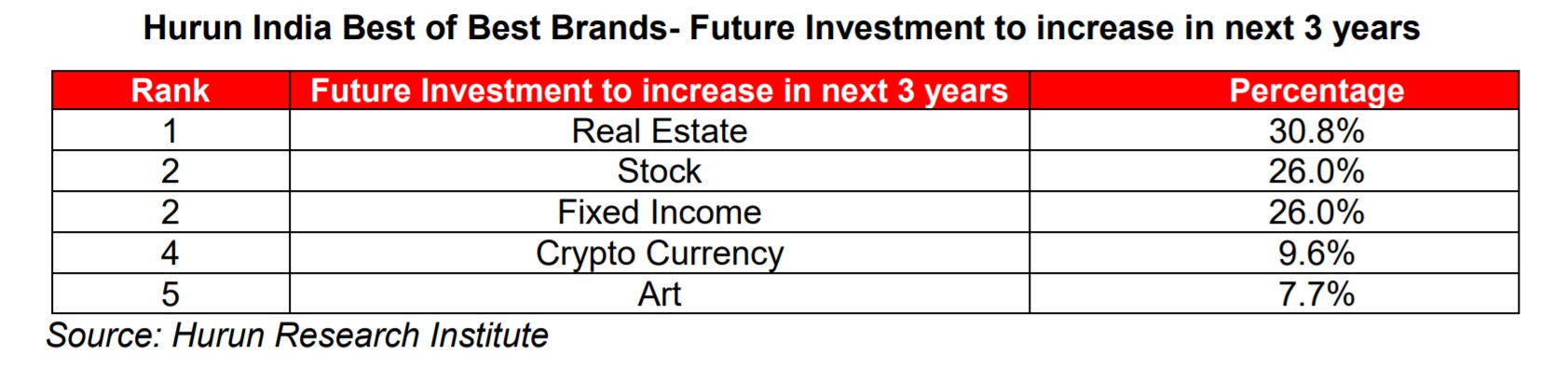
Despite the country’s uncertain policies on crypto assets, some wealthy Indians are planning to invest in cryptocurrencies, according to the first “Hurun Indian Luxury Consumer Survey 2019.” Released Friday by The Hurun Research Institute, the survey reveals “the changes and preferences of lifestyle, consumption habits and brand cognition of high-net-worth individuals in India,” the institute described. Respondents include 831 richest Indians on the Hurun India Rich List.
Indian Exchanges Innovate as Calls for Positive Crypto Regulation Escalate

According to the results, 9.6% of respondents said that their investment in cryptocurrency would increase over the next three years. However, nearly half of the survey participants said they did not know much about cryptocurrency. Among those who did, 29.15% said they preferred bitcoin, 8.74% preferred ethereum, 6.8% preferred ripple, and 5.83% preferred other coins.

Calls for Positive Regulation Escalate

Since the IMC report and draft bill were made public on July 22, the Indian crypto community has been trying to convince the government to reexamine the draft bill. Many believe that the bill is flawed in many areas, from the definition of cryptocurrency to the ban recommendations. The community has gained support from a number of leading industry groups, such as The National Association of Software and Services Companies (Nasscom) and the Internet & Mobile Association of India (IAMAI) which also believe that banning is not the solution.

Indian Exchanges Innovate as Calls for Positive Crypto Regulation Escalate

The “India Wants Crypto” campaign, which calls on the government to introduce positive crypto regulation, has entered its 306th day and has recently crossed its milestone of more than 50,000 tweets and retweets.

“The entire 5 million Indian crypto youth want to participate in achieving [the] target of growing Indian economy to $5 trillion,” Shetty tweeted to his country’s prime minister and finance minister. His persistence is starting to pay off, as at least one parliament member, Rajeev Chandrasekhar, is willing to hear more. The Wazirx executive further explained that many in the crypto sector are rapidly innovating, but they lag behind other countries due to regulatory uncertainty and banking restrictions. He believes that embracing crypto will lead to more jobs and investments, among other benefits, which he recently shared with news.Bitcoin.com.

What do you think of Indian exchanges’ new services? Do you think the Indian government will introduce positive crypto regulation instead of banning crypto? Let us know in the comments section below.

Disclaimer: Bitcoin.com does not endorse or support claims made by any parties in this article. None of the information in this article is intended as investment advice, as an offer or solicitation of an offer to buy or sell, or as a recommendation, endorsement, or sponsorship of any products, services, or companies. Neither Bitcoin.com nor the author is responsible, directly or indirectly, for any damage or loss caused or alleged to be caused by or in connection with the use of or reliance on any content, goods or services mentioned in this article.


Images courtesy of Shutterstock.


Did you know you can buy and sell BCH privately using our noncustodial, peer-to-peer Local Bitcoin Cash trading platform? The Local.Bitcoin.com marketplace has thousands of participants from all around the world trading BCH right now. And if you need a bitcoin wallet to securely store your coins, you can download one from us here.

The post Indian Exchanges Innovate as Calls for Positive Crypto Regulation Escalate appeared first on Bitcoin News.


via Kevin Helms
Monday, September 2, 2019

Crypto Payments Startup Eligma Raises €4 Million From Bitcoin.com and Pangea Blockchain Fund

Many retail stores would like to welcome the added business that the crypto community brings, but find that they don’t have the capability to do so within their existing payment infrastructure. One company bridging this gap is Slovenian startup Eligma which is now set to start global expansion with an infusion of cash from Bitcoin.com and Pangea Blockchain Fund.

Also Read: What Makes Slovenia a Cryptocurrency Leader – Bitcoin.com Mini-Documentary

Eligma Raises €4 Million For Global Expansion

Eligma has announced it’s recently completed a new funding round, bringing the total investment to €4 million ($4.39M) with participation from Bitcoin.com and Pangea Blockchain Fund. The company is the developer of Elipay, an infrastructure for accepting crypto payments at brick-and-mortar as well as online shops where merchants can receive settlement in local fiat currency.

Since starting out with a public crowdsale in 2018, Eligma has established more than 450 locations in Slovenia, Croatia and Turkey accepting crypto on a daily basis. The new injection of capital will help the company expand its services to additional markets around the world where merchants wish to add support for crypto payments at the point-of-sale.

Crypto Payments Startup Eligma Raises €4 Million From Bitcoin.com and Pangea Blockchain Fund

“On a daily basis, we are being contacted by merchants and companies from various countries where cryptocurrencies already represent an important alternative to the local currency or fiat in general. This is not only an important recognition of all our hard work and persistence, but is also proof of the practical utility of our ideas and solutions. We are proud to have raised the interest of Bitcoin.com and Pangea Blockchain Fund, whose investment clearly reflects their belief that our solutions have global market potential,” stated Eligma CEO Dejan Roljic.

Pangea Blockchain Fund is an investment firm focusing on offering intellectual and financial capital to early stage blockchain companies. It invests in entrepreneurs committed to building blockchain solutions that disrupt or transform the status quo. The firm secured $22 million in a seed round in February 2019 from a group of investors including Copernicus Asset Management SA, a Switzerland-based financial services group, and Bitcoin.com Executive Chairman Roger Ver.

Empowering Merchants to Accept Cryptocurrencies

Elipay helps businesses accept cryptocurrencies as payment in a way that they are familiar with, without being exposed to the volatility of the crypto markets or to the regulatory and tax uncertainty that currently exists when receiving crypto in many countries. The service is already used by hotels, shops, restaurants, sports facilities and a range of service providers, including for flight tickets, taxi rides and car rentals. It is also notably accepted by 14 supermarkets from one of Slovenia’s biggest grocery store chains Tus, with more than 20,000 products on offer.

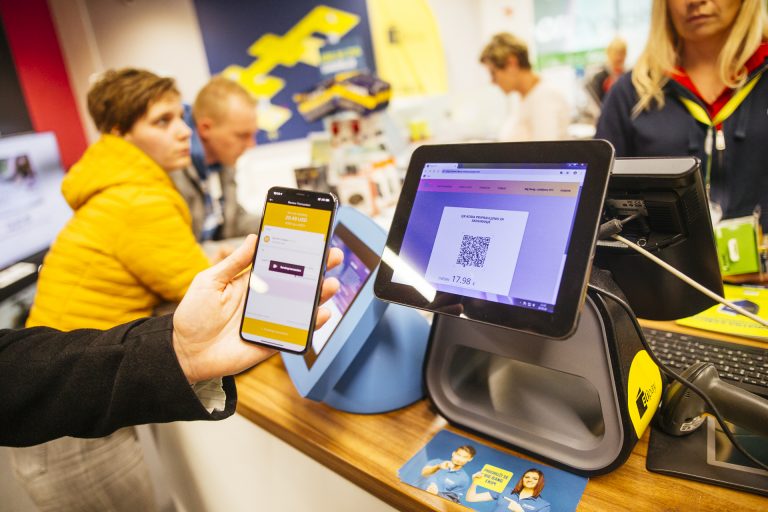
On the buyer side, the shopping process is designed to be extremely simple. The user just scans the purchase QR code with a crypto wallet, selects the cryptocurrency and confirms the transaction. Currently, the supported locations can serve more than 20,000 users of the Elipay app as well as the 4 million users of the Bitcoin.com Wallet. The company also plans to open up its infrastructure for additional crypto wallets soon.

The Elipay service offered by Eligma is available for Android and iOS mobile devices. It supports cryptocurrencies like ETH, BCH, BTC, and the company’s native token, ELI. Users of the Elipay app receive up to 2% of ELI tokens back for every purchase, and can spend these on further shopping at any of the Elipay locations. According to a recent blog post by the CEO of Eligma, following the new investment, the ELI token will be integrated into the Bitcoin.com Wallet and will be listed on the new Bitcoin.com Exchange. The token will also shift from the Ethereum blockchain to the Bitcoin Cash blockchain.

Crypto Payments Startup Eligma Raises €4 Million From Bitcoin.com and Pangea Blockchain Fund

“The development of finance is going towards cash becoming a thing of the past. Among other things, this is because doing business with it is quite time-consuming and expensive. On the other hand, one of the main problems with cryptocurrencies is that the confirmation of transactions can take several minutes if not more, which is unacceptable in daily shopping. Eligma effectively solved this problem with Elipay, which enables instant crypto transactions; furthermore, the merchant receives settlement in local fiat and is thus safe from crypto volatility. This makes the use of cryptocurrencies quick and effective for daily use. We must not forget that cryptocurrencies were envisioned as the electronic cash of the future,“ commented Roljic.

The Slovenian Success Story

Beyond empowering local businesses in their home market to accept cryptocurrency payments, Eligma has greatly helped put Slovenia on the map for many crypto entrepreneurs and developers. The country is now a global leader in the number of brick-and-mortar shops and service providers accepting fiat and crypto. In fact, with a population of just 2 million people, Slovenia now contains more retail locations accepting bitcoin cash payments than the United States. A recent short documentary on Bitcoin.com’s Youtube channel highlighted the thriving cryptocurrency ecosystem in Slovenia.

Elipay has also enabled the creation of Bitcoin City, a giant shopping mall with over 500 shops where many accept crypto payments in the Slovenian capital of Ljubljana. This commercial center is frequented by 21 million visitors a year and features the world’s highest concentration of shops accepting crypto in one location. Eligma revealed it now plans to expand this concept to additional cities around the world.

What do you think about the €4 million investment in crypto payments startup Eligma by Bitcoin.com and Pangea Blockchain Fund? Share your thoughts in the comments section below.


Images courtesy of Eligma.


Verify and track bitcoin cash transactions on our BCH Block Explorer, the best of its kind anywhere in the world. Also, keep up with your holdings, BCH and other coins, on our market charts at Bitcoin.com Markets, another original and free service from Bitcoin.com.

The post Crypto Payments Startup Eligma Raises €4 Million From Bitcoin.com and Pangea Blockchain Fund appeared first on Bitcoin News.


via Avi Mizrahi

Crypto Needs Less Government Regulation – Not More

Crypto Needs Less Government Regulation – Not More

A recent opinion article by Peter Lin, “Why Regulation Is The Best Thing For Crypto,” presents common arguments on why the state and state-affiliated institutions should administer cryptocurrency. Underlying the arguments is an assumption: the free market cannot provide necessary standards for crypto and the state must step into the void.

Also read: Why the Birth of Bitcoin Can Be Traced Back to 1971

The Case Against Greater Crypto Regulation

The arguments and the assumption in Lin’s article are the opposite of what is true. The assumption is the more important aspect of Lin’s article, however, because the arguments rest so heavily upon it that they are almost offered as self-evident assertions. If you buy the presumption, you’ve bought the conclusions.

Lin opens with a nod to the “disconcerting image of what regulation might entail,” such as “being tracked down [by] the Internal Revenue Service” or being imprisoned for “using crypto in India.” Another nod goes to advocates who believe financial freedom is “part of crypto’s DNA”—a freedom for which Bitcoin was created. The acknowledgements are cursory and dismissive, however.

Lin moves on quickly. “If crypto is the future and there are valid concerns,” then “we need to engage in the debate and embrace reasonable and responsible regulation.” The conclusion of this debate between financial freedom and state control is apparently foregone—namely, that “reasonable” and “responsible” regulation is required. This means the debate will be limited to what type of regulation should be imposed. Given that Lin is the founder and CEO of a digital asset exchange that is part of London Stock Exchange Group, his default position of “there oughta be a law” is understandable.

Crypto Needs Less Government Regulation – Not More

‘I’m From the Government – I’m Here to Help You With Crypto’

Lin simply assumes that only the state can resolve “valid concerns” regarding the future of crypto. He offers a common explanation as to “why.” Because “even the most devout supporters … could agree that the growth of this industry depends, in part, on the establishment of safe, fair and reliable market conditions.” Many, if not most, devout supporters do not agree. Moreover, his statement contains an odd leap of logic: it equates “market conditions” with the condition of being regulated by a central authority, when they are actually antagonistic states. Market conditions, good or bad, are not “established” by authority; they are a natural result of the cumulative choices and exchanges of individuals.

Lin continues. “Presently, the regulatory climate is still uncertain and fragmented across jurisdictions.” He seems to believe this is a problem. To “devout supporters” who think there should be no regulation, however, this presents no difficulty. The marketplace is always “uncertain” in the sense that individual preferences are unpredictable and market circumstances change. Nor does things being “fragmented across jurisdictions” pose a problem for the free market; indeed, the word “fragmented” can be replaced by the words “diverse and decentralized.” Only if crypto serves jurisdictions—that is, centralized authorities—is homogeneity desirable. If crypto serves individuals, then diversity should reign.

Crypto Needs Less Government Regulation – Not More

Would You Trust the IMF?

The conclusion toward which Lin has been driving now arrives. “The contours of a global regulatory framework are coming into focus, and we should welcome it.” The contours prominently include the International Monetary Fund (IMF), which has published what Lin calls a “compelling document.” It cites the alleged liquidity risk, default risk, market risk and foreign exchange risk” posed by private coins.

To pause for a second: the IMF is the type of trusted third party problem against which Satoshi Nakamoto and the cypherpunks rebelled—the central banking system writ large. Central banking, not private money, is the overwhelming risk to liquidity, default, and foreign exchange—not to mention inflation, fiat, bail-outs, negative interest rates and the many other money monopoly travesties.

Yet private money is the risk that Lin perceives because “digital assets and cryptocurrencies could be attractive and see capital inflows away from fiat currencies in countries with high inflation rates and weak institutions.” In other words, people move their assets to escape high inflation and collapsing banks rather than have their financial choices dictated by the same elite authorities that caused the high inflation and collapsing banks. Furthermore, Lin notes how difficult it is for “virtual asset service providers (VASPs), such as crypto exchanges [like his own], to comply with Anti-Money Laundering (AML) and Combating the Financing of Terrorism (CFT) regulations.” The true solution is to remove those regulations and allow individuals to be financially independent.

Crypto Needs Less Government Regulation – Not More

Financial independence and personal freedom are not the purpose of Lin’s article, however. His intent is to champion the extreme centralization of crypto into the hands of the same trusted third parties that have ravaged the wealth of society over and over again. This intention is clear from the “reasonable and responsible regulations” that he presents from the IMF.

Two examples:

Central banks could grant licenses — on the condition of supervision — and hold VASPs accountable for customer screening, transaction monitoring and reporting suspicious activity in accordance with Know Your Customer (KYC), AML and CFT regulations.

And: “We can see the first attempts at such cooperation being made with the Financial Action Task Force’s (FATF) recently introduced travel rule, which requires VASPs to collect and transfer customer information when processing transactions.”

As it rolls on, the article sounds like a paean to the destruction of every advantage crypto offers to individuals. Its arguments and conclusions are all based on the assumption that the free market is incapable of evolving standards and techniques to combat the problems that exist—problems that are minor compared to the disastrous solution suggested.

Questioning the Assumption

My book “The Satoshi Revolution” gives economic, social, and moral answers as to why an unfettered free market is infinitely better at serving individuals than the state. But, for many people, nothing is as effective as real-life examples. Of the hundreds that are possible, consider only two, which act to create a proof of principle.

Few historians have examined the origins of free-market standards as closely as the voluntaryist scholar Carl Watner. In his essay “Weights and Measures: State or Market?” he contrasts the evolution of private weights and measures as opposed to state-regulated ones.

One example: the barrel measure of 42 gallons of petroleum, which is used as a standard by most OPEC nations today. Watner explains, “In the early 1860s, a barrel of oil usually meant a cask of oil, regardless of its size, for there were no standard-size casks in use. Variations in the oilman’s barrel persisted until at least 1872, when a producer’s agreement resulted in a fixed price for a 42 gallon barrel of oil.” He notes that oil may not now be shipped in 42 gallon barrels because it started moving by pipeline, oil tankers, and tank trucks. “What is important to us,” Watner observes, “is that the custom still persists of buying and selling oil by the barrel.

The oil pioneers did not (indeed they could not) wait for the government to proclaim a unit by which they should measure and sell the oil they discovered. Rather they adopted measurements from other liquids (the whiskey barrel of western Pennsylvania, where oil was first commercially exploited, was a 42 gallon container). Eventually there arose from the competition of various interests (the producers, transporters, and consumers of oil), the industry standard of a 42 gallon barrel. It did not originate in the halls of any legislature and needed no governmental sanction.” It persists intact to this day.

Crypto Needs Less Government Regulation – Not More

Watner continues, “The history of the oilmen’s barrel is just one incident in the standardization of weights and measures in modern industrial America (there are many others). For example, the development of the electrical industry explains why product integration and standardization were needed. It also exemplifies the manner in which the free market operates. Light bulbs must screw into household sockets; electrical appliances must be supplied with the proper voltage. The United States electrical industry agreed on standards because it made economic sense, not because they were imposed by Congress.”

Contrast the preceding free-market evolution with state-regulated weights and measures. “Since the mining and use of gold and silver were a jealously guarded prerogative of royalty in the ancient world, the provision of coins became a government monopoly.” To maintain a monopoly, government needed to intervene in the definition, promulgation, and standards for weights and measures. “Governments had to … provide for the prohibition of new standard, which might compete with its existing standards.” This dynamic “is well exemplified by the ordinances found in medieval Germany. The accuracy of early German coinage left much to be desired: many were underweight, others overweight. In an effort to prevent people from discovering and melting down the overweight coins, the government outlawed the private ownership of scales.”

“There were numerous, other ways in which governments tampered with weights and measures. In the history of nearly every national unit of account, there can be found the story of chronic debasement, either in the form of reducing the weight or the purity of the metal in a given coin, without reducing its legal value.” (For a more extensive discussion of how the free market solved the problems of private money—and how government impeded solutions—see How and Why Government Outlawed Private Money Part 1 and Part 2.)

Free Market Versus the State

Watner uses two other examples to contrast the effectiveness of the free market’s development of standards with that of the state: “Chaos in the Air: Voluntaryism or Statism in the Early Radio Industry?” and “Voluntaryism and the Evolution of Industrial Standards.”

Another set of essays in the periodical The Voluntaryist highlights a marked advantage of free-market solutions over statist ones. Watner’s essay “Free Banking and Fractional Reserves” is a sharp counterpoint to that of economic professor Larry White, “Free Banking and Fractional Reserves: A Reply.” The debate hinges on whether fractional reserve would evolve in a free-market banking system. The marked advantage is this: both could exist in competition, allowing customers to decide which best suited their needs. Lin would almost certainly refer to such an arrangement as “uncertain and fragmented across jurisdictions” and would almost certainly call for legislation to create certainty and homogeneity. Watner and White would not, and customers would have choice.

Debate on crypto freedom versus state control is needed and inevitable. But let it be an honest debate. Not one that proceeds from a blatantly false assumption into arguments that are assertions. Not one with sleights of hand that equate good “market conditions” with state regulation or leaps of logic. Let the debate at least mention that state control is an involuntary transfer of financial power from individuals to elite trusted third parties. But, ultimately, there can be no honest debate over how much control to assert over peaceful people and their wealth. There can be no ethical debate about how best or how much to steal.

Publication of Wendy McElroy’s updated book “The Satoshi Revolution” is imminent. The book provides a classical-liberal and individualist-anarchist framework of theory for cryptocurrency.

Op-ed disclaimer: This is an Op-ed article. The opinions expressed in this article are the author’s own. Bitcoin.com is not responsible for or liable for any content, accuracy or quality within the Op-ed article. Readers should do their own due diligence before taking any actions related to the content. Bitcoin.com is not responsible, directly or indirectly, for any damage or loss caused or alleged to be caused by or in connection with the use of or reliance on any information in this Op-ed article.


Images courtesy of Shutterstock.


You can now easily buy bitcoin with a credit card. Visit our Purchase Bitcoin page where you can buy BCH and BTC securely, and keep your coins secure by storing them in our free bitcoin mobile wallet.

The post Crypto Needs Less Government Regulation – Not More appeared first on Bitcoin News.


via Wendy McElroy

‘We’re Going to Find You’ – How Undercover Agents Trade Prison Time for Bitcoins

'We're Going to Find You' - Undercover Agents Continue Trading Prison Time for Bitcoins

An Australian national living in Boulder, Colorado was slammed with a one year and a day prison sentence last month for trading bitcoins. An August 23 statement from the Colorado U.S. District Attorney’s Office states that Emilio Testa, 32, was charged with money laundering, and claims Testa knew the funds he was acquiring had been used in narcotics deals. While Testa’s reason for trading was reportedly that “he preferred not to use banks or deal with taxes,” and the type of “narcotics” was not mentioned, the D.A. has pinned him for more serious crimes nonetheless, in an emergent pattern of targeting bitcoin traders while letting big-time criminals like banks, governments, and drug companies off the hook.

Also Read: Cryptocurrencies Such as Bitcoin Cash Shine During Hong Kong Protests

A Pattern of Entrapment

Testa is not alone in his predicament. As news.Bitcoin.com reported last month, 42-year-old William Green of New Jersey could similarly face five years in prison and a $250,000 fine. Bitcoin hobbyist and family man Jason Klein barely avoided five years himself, having to pay a $10,000 fine after two agents posing as friendly bitcoin traders tricked him into selling larger and larger amounts, and used code words to describe drugs which Klein didn’t understand.

It seems that when it comes to over-the-counter (OTC) and peer-to-peer trading these days, no one is safe. In the ominously worded D.A. press release, United States Attorney Jason Dunn threatens:

Trying to hide criminal proceeds in Bitcoin? We’re going to find you.

Steven Cagen, Homeland Security Investigations (HSI) Special Agent in Charge, Denver, states: “Criminals may be sophisticated enough to use cryptocurrency but they’re not smart enough to stay out of jail, as this conviction shows.”

'We're Going to Find You' - How Undercover Agents Trade Prison Time for Bitcoins

What Is a Criminal?

While the D.A.’s report mentions that Testa “agreed to exchange Bitcoin for narcotics proceeds” and that this was done “while understanding that the transaction would conceal or disguise the nature … of the money,” it fails to detail what specifically was mentioned, and in regard to what type of narcotics. The legal definition of the term is broad and dangerously murky, historically covering anything from from cannabis plants to heroin and crack cocaine. Druglibrary.org claims that there are three main reasons for this ambiguity, where medically and etymologically the term “narcotic” more clearly means a sleep-inducing agent:

One reason is that they are genuinely ignorant about these drugs and their effects …The second reason is that “narcotic” sounds dangerous and makes good headlines …The third reason is that it blurs the line between things like marijuana and heroin. Police can’t take a lot of credit for busting someone with an ounce of pot, so they call it a “narcotics bust.”

This in mind, whether Emilio Testa knowingly laundered money for what he thought were big time drug dealers, or simply sold some bitcoin to a couple guys talking casually about cocaine or pot, remains to be seen. The D.A.’s release also omitted the amount of money that was involved.

'We're Going to Find You' - How Undercover Agents Trade Prison Time for Bitcoins

Man With Bitcoin Kiosk Pleads Guilty, Pentagon Goes Unpunished

In the case of verified drug dealer Kunal Kalra, known to some as “Kumar,” “shecklemayne,” or “coinman,” an unlicensed bitcoin kiosk was part of an operation that the California D.A. says facilitated up to $25 million of exchanges for the 25-year-old. Kalra’s charges stem from buying $400,000 in bitcoin from an undercover agent at a Los Angeles coffee shop, operating the non-KYC/AML (know your customer/anti-money laundering policy) Bitcoin ATM without a license, and selling “nearly two pounds of methamphetamine to an undercover law enforcement official in exchange for $6,000,” according to an August 23 press release.

While “Shecklemayne” will most likely be doing hard time for these offenses, government officials, state-embedded banks, and big pharma never seem to fare so badly. Medical juggernaut Johnson & Johnson was met with only a $572 million slap on the wrist last week for deceptively peddling opiates, and nobody will face jail time. They may not even have to pay, if their appeal goes through. Early this summer a cargo ship owned by JP Morgan Chase’s asset management unit was found trafficking 15,000 kilos of cocaine. The company is, of course, still in business and doing fine. Though the U.S. Department of Defense continues its sordid tradition of money laundering, conveniently misplacing funds, and is currently embroiled in direct ties to pedophilia, it still exists as a respected institution today.

Even Small Amounts Punished

Harking back to the narcotics charge in Testa’s case, there was another arrest made in 2018 over a bitcoin transaction involving proceeds from the sale of hash oil for about $9,208. In this case, Morgan Rockcoons was arrested in his home by the Department of Homeland Security for money laundering and operating an unlicensed money transmitting business. Rockcoons is currently in federal prison, but will be getting out in about 21 weeks, as per a Twitter update posted August 29.

It may be true that hearing about someone selling meth to undercover agents is hard to relate to for the vast majority of crypto holders, traders, and enthusiasts. That said, in Rockcoons’ case, selling a relatively small amount of bitcoins (for the time) to someone who says “Hey, I sell hash oil,” hardly seems a shocking criminal offense. Especially given that the cannabis is not dangerous and has therapeutic value. All the same, the government seems to be very concerned.

Staying Safe In P2P Transaction

When it comes to trading crypto, even transacting directly with a trusted circle of friends, or a network of online acquaintances, poses risk. In many of these Local Bitcoins type busts, the people trading believe that they are meeting with other normal folks, who also share an affinity for crypto. The truth is, it is now an established fact that undercover agents frequent online P2P exchange platforms, and target even small time users. For those who love the true power of bitcoin, which is permissionless, low-fee, instant exchange of value on the blockchain, it seems caution can’t be exercised enough in the current climate of deceit, where even those who are doing nothing wrong are nevertheless targeted by the hypocritical government campaign to secure a monopoly on crime.

What are your thoughts on recent bitcoin trading busts? Let us know in the comments section below.


Images courtesy of Shutterstock.


Did you know you can buy and sell BCH privately using our noncustodial, peer-to-peer Local Bitcoin Cash trading platform? The Local.Bitcoin.com marketplace has thousands of participants from all around the world trading BCH right now. And if you need a bitcoin wallet to securely store your coins, you can download one from us here.

The post ‘We’re Going to Find You’ – How Undercover Agents Trade Prison Time for Bitcoins appeared first on Bitcoin News.


via Graham Smith

Bitcoin.com’s Premier Cryptocurrency Exchange Is Now Live

Bitcoin.com's Premier Cryptocurrency Exchange Is Now Live

We’ve just launched our premier trading platform exchange.Bitcoin.com and registered users can access it right now. Since we announced pre-registration last month, over 10,000 accounts have signed up with our exchange and the platform is ready to provide a world-class trading experience for crypto newcomers and veterans alike.

Also Read: Check Out the New Featured Tokens on Bitcoin.com’s Markets Page

Trade Your Favorite Cryptos Today With Bitcoin.com’s New Exchange

Exchange.Bitcoin.com is live and we’re thrilled to launch a trading engine that provides fast and secure exchange in this competitive crypto environment. On the two-year anniversary of the Bitcoin Cash fork, we announced a pre-registration period so people could get a head start and participate in our rewards contest. Since then, we’ve registered over 10,000 new accounts and our exchange is ready to provide deep liquidity for the most popular digital assets today. Moreover, new accounts will get paid to trade by benefiting from negative 0.3% trading fees for the next three months. Upon logging in, you will quickly notice that exchange.Bitcoin.com was designed by traders for traders, with a user interface and design that brings you the very best in optimized crypto trading.

When you want to trade cryptocurrency, you look for an exchange which is trustworthy and which also offers you a wide range of digital assets”, Bitcoin.com:s CEO Stefan Rust commented on the new exchange. “Bitcoin.com has been in the crypto space since the beginning and our new exchange, which supports many different coins and soon SLP tokens, will complement our existing trusted products in making money work for everyone.”

Bitcoin.com’s Premier Cryptocurrency Exchange Is Now Live
Bitcoin.com’s exchange will host a slew of trading pairs including popular cryptocurrencies like litecoin (LTC), ripple (XRP), tron (TRX), zcash (ZEC), stellar (XLM), and EOS. Exchange.Bitcoin.com will have markets denominated in base currencies like bitcoin cash (BCH), ethereum (ETH), bitcoin core (BTC), and tether (USDT).

The exchange will furnish professional charts with technical indicators, optional timeframes, and order books in real-time so traders can visualize the market’s depth. Furthermore, in the near future, Bitcoin.com developers will integrate Simple Ledger Protocol (SLP) token support. This means you will be able to swap some of the most popular and valuable SLP tokens out there today.

Bitcoin.com’s Premier Cryptocurrency Exchange Is Now Live

Trading Fee Rewards and a Professional-Grade Trading Engine

To mark the launch of our new exchange, you can earn rewards through negative 0.3% trading fees. With exchange.Bitcoin.com, registered users will score more bonuses the more they trade. Negative 0.3% trading fees work in the following manner:

  • You’ll earn negative fees up to $1,000,000 of cumulative trades for the first three months.
  • So, if your total cumulative trades are $1,000,000, the typical trading fees would be $2,000 and you’d earn $5,000 in rewards.
  • You’ll receive these rewards at the end of the three months. To find out more, please read the full promotional details in the terms and conditions.

Bitcoin.com’s Premier Cryptocurrency Exchange Is Now Live

If you haven’t signed up for our trading platform, the process is quick and easy. Simply register with exchange.Bitcoin.com and you’ll be able to instantly trade, deposit, and withdraw your favorite digital assets. Bitcoin.com’s user interface is designed for ease of use combined with a professional-grade trading platform designed to offer seamless swaps in a secure environment. Exchange.Bitcoin.com’s matching engine is faster than lightning and traders can execute trades smoothly with cryptocurrencies that have deep liquidity. Besides pleasing veteran traders, our new exchange will be one of the easiest ways for newcomers to obtain cryptocurrencies. As a trading platform that provides a superior user experience, exchange.Bitcoin.com will always be reliable and backed by our trusted brand.

“At Bitcoin.com we have a mission to bring financial freedom to the world and we’re excited to offer industry-leading rewards on an exchange you can trust to help propel the crypto space forward,” Danish Chaudhry, Managing Director of Bitcoin.com Exchange stated during the announcement.

Bitcoin.com’s Premier Cryptocurrency Exchange Is Now Live

A Better Trading Experience

Our web portal has been offering dependable crypto resources, tools, and services for years and exchange.Bitcoin.com’s principled approach to security will help you trade with confidence. For instance, the exchange domain will display an EV green bar verification at all times, so you can be confident you are trading with Bitcoin.com. Accounts will be guarded with IP whitelisting, two-factor authentication (2FA), and institutional-grade encryption. You will always be notified if there are any login attempts using your account. These safeguards make exchange.Bitcoin.com ideal for both small and large traders. At Bitcoin.com, we understand the need for high-speed order execution in the fast-paced crypto marker, and our exchange has been configured accordingly.

We’re excited to offer a world-class cryptocurrency exchange that provides an array of tools across all of exchange.Bitcoin.com’s trading pairs. Right now the trading platform is live, and if you haven’t signed up already, you can do so today and start trading cryptos immediately. With our rewards program, deep volume, and crisp user interface, we believe exchange.Bitcoin.com delivers a better trading experience and we think you’ll agree.

What do you think about the new exchange.Bitcoin.com trading platform? Let us know what you think about this subject in the comments section below.


Image credits: Shutterstock, and Bitcoin.com.


How could our Bitcoin Block Explorer tool help you? Use the handy Bitcoin address search bar to track down transactions on both the BCH and BTC blockchain and, for even more industry insights, visit our in-depth Bitcoin Charts.

The post Bitcoin.com’s Premier Cryptocurrency Exchange Is Now Live appeared first on Bitcoin News.


via Bitcoin.com

Sunday, September 1, 2019